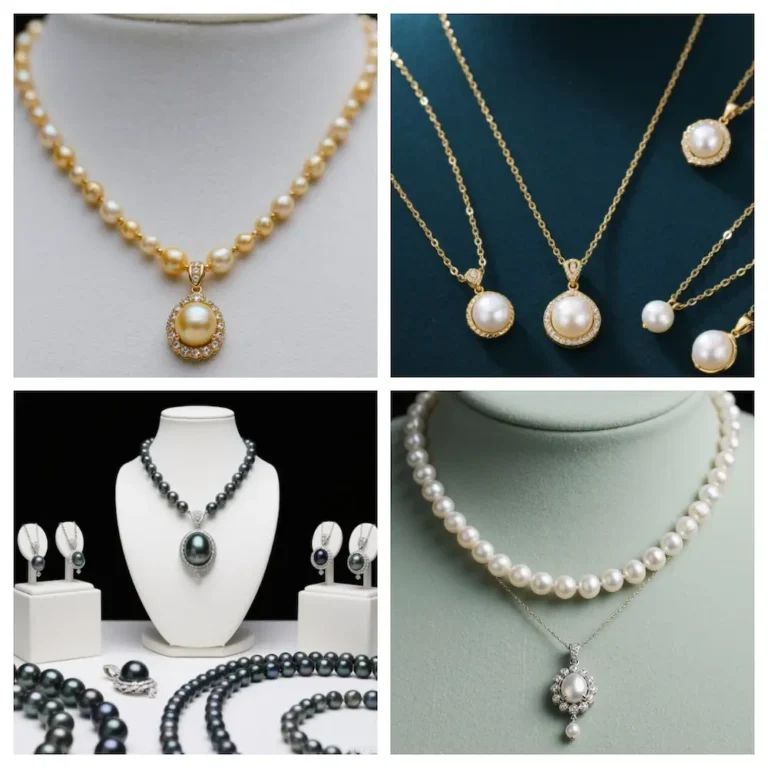
Note: This guide is specifically designed for jewelry manufacturers, retailers, and bulk buyers. For general information on pearl types, please visit our [What are Cultured Freshwater Pearls →] guide.
If you are sourcing cultured freshwater pearls at scale, the decisions you make in the next five minutes will either protect your margins or kill them.
This is not a general overview. This is an operations guide — written from our factory floor in Changzhou, backed by over a decade of supplying wholesale pearls to brands in the US, Europe, and Southeast Asia.
The business case for cultured freshwater pearls in 2026
The math is straightforward. Saltwater akoya pearls — grown mostly in Japan and China’s coastal regions — require single nucleation per mussel. Cultured freshwater pearls work differently, and yield varies by type.
- Tissue-nucleated freshwater pearls (the traditional non-beaded category) produce 10–30 pearls per mussel per cycle, with high-output harvests reaching up to 50.
- Nucleated Freshwater AK pearls — the 3–7mm beaded variety — yield around 5–12 per mussel.
- Edison pearls, nucleated for their large 8–15mm size, produce just 1–2 per mussel.
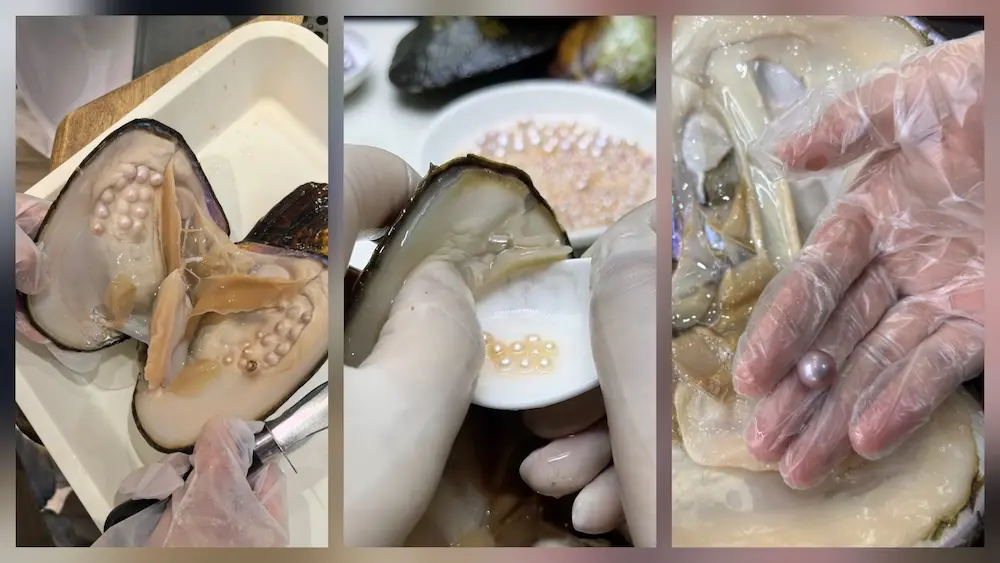
That production difference across all three categories is the reason freshwater supply runs high and price stays competitive against saltwater alternatives.
For a jewelry brand, this means your per-unit cost on a 7–8mm round freshwater pearl strand runs roughly 60–80% less than a comparable akoya strand. That gap goes straight to your gross margin — or lets you price competitively and still win.
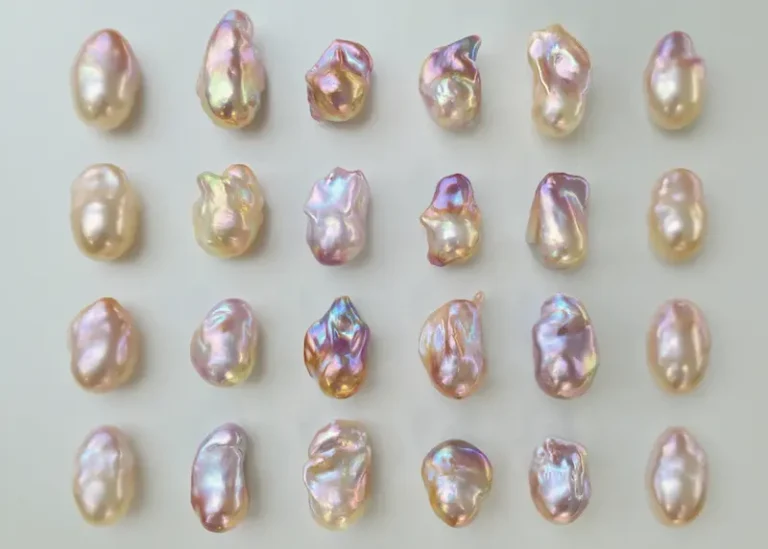
Market demand is also shifting in your favor. According to GIA’s pearl research resources, consumer interest in baroque and off-round pearl shapes has grown significantly in fine jewelry retail over the last three years. (source: GIA) Buyers are no longer asking only for round. Near-round, potato, rice, and Edison pearls all sell — sometimes at a premium — in the right retail context. That means wholesale pearls in irregular shapes are now a real revenue line, not a clearance problem.
Sourcing strategies: how to buy cultured freshwater pearls in bulk
Where the pearls actually come from
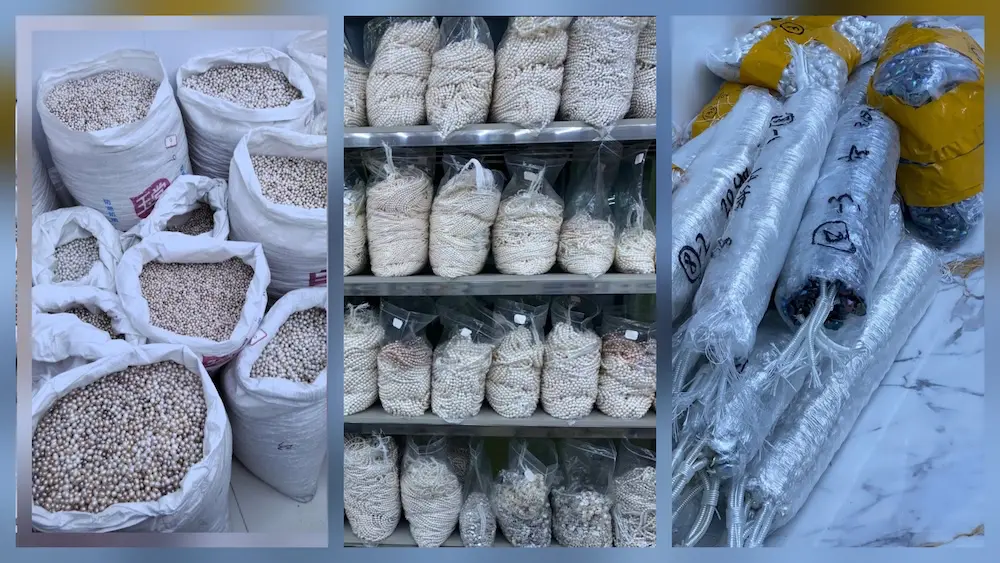
China produces over 95% of the world’s cultured freshwater pearls. We farm in Ma’anshan Hexian. Our processing and sorting factory is in Changzhou, Jiangsu. That is not a detail — it matters because the farm-to-factory distance determines how quickly we can respond to custom grade requests and how much handling the pearls go through before they reach your door.
When a middleman broker sources cultured freshwater pearls from the open market in Zhuji and sends them to a separate processing factory, you are paying for their margin and absorbing their quality inconsistency. I’ve seen buyers receive three shipments from the same “supplier” that graded differently every time. That is what a fragmented supply chain looks like.
MOQ: what you actually need to order
| Pearl Type | Minimum Order Quantity | Unit |
|---|---|---|
| Standard round (5–8mm) | 5-10 strands | Per size/color |
| Near-round / potato | 5-10 strands | Per size/color |
| Edison (10–14mm) | 3-5 strands | Per size |
| Baroque (freeform) | 100-500g | Per color |
| Loose, undrilled | 50g-100g | Per size/color |
A standard 16-inch strand of 5.5–6mm cultured freshwater pearls contains around 70 pearls. Keep that in mind when translating strand counts to piece counts for your production runs.
For first-time buyers, I recommend starting with a sample order before committing to volume. The reason is simple: photos lie. Luster and surface quality are things you need to hold. Request sample strands — most legitimate pearl suppliers will charge a nominal fee or apply it to your first order.
Technical grading for wholesalers
The industry does not have a single universal grading standard for cultured freshwater pearls. That is a problem buyers need to know about before they write a spec sheet. Most factories use a three-tier A/AA/AAA system, but the definitions shift by supplier — and that system does not give you enough resolution to spec product confidently at the top end.
We use a five-tier A through AAAAA system. Here is what each grade means — and what you should demand in writing from any supplier you work with:
| Grade | Luster | Surface | Shape Tolerance | Typical Use |
|---|---|---|---|---|
| AAAAA | Mirror-perfect, crisp reflection, zero diffusion | <2% blemish coverage | Round ±1% diameter variance | Fine jewelry, bridal, high-ticket retail |
| AAAA | Mirror-sharp, negligible diffusion | 2–5% blemish coverage | Round ±2% variance | Premium retail, branded collections |
| AAA | Sharp luster, slight diffusion at edges | 5–10% blemish coverage | Round ±3% variance | Mid-range retail, fashion jewelry |
| AA | Good luster, visible diffusion | 10–25% blemish coverage | Near-round acceptable | Volume fashion, entry-level retail |
| A | Dull or chalky | 25–40% blemish | Mixed shapes accepted | Children’s jewelry, ultra-budget pieces |
Why five tiers? Because “AAA” from one Chinese factory and “AAA” from another can look nothing alike. A five-tier system forces both sides to be specific. When you place an order with us, the grade is defined by this table — not by whoever graded the last batch.
Low-grade A pearls are a waste of your money unless you are making children’s jewelry or ultra-budget fashion pieces. The customer return rate on A-grade pearl jewelry is disproportionately high. Step up to AA or above — the margin you recover on lower returns more than covers the difference.
Automated sorting vs. hand grading
Our Changzhou factory runs an automated sorting system 24 hours a day for roundness, diameter, and color. Automated systems are faster and eliminate human fatigue errors on shape and size.
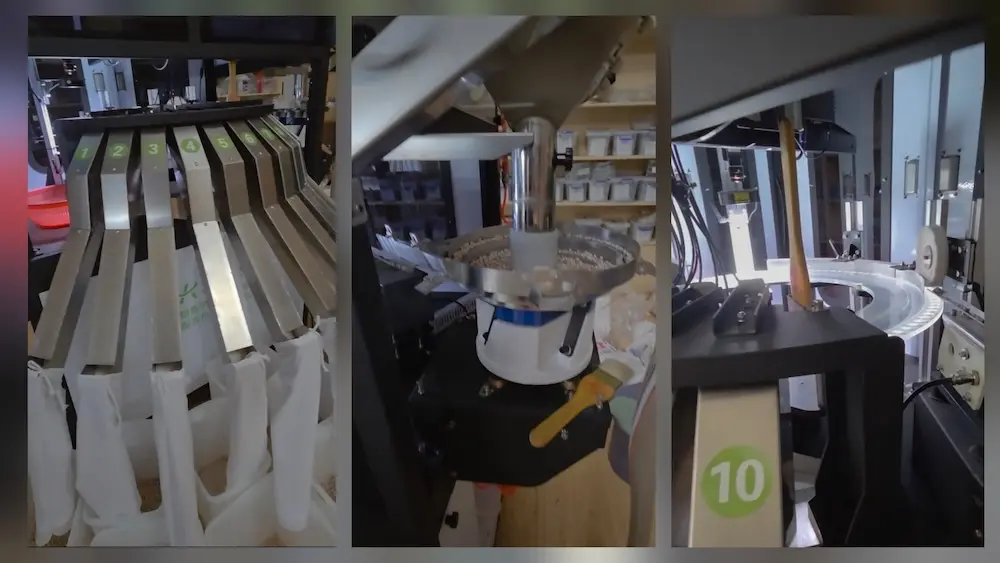
But they do not replace hand grading for luster and surface — those require trained eyes under consistent 5000K daylight-balanced lighting.
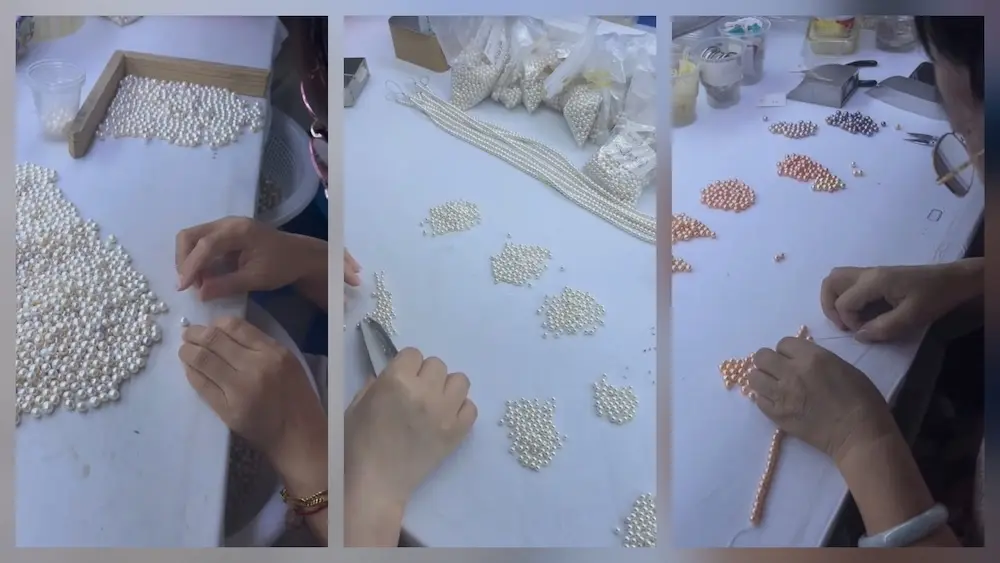
Any pearl manufacturer that tells you their entire quality process is automated is either exaggerating or selling you a grading shortcut.
Drilling specifications
| Application | Hole Size | Notes |
|---|---|---|
| Standard bead stringing | 0.6–0.8mm | Works with silk, nylon, 0.5mm wire |
| Large-hole / European beads | 2.0–2.5mm | Required for leather cord or thick wire designs |
| Half-drilled (earrings/pendants) | 0.8mm, 4mm depth | Requires post gluing |
| Undrilled | N/A | For wire-wrapping or cage settings |
Specify drilling before your order is processed. Redrilling cultured freshwater pearls after the fact risks cracking — especially in high-luster thin-nacre stones.
Logistics and customs: what global buyers must know
HS code reference
Cultured freshwater pearls — unworked — fall under HS Code 0107.10 in most jurisdictions. Worked pearls (drilled, sorted, graded) typically move under 7101.22. The distinction matters for import duty calculations in your country.
We recommend verifying with your customs broker before placing a large order. The US, EU, and Australia all apply different duty rates, and tariff classifications occasionally shift. The World Customs Organization publishes the current HS nomenclature — bookmark it.
When to order
- Jan–Feb (Chinese New Year): Factory closures, 3–6 week delays. Place orders by late December
- Sep–Oct: Peak export demand from trade shows. Lock pricing in August
- Nov–Dec: Holiday rush from Western buyers. Confirm stock availability early
The one rule: if you need delivery by a fixed date, add three weeks to your actual deadline and use that as your order date. Shipping delays from Shanghai to Los Angeles alone average 18–25 days by sea. Air freight shipping via UPS, FedEx, or DHL typically takes 3–7 business days.
Supplier verification checklist
Before you wire money to any pearl supplier, check these:
- [ ] Do they own their farm, or are they a broker? Ask for the farm location.
- [ ] Can they show you export records or prior buyer references in your country?
- [ ] Do they have their own sorting and processing facility, or do they outsource it?
- [ ] Can they produce a sample strand in your exact spec within 7 days?
- [ ] Do they offer OEM services — custom dye colors, shape sorting, private label packaging?
- [ ] Are they able to issue a commercial invoice that matches your declared customs value?
- [ ] Are they able to issue a Certificate of Origin (CO) that matches your customs declaration?
- [ ] What is their policy if the shipment arrives outside spec?
A legitimate pearl manufacturer will answer every one of these without hesitation. If they deflect on the farm question, they are a middleman. If they hesitate on the returns policy, walk.
FAQ
What is the average lead time for a bulk order of 1,000 strands?
For in-stock grades: 3–10 business days including packing and documentation. For custom dye colors or non-standard drilling: 14–21 days. We confirm lead times in writing before you pay.
Do you offer bulk discounts for jewelry start-ups?
Yes. We use tiered pricing: the per-strand price drops at 50, 100, 200, and 500-strand thresholds. Start-up brands with smaller first orders get the same price break if they commit to a quarterly volume target in writing.
Can cultured freshwater pearls be customized for specific jewelry designs?
Our factory in Changzhou handles custom shape-selective sorting, large-hole drilling, and half-drilling. OEM packaging with your brand label is also available for orders over 300 strands.
What is the difference between Edison pearls and standard rounds?
Edison pearls are nucleated cultured freshwater pearls — a single bead nucleus is implanted, similar to akoya production. The result is a larger, rounder pearl (typically 10–16mm) with thick nacre and high luster. They command higher prices than standard tissue-nucleated rounds, but the margin on finished jewelry is also higher.
How do I verify pearl luster before committing to a bulk order?
Request a physical sample strand. Judge luster under natural daylight or 5000K artificial light. A high-luster cultured freshwater pearl will show a clear, sharp reflection of a light source on its surface. If the reflection is blurred or you can’t distinguish one, the luster grade is AA or below.
Sourcing cultured freshwater pearls at bulk is a supply chain decision, not just a purchasing one — get the farm, the factory, and the freight right, and your margins will follow.