
Running a successful bulk jewelry business means making smart choices. You need materials that look stunning, stay affordable, and arrive consistently. That’s where cultured freshwater pearls come in—they’re changing the game for jewelry manufacturers worldwide.
If you’re sourcing materials for your jewelry line, you’ve probably felt the pressure. Customers want beauty, but your margins depend on cost-effectiveness. Production schedules demand reliable supply chains. And everyone expects consistent quality across hundreds or thousands of pieces.
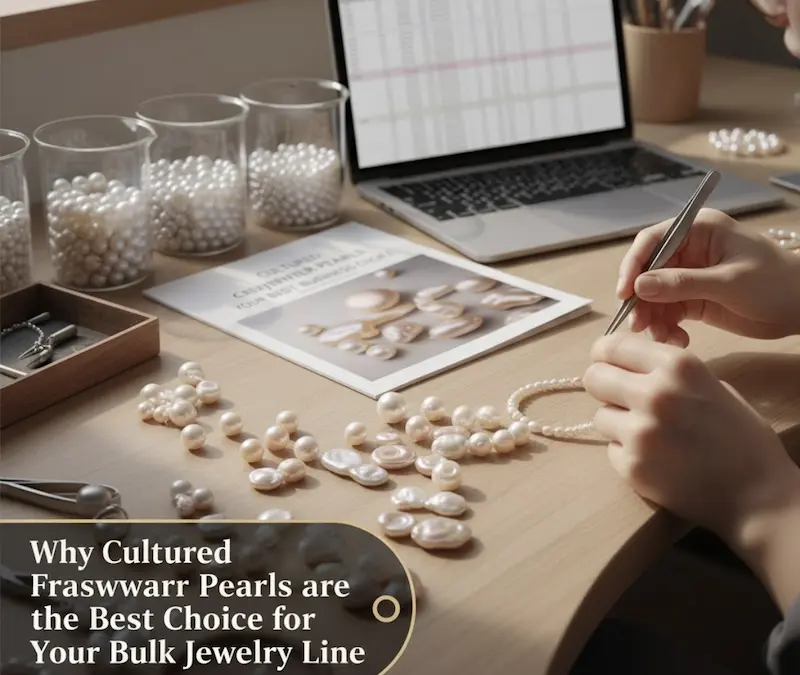
The good news is that cultured freshwater pearls can fix all three problems at once. These jewels are much more valuable than their saltwater counterparts, and they don’t lose their beauty. They come in shapes and colors that saltwater pearls can’t match. And because they create so many, they are the best choice for large orders.
This tutorial will show you exactly why cultured freshwater pearls should be the main focus of your jewelry line. We’ll talk about the economics, how flexible they are, and how they make sure your firm runs well.
The Cost-Effectiveness Advantage: Maximizing Your Profit Margins
Money talks in the jewelry business. When you’re placing bulk orders, every dollar per strand matters. Cultured Freshwater Pearls offer something remarkable—they look expensive without the expensive price tag.
Think about typical Akoya saltwater pearls. They’re beautiful, sure. But they’ll cost you 3-5 times more per strand than comparable freshwater varieties. South Sea pearls? Even worse. You’re looking at prices that can reach 10 times higher for similar sizes.
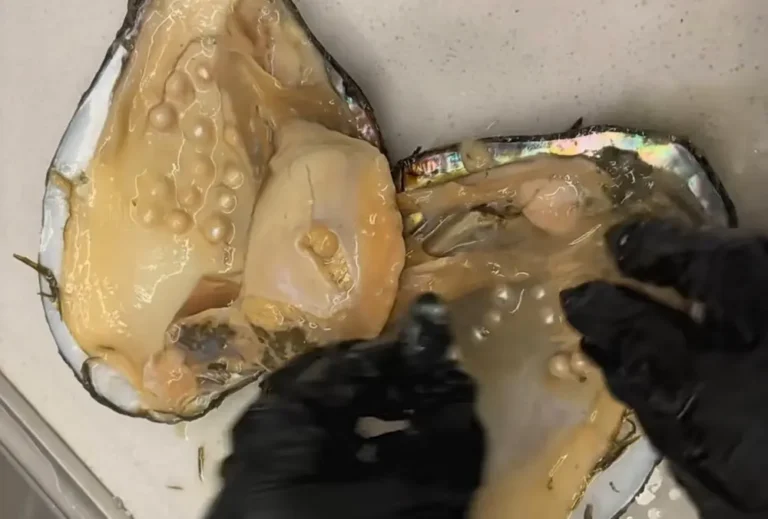
The reason comes down to production. Saltwater oysters typically produce just 1-2 pearls per harvest cycle. Freshwater mussels? They can yield 30-50 pearls from a single mussel. That fundamental difference transforms your bottom line.
Understanding The Source Economics
Pearl Manufacturer operations in China’s freshwater lakes have perfected high-volume cultivation. These farms work with hybrid mussels specifically bred for pearl production. The grafting process is simpler than saltwater nucleation, which means lower labor costs that get passed directly to you.
Here’s what most jewelry designers don’t realize: Cultured Freshwater Pearls are composed almost entirely of nacre. Saltwater pearls use a mother-of-pearl bead nucleus with just a thin nacre coating. More nacre means better durability and that soft, glowing luster customers love—all at a fraction of the cost.
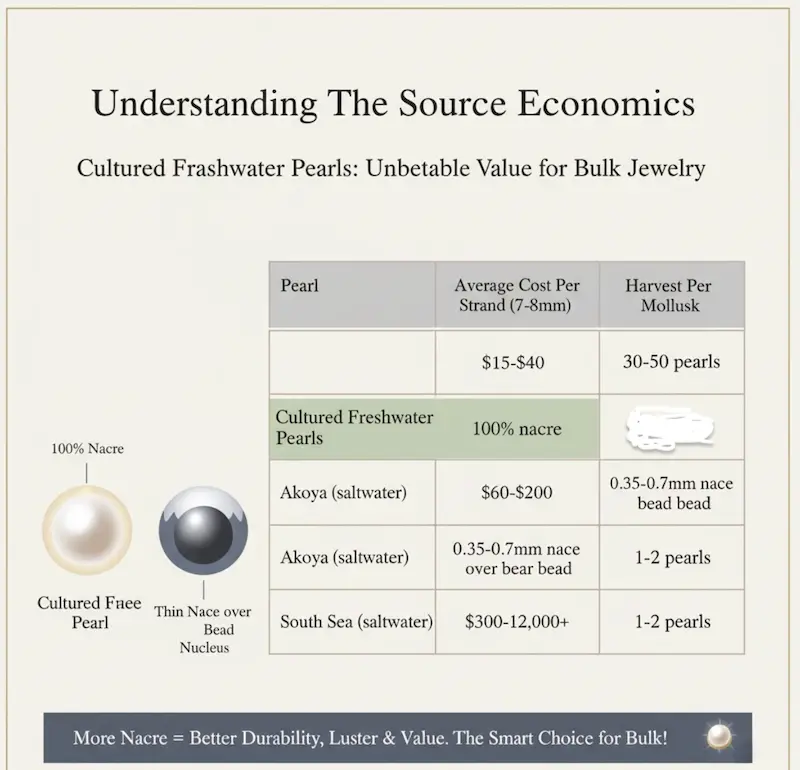
Consider this comparison:
| Pearl Type | Average Cost Per Strand (7-8mm) | Nacre Thickness | Harvest Per Mollusk |
|---|---|---|---|
| Cultured Freshwater Pearls | $15-$40 | 100% nacre | 30-50 pearls |
| Akoya (saltwater) | $60-$200 | 0.35-0.7mm nacre over bead | 1-2 pearls |
| South Sea (saltwater) | $300-$2,000+ | 2-6mm nacre over bead | 1-2 pearls |
Minimal Waste Means Lower Per-Unit Costs
When you’re ordering wholesale pearls, waste eats into profits. Cultured Freshwater Pearls deliver exceptionally high yields. Modern cultivation techniques have pushed quality standards higher while maintaining volume.
A single bulk order might include pearls from dozens of mussels, but the grading consistency means minimal discards. You’re not throwing away 20-30% of your purchase because pieces don’t match. That’s money saved, directly improving your margins.
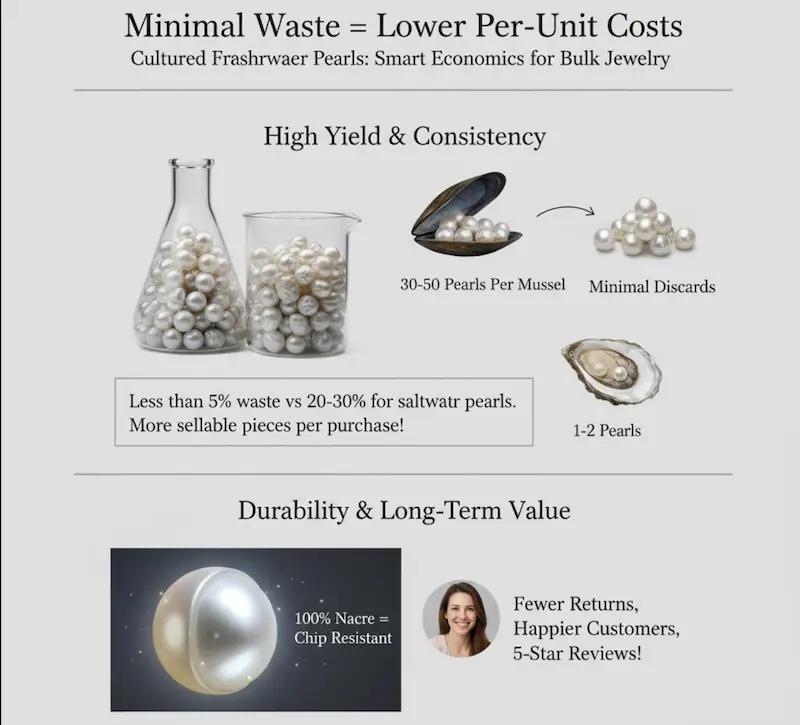
Not only do smart jewelry companies figure out the cost every strand, they also figure out the cost per final piece. Adding in the fact that Cultured Freshwater Pearls last a long time makes the worth even evident. These pearls are less likely to chip or get damaged than thin-nacre saltwater pearls. That one choice leads to fewer returns, happier consumers, and better reviews.
Design Versatility: A Creative Palette Like No Other
Cookie-cutter jewelry doesn’t sell anymore. Today’s consumers want pieces that feel unique, personal, and Instagram-worthy. Cultured Freshwater Pearls give you creative freedom that saltwater pearls simply can’t match.
Walk into any jewelry trade show and you’ll see hundreds of similar Akoya strands. They’re round, white, and frankly, a bit boring. Now imagine offering your customers baroque drops, coin shapes, stick pearls, or even square-ish forms. That’s the cultured freshwater difference.
Shape Innovation That Sparks Creativity
The variety available is stunning. Round and near-round Cultured Freshwater Pearls work beautifully for classic designs. But the real magic happens with non-traditional shapes:
- Baroque pearls look like they were made by hand and are natural. Because they aren’t round, their strange forms make them more interesting to look at than round pearls. They look great with modern earrings and bracelets that make a statement.
- Coin pearls offer flat, disc-like profiles. They create elegant layered looks and work wonderfully in chandelier earrings. The surface area provides more space for light to play across the nacre.
- Stick or biwa pearls add drama in a straight line. These lengthy shapes make earrings look taller and provide texture to multi-strand necklaces.
- Button pearls feature flattened backs with domed fronts—ideal for stud earrings and rings where you need a flat mounting surface.
- This shape diversity lets you create distinct product lines from a single pearl type. Your “Classic” collection uses round Cultured Freshwater Pearls. Your “Modern” line features baroque shapes. Your “Bridal” collection combines both for varied looks. Same supplier, same quality standards, but completely different aesthetic statements.
Natural Color Options That Eliminate Dye Costs
Color sells. But dyeing pearls adds cost, time, and potential quality issues. Cultured Freshwater Pearls come in an extraordinary natural color palette that saltwater varieties can’t match.
Standard options include:
- Pure white with pink overtones
- Cream and champagne tones
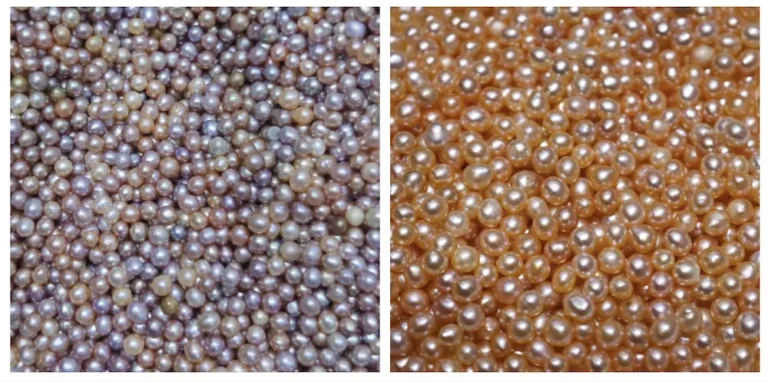
- Soft peach and apricot hues
- Delicate lavender and purple shades
- Rich mauve and burgundy colors
- Natural grey and silver tones
These variations are not small. The color difference is so big that whole product lines can be built around certain shades. A collection of lavender Cultured Freshwater Pearls stands out right away from other stores that sell plain white strands.
Farmers can change the color of freshwater pearls by choosing the right mussels and changing the environment. This implies that when you order Bulk Pearls in certain hues, you will always get the same results. There is no longer any need to hope that dye lots match between orders.
Guaranteed Consistency For Bulk Production
Nothing kills a jewelry line faster than inconsistent materials. Your customers expect every piece to match the quality they saw online or in your previous collection. Cultured Freshwater Pearls deliver that consistency at scale.
Quality Control Standards You Can Trust
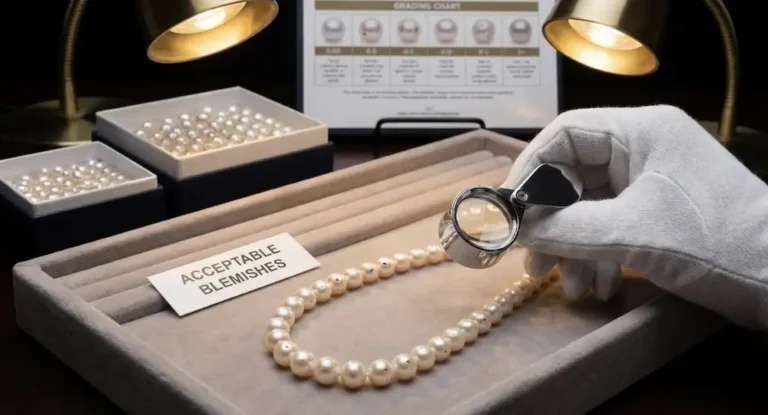
Professional pearl suppliers grade Cultured Freshwater Pearls using established systems. The most common uses AAAAA, AAAA, AAA, AA and A ratings based on five factors:
- Luster – How light reflects off the pearl surface
- Surface quality – Presence of blemishes or irregularities
- Shape – How round or symmetrical the pearl appears
- Color – Uniformity and desirability of the hue
- Size – Consistency within the strand or lot
When you order bulk Cultured Freshwater Pearls at AAAAA grade, every strand meets those standards. You’re not gambling on whether this month’s shipment matches last month’s quality. The grading system provides objective benchmarks that protect your brand reputation.
Before putting together strands, good wholesalers sort and match pearls. This time-consuming technique makes sure that each strand is the same size (usually within 0.5mm) and has the same shine all over. This signifies for your line of jewelry:
- Fewer production delays from mismatched materials
- Reduced customer complaints about quality variation
- Ability to reorder confidently for future collections
- Professional appearance across your entire product catalog
Supply Stability That Protects Your Business
Market volatility destroys profit margins. When saltwater pearl harvests fall short due to typhoons, water temperature changes, or disease, prices spike. Suddenly your costs jump 40-60% with no warning.
Cultured freshwater pearls have a very stable supply. The freshwater pearl business in China makes over 1,500 tons of pearls every year, which is billions of individual pearls. There are a number of benefits to this huge amount of production:
- Predictable pricing – Large-scale operations maintain steady costs year-round. You can forecast material expenses accurately when planning new collections.
- Consistent availability – Unlike limited saltwater harvests, freshwater farms produce multiple harvests annually. If one region faces issues, other production areas compensate.
- Flexible ordering – Because they get a lot of orders, suppliers can handle different sizes of orders. Want to try out a fresh design with a smaller number? No issue. Are you ready to make more? They can do that too.
This consistency is great for jewelry firms that want to have seasonal sales or collections. You can promise delivery dates since you know your supply of pearls won’t suddenly run out or cost twice as much.
The Gemological Institute of America says that as cultivation methods have gotten better, it has become easier to cultivate cultured freshwater pearls. Modern farms utilize science to regulate water quality, keep an eye on mussel health, and decide when to harvest, all of which help keep supply disruptions to a minimum.
Three Winning Product Ideas Using Cultured Freshwater Pearls
Let’s put what we’ve learned into action. Here are three jewelry line ideas that will make you money and take use of the benefits of Cultured Freshwater Pearls:
1. The Layered Baroque Collection
Use different sizes of baroque cultured freshwater pearls to make a set of 3 to 5 strand necklaces. For further dimension, mix 6–7mm pearls with 8–9mm pieces. The irregular shapes create visual texture that photographs beautifully for online sales.
Why it works: Baroque pearls are 30–50% cheaper in quantity than round pearls, yet purchasers think they are creative and planned. The tiered strategy employs more pearls per piece, which increases your income per item while keeping your margins high by lowering the cost of materials.
2. The Edison Pearl Pendant Line
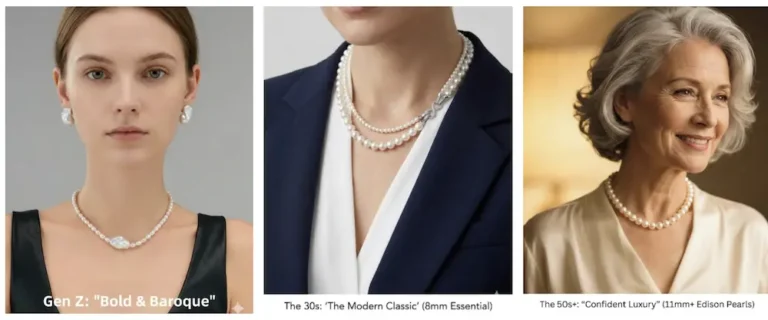
Edison pearls are a high-end type of cultured freshwater pearl that can grow to be 10 to 16 mm in size and have a very high shine. Use these as the main parts of simple pendant designs that don’t have a lot of metal parts.
Why it works: At these sizes, big saltwater pearls become too pricey. Edison Cultured Freshwater Pearls look just as good but cost a lot less. The basic designs keep labor expenses low, and the large size of the pearls makes the high prices worth it.
3. The Mix-and-Match Basics Series
Make a set of stud earrings, simple pendants, and single-strand necklaces all using 7–8mm white or cream Cultured Freshwater Pearls. Sell them as must-have items that can be built on.
Why it works: The same size and color throughout the series makes people want to buy more. A lot of people like the vintage look. Using standard round Cultured Freshwater Pearls makes it easy to reorder and makes sure that clients can always get more pearls.
Making Smart Bulk Orders: Practical Tips
Now that you know why Cultured Freshwater Pearls are good for business, let’s speak about how to place big orders. Some smart choices here can have a big effect on how well you do.
Know Your Grade Requirements
Don’t always get the best grade for every design. Grade AAAAA Cultured Freshwater Pearls are great for high-end collections and pieces where the pearl is the main focus. But for designs where pearls are just there to support other stones, such spacers in gemstone necklaces or little accent earrings, AAAA and AAA grade is often just as good and costs less.
Match your grade to your:
- Price point – Higher-end lines justify AAA investment
- Design visibility – Prominent pearls need top grades
- Target customer – Luxury buyers expect flawless surfaces
- Competition – What grade level matches market expectations?
Start With Sample Strands
Ask for sample strands in the sizes and colors you want before you place a major order. Yes, this costs a little bit more up front. But it stops costly mistakes from happening.
Take pictures of the samples in the light of your studio. Look at them next to the parts you already have. See how they appear in real jewelry creations. Ask your staff or loyal consumers for feedback by sending them images. This step shows if the color matches what you had in mind, if the size fits your needs, and if the quality is up to your standards.
Build Supplier Relationships
Strong relationships with suppliers lead to the greatest pricing on Cultured Freshwater Pearls. Stick with a source you can trust once you locate one. Ordering regularly gets you better prices, faster service during busy times, and first dibs on great lots.
Be explicit about what you require. Let your vendors know your manufacturing schedule so they can plan ahead. Give input on quality, both good and bad. Professional suppliers want to keep clients for a long time, and they will work to suit your needs once they know what they are.
Plan For Growth But Start Smart
A lot of jewelry stores go out of business because they order too much stock that they can’t sell soon. Start with small bulk orders based on sales forecasts that are reasonable. Because Cultured Freshwater Pearls are so easy to find, you can quickly reorder if items sell out faster than you thought.
Figure out your:
- Average monthly sales by type of product
- Time it takes to get new orders (usually 2 to 4 weeks for good suppliers)
- Safety stock is needed to keep from running out of stock.
- Cash flow that can be used to buy inventory
Get enough Cultured Freshwater Pearls to last for 2 to 3 months of production and some extra stock. As your jewelry line grows and you learn more about how people buy it, you can place larger orders to get better prices on bulk items.
The Science Behind The Beauty: Why Cultured Freshwater Pearls Last
Your buyers don’t simply want attractive jewelry; they want jewelry that stays pretty. Customers are happy with Cultured Freshwater Pearls because they last a long time, which means less returns.
Understanding Nacre Structure
The secret is in the materials that make up pearls. The majority of cultured freshwater pearls are made up of nacre, which is made up of thousands of tiny layers of calcium carbonate crystals held together by organic proteins. This structure gives pearls their unique shine and strength.
Look at this next to saltwater pearls with bead nuclei. These feature a core made of shell beads and a thin nacre coating (for Akoya pearls, this is usually 0.35 to 0.7 mm). The thin covering is more likely to chip, scratch, or wear through. Cultured freshwater pearls are made of firm nacre, which makes them much more resistant to this kind of damage.
Practical Durability Benefits
This structural advantage means that
Longer product life: Customers can wear Cultured Freshwater Pearls jewelry every day without it quickly falling apart. This makes people think the product is worth more and encourages good ratings.
Better drill hole integrity: The solid nacre around the drill holes keeps them from cracking during manufacture and use. Less waste in your studio since fewer pearls break when you string or place them.
Better luster retention: All pearls might lose their luster over time if they aren’t taken care of properly, but the rich nacre of Cultured Freshwater Pearls keeps their brilliance longer than thin-coated pearls.
Better restoration potential: If consumers do damage their items, the thick nacre makes it possible to repolish and restore them, which isn’t achievable with thin-nacre pearls.
Durability has a direct effect on profitability for bulk jewelry businesses. stronger Cultured Freshwater Pearls mean less problems during manufacturing, fewer returns, and stronger long-term connections with customers. The International Gem Society says that cultured pearls can last for generations if they are taken care of properly. This is a selling factor that appeals to those who are more and more interested in making purchases that will last.
Final Considerations: Making The Switch
If you’re currently using other pearl types or considering pearls for the first time, transitioning to Cultured Freshwater Pearls requires some planning. But the process is straightforward, and the benefits justify the effort.
Educate Your Customers
People still think that “freshwater” indicates inferior quality. That old idea stems from production in the 1980s that put more emphasis on quantity than quality. Modern cultured freshwater pearls are just as beautiful and long-lasting as saltwater pearls, and sometimes even more so.
Use your marketing to explain why these things are good:
- Emphasize the strong nacre composition
- Focus on the high-volume, long-lasting production
- Show off the many shapes and colors
- Make the value proposition explicit
Being open and honest develops trust. Customers like both the beauty and the price of Cultured Freshwater Pearls when they know why they are a good buy.
Consider Your Brand Positioning
Freshwater pearls that are cultured work in a lot of different market situations, but your messaging should match the quality of your brand:
High-end brands can highlight hues that are hard to find, luster grades that are very high, and baroque shapes that are one of a kind. Put cultured freshwater pearls in the same category as handmade saltwater strands instead of mass-produced ones.
Brands in the middle market should pay attention to the value-to-quality ratio. Show buyers that they can receive nacre-solid pearls at rates that are easy to reach. This is a wise buy that doesn’t skimp on beauty.
Fast-fashion companies can use the different colors and shapes to make collections that are in style for the season. The inexpensive prices for buying in bulk let you try out several designs.
Test Before You Transform
Don’t try to rebuild your whole jewelry line in one night. Start by adding a few new Cultured Freshwater Pearls designs to your current line of products. This method lets you:
- Find out which styles your customers like the most.
- Use the new materials to improve how you make things.
- Build ties with providers over time.
- Take chances while keeping risks low.
Pay close attention to sales data. Many jewelry stores find that creations made with Cultured Freshwater Pearls soon become bestsellers, which surprises designers who thought they were only cheaper options at first.
Your Next Steps: Securing Quality Bulk Cultured Freshwater Pearls
Knowing why Cultured Freshwater Pearls are good for business is only the first step. The true value comes from getting high-quality materials from trusted suppliers who know what jewelry makers need.
When evaluating potential pearl suppliers for your Bulk Pearls orders, look for these essential qualities:
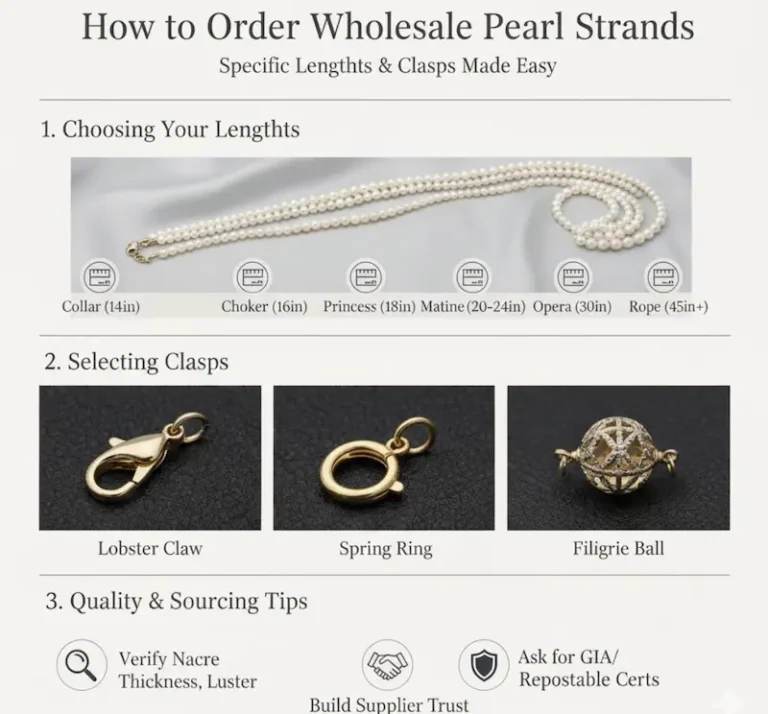
- Transparent grading – It’s evident that providers should let customers know how they grade their goods and make sure that all of them are of the same quality. Don’t buy from merchants that don’t have clear grading methods or who don’t always supply high-quality goods.
- Minimums could change: As you attempt new ideas and build your jewelry business, your demands will change. Pick vendors who can handle orders of different sizes without charging you more.
- Good Communication: It can be hard to do business with people in foreign nations because of language and time zone differences. Choose businesses who provide fast customer service and simple ways to acquire products.
- Quality guarantees – Reliable sellers will stand behind what they sell. Look for return policies or happiness guarantees to make sure you don’t get terrible stuff.
- Industry reputation – Read reviews, join industry groups, and ask other jewelry experts for advice on where to buy jewelry. People who sell items with a good name are less likely to take shortcuts to get money fast.
Get Started Today
The jewelry market is always changing, but one thing is the same: clients desire beautiful, long-lasting pieces at reasonable costs. Cultured Freshwater Pearls are the best choice for all three needs.
It’s a great opportunity to look into what Cultured Freshwater Pearls can do for your business, whether you’re starting a new line of jewelry or updating an old one. The combination of being cost-effective, having a wide range of designs, and always being available makes for a solid base for long-term growth.
Don’t let your rivals get ahead of you. To begin, ask for sample strands in the sizes and colors you like most. Try them out in your designs. Figure out how much better the margins are. Then confidently scale up, knowing you’ve picked materials that will help you reach both your creative and business goals.
The most successful brands in the jewelry sector know that making wise choices about materials is what sets successful enterprises apart from those who are failing. Cultured Freshwater Pearls aren’t simply an option; they’re the edge your Jewelry Line needs to do well in today’s market.
Are you ready to get high-quality cultured freshwater pearls for your bulk jewelry making? Get in touch with a wholesale sourcing expert who can provide you personalized estimates based on the size, color, and quantity you need. The first step in the ideal cooperation is to talk about your jewelry line’s specific needs and how Cultured Freshwater Pearls can meet them better than you thought.
Are freshwater cultured pearls any good?
Yes, high-quality freshwater cultured pearls are excellent. They are known for their wide range of colors, diverse shapes, beautiful luster, and impressive durability.
Are cultured pearls worth anything?
Yes, cultured pearls are valuable. Their worth is determined by factors like luster, size, shape, color, and surface quality. High-grade cultured pearls can be quite valuable.
Are freshwater pearls considered real pearls?
Yes, freshwater cultured pearls are 100% real pearls. They are formed inside a freshwater mussel with human assistance, using the same natural process as wild pearls.
Why are cultured pearls so cheap?
This is a common misconception. While some freshwater pearls are affordable due to high yields, high-quality cultured pearls (like Japanese Akoya, Tahitian, or South Sea) remain very valuable and expensive due to their rarity and quality.


 EN
EN  JA
JA  AR
AR  IT
IT  ES
ES  DE
DE  KO
KO