Table of Contents
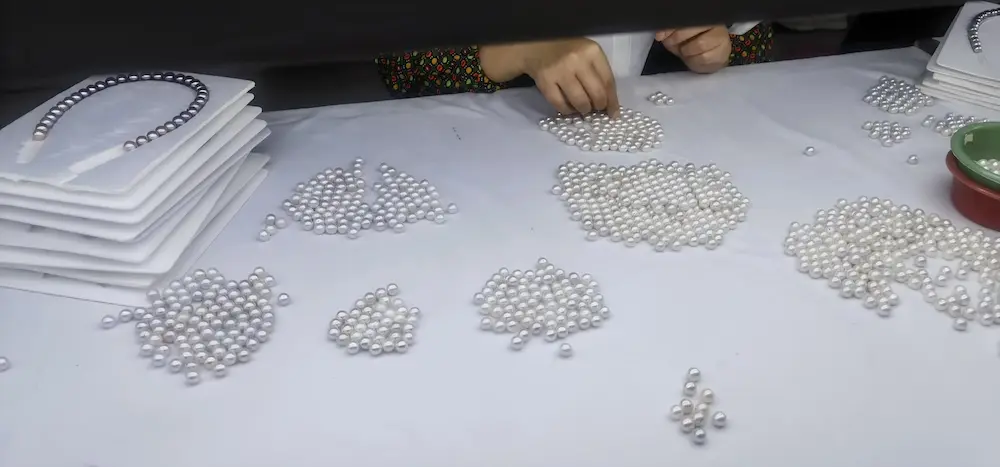
A sample should show what you are approving before you place a larger order. Wholesale pearl samples let you check appearance, actual size range, matching, and processing details in your own hands. A supplier’s grade name cannot do that by itself. The useful result is a written standard that both sides can use when the bulk order is prepared. It is crucial to thoroughly evaluate wholesale pearl samples to ensure they meet your specific requirements.
What should a wholesale pearl sample represent?
As you work with wholesale pearl samples, remember to keep an open mind about variations and imperfections, as they are part of the natural beauty of pearls.
Different samples answer different buying questions. Identify what each sample is supposed to prove before you approve it.
- Stock sample: A stock sample comes from material the supplier currently has available. It can show the color, luster, surface condition, size variation, and matching within that stock. Ask whether the bulk order will come from the same batch. If not, treat the sample as a reference rather than proof of the next batch.
- Reference sample: A reference sample defines the target color range, luster, shape, and acceptable surface characteristics. The supplier may use another batch to fill the order, so attach written limits to the sample. “Match this sample” is too vague when the next batch has natural variation.
- Pre-production sample: A pre-production sample checks a custom specification before the full run starts. Use it for finished jewelry, special drilling, matched pairs, custom clasps, private-label packaging, or a fixed assembly method. Confirm which details the supplier will repeat and which can still vary.
What information should you provide before requesting samples?
A useful pearl sample order starts with a useful request. Send the supplier enough detail to select material that matches the intended product:
- Pearl type
- Pearl Size range
- Pearl Shape
- Pearl Color
- Target Pearl grade or quality level
- Quantity for the later order
- Drill-hole size and position
- Intended jewelry use
Add reference photos if they clarify the design, but do not let a photo replace written measurements. For earrings, specify loose matched pairs or finished pieces. For strands, state the length and whether you need temporary stringing, knots, or a clasp.
How to evaluate pearl samples
Use the same lighting, tools, viewing distance, and recording sheet for every supplier. If your team is learning how to evaluate pearl quality, repeatable inspection conditions matter more than a grade chart.
GIA describes pearl quality through size, shape, color, luster, surface, nacre, and matching. Its pearl quality factors provide useful terms. Your job is to turn the factors that matter to your product into an approved purchasing specification.
When assessing the quality of wholesale pearl samples, it is important to consider how they will fit into your final product. Make notes on each wholesale pearl sample’s strengths and weaknesses. Ultimately, the right wholesale pearl samples will help ensure that your final products meet both quality and design standards.
Check the pearl luster
Look at the strength and clarity of surface reflections. Check the sample in indirect natural light and stable white indoor light. Keep the background and viewing distance consistent, then record what you see instead of writing only “good luster.”
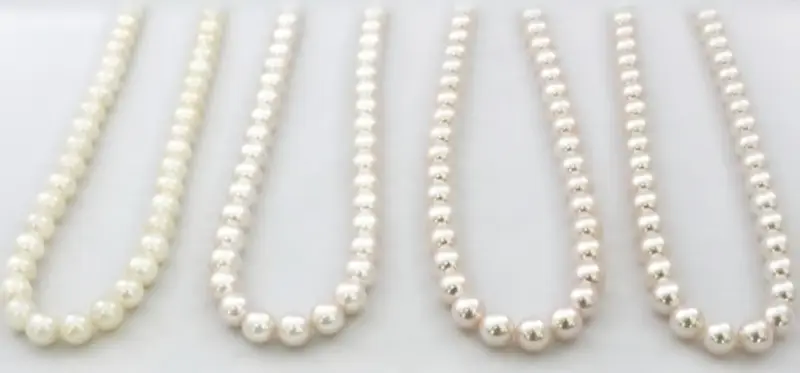
If your team needs a fuller explanation of the factors behind supplier grade labels, use the pearl grading guide. Keep the sample approval focused on the appearance you will accept.
Examine the pearl surface
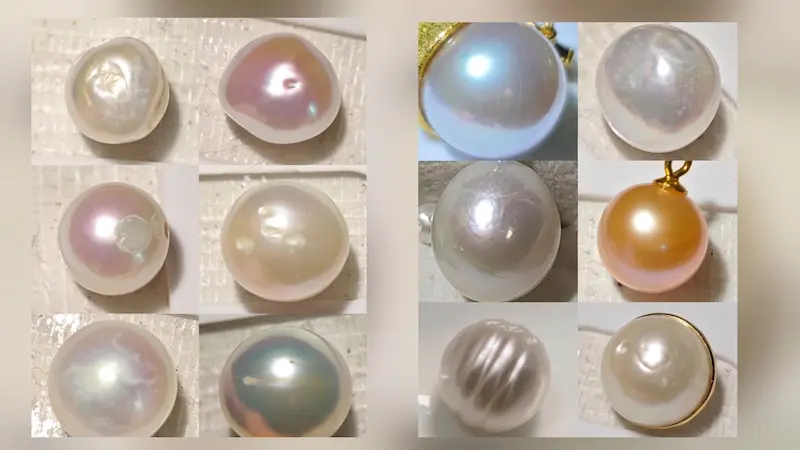
Cultured pearls can have growth marks, pinpricks, small pits, or wrinkles. Decide which marks your design can accept and where they may appear. A mark near a setting may be hidden, while a pit on the front of a stud earring can remain obvious.
Measure the actual pearl size range
Use a calibrated digital caliper and measure several pearls. Do not measure one pearl and assume it represents the sample.
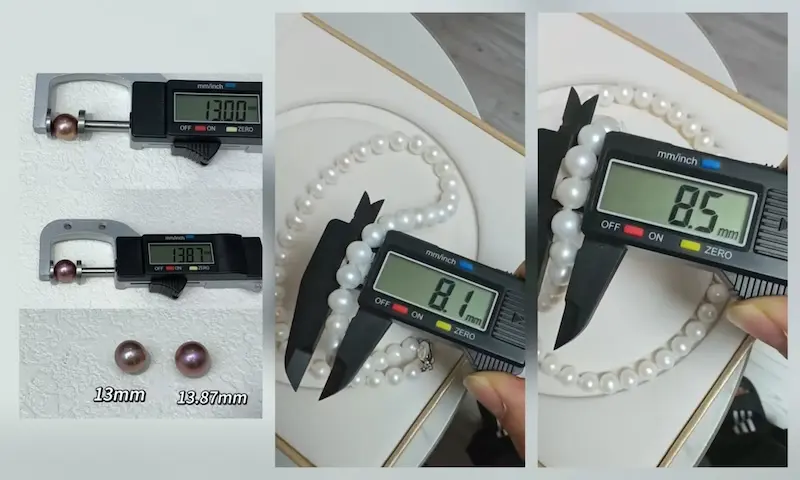
Record the minimum and maximum measurements. A stated size often covers a range, so your order needs an agreed pearl size tolerance. The acceptable range may also depend on whether the pearls will sit in fixed settings, form matched pairs, or run along a graduated strand.
Use the pearl size chart when you need broader visual context for different jewelry types.
Compare pearl color and overtone
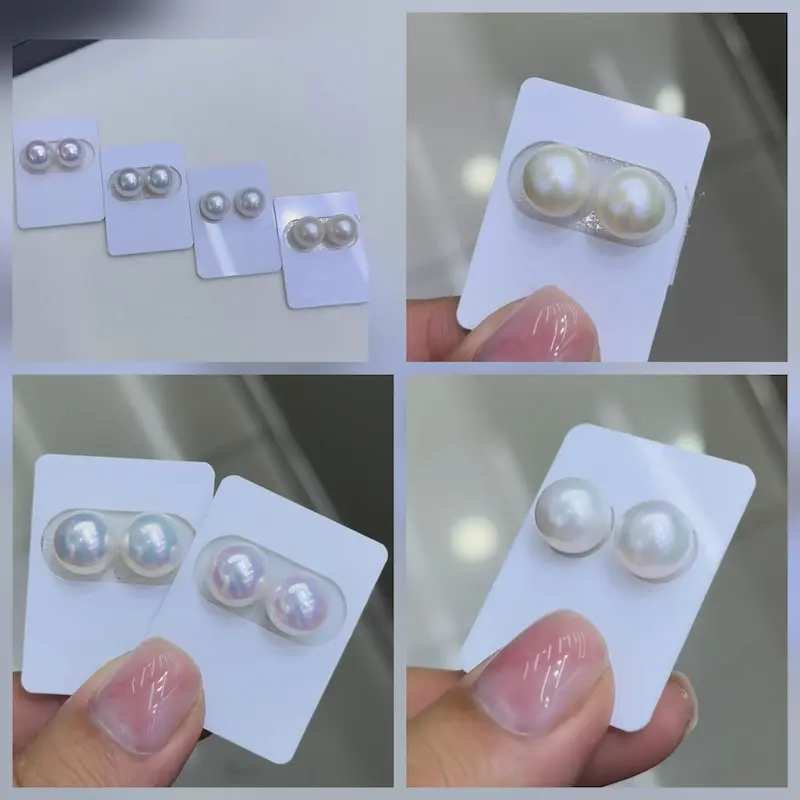
Check the bodycolor and overtone under more than one stable light source. Natural pearl material can vary slightly within a batch, so define an approved range instead of relying on one color word. If color drives the design, photograph the sample under controlled lighting.
Check the pearl shape
Confirm whether you ordered round, near-round, oval, button, drop, or baroque pearls, then define the acceptable variation. Baroque pearls should be irregular. The question is whether the forms fit the setting or layout.
Review pearl matching consistency
Matching depends on the product. Wholesale pearl earrings need close agreement within each pair. Compare size, color, luster, shape, and visible surface characteristics from the normal viewing angle.
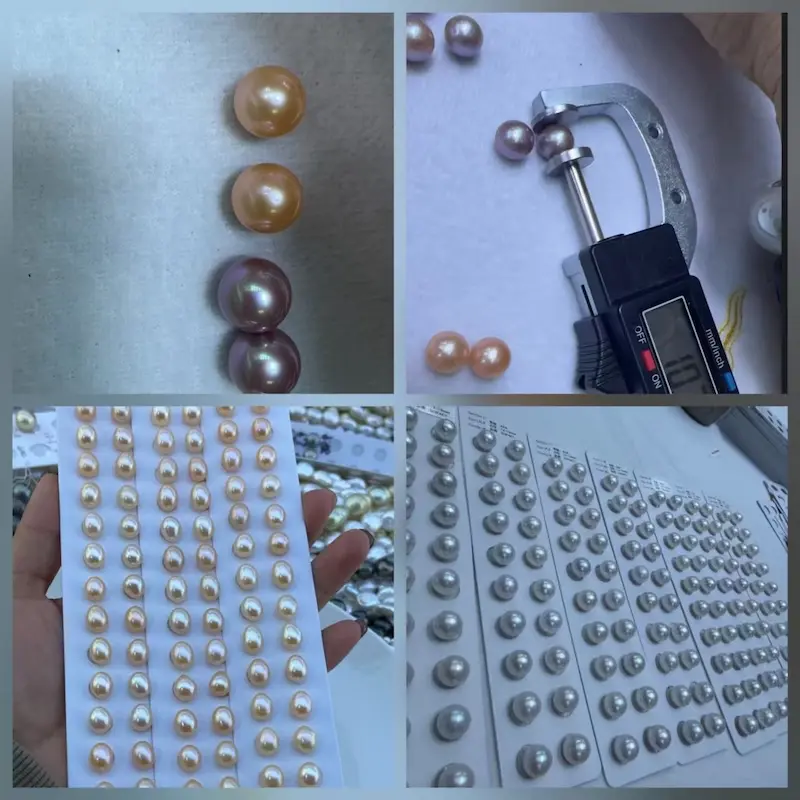
Wholesale pearl strands need a consistent visual transition across the full length. Lay the strand straight and curved. Check for abrupt changes that become obvious when the strand follows the neck or wrist.
Write down what “matched” means for your product. The standard for a deliberate multicolor baroque strand will differ from the standard for white round studs.
Incorporating feedback on wholesale pearl samples from your team can enhance the selection process and lead to better results.
Inspect drill holes of the pearls

Check hole position, diameter, direction, and edge condition. Look for chips, cracking, rough edges, or off-center holes. Half-drilled pearls need the right depth for posts or pegs, while fully drilled pearls need a diameter that fits the cord or wire. Review full-drilled and half-drilled pearls before approving a custom drilling specification.
Pearl sample evaluation checklist
| Check | What to look for | What to record |
|---|---|---|
| Luster | Brightness and reflection clarity | Lighting and visual notes |
| Surface | Blemishes and growth marks | Acceptable defect range |
| Size | Actual measurements | Minimum and maximum size |
| Color | Bodycolor and overtone | Approved color range |
| Shape | Roundness or shape consistency | Acceptable variation |
| Matching | Consistency within pairs or strands | Matching standard |
| Drill holes | Position, diameter, and edge condition | Hole size and drilling style |
How to record an approved sample
Give each approved sample a number. Record its measurements, approval date, color range, matching notes, and drilling specification. Use the same number on photos and keep the physical sample when practical.
Written records are more reliable than AAA, AAAA, or another supplier grade. Measurements, visible characteristics, and processing requirements give both sides something specific to check.
Investing time into selecting the best wholesale pearl samples will pay off in the long run, as quality and consistency are key to customer satisfaction. Communicate regularly with suppliers about your wholesale pearl samples to ensure that your expectations are understood and met.
What a sample cannot guarantee
Consider the aesthetic qualities of your wholesale pearl samples, as these will significantly impact your final design. Lastly, ensure that you maintain a checklist when analyzing wholesale pearl samples to keep track of your evaluation process.
Pearls are natural materials, so another batch will not be an exact copy. A small sample cannot show every variation in a large order.
Use the sample to set boundaries for size, color, shape, surface, and matching. Finished jewelry also needs separate approval for metal, findings, plating, assembly, and packaging. A sample reduces uncertainty, but it does not replace a written order specification or pre-shipment check.
Frequently asked questions
How many pearls should a sample include?
There is no useful fixed number for wholesale pearl samples. The sample should contain enough pearls to show the expected variation and matching standard for the product. A single loose pearl cannot demonstrate how a pair or full strand will look.
Should the bulk order come from the same batch as the sample?
Ask for the same batch when current stock and order timing allow it. If the supplier will use another batch, treat the sample as a reference and write down the acceptable size, color, shape, surface, luster, and matching range. With the right wholesale pearl samples, you can create beautiful jewelry that aligns with your vision and meets your customers’ expectations.
Can a supplier grade replace sample approval?
No. Grade labels such as AAA or AAAA can help with quoting, but suppliers may define them differently. Approve the actual appearance, measurements, matching, and processing details that matter to your product.
What should I do if the bulk order differs from the approved sample?
Document the differences before using or altering the goods. Compare the order with the written specification, measurements, and photos attached to the approved sample, then contact the supplier with specific evidence rather than saying the quality “looks different.”
Request pearl samples from Xinye Pearl
To request wholesale pearl samples, send Xinye Pearl the pearl type, size range, shape, color, intended quantity, drilling requirement, and jewelry use. State whether you need a stock sample, reference sample, or pre-production sample. You can also ask for current availability and photos or video of the available batch. Use the contact page to send the specifications and confirm the sample terms before payment.