
I’ve watched a technician insert a nucleus into a mussel more times than I can count. It takes about eight seconds per shell once you know what you’re doing. Most articles explaining how pearls are made never get close enough to see that. They’re written from a desk, not a farm. This guide provides insights into how are pearls made.
If you’ve ever wondered how oysters make pearls—or in our case, mussels—the short answer is a defense reaction that turns into a gem.
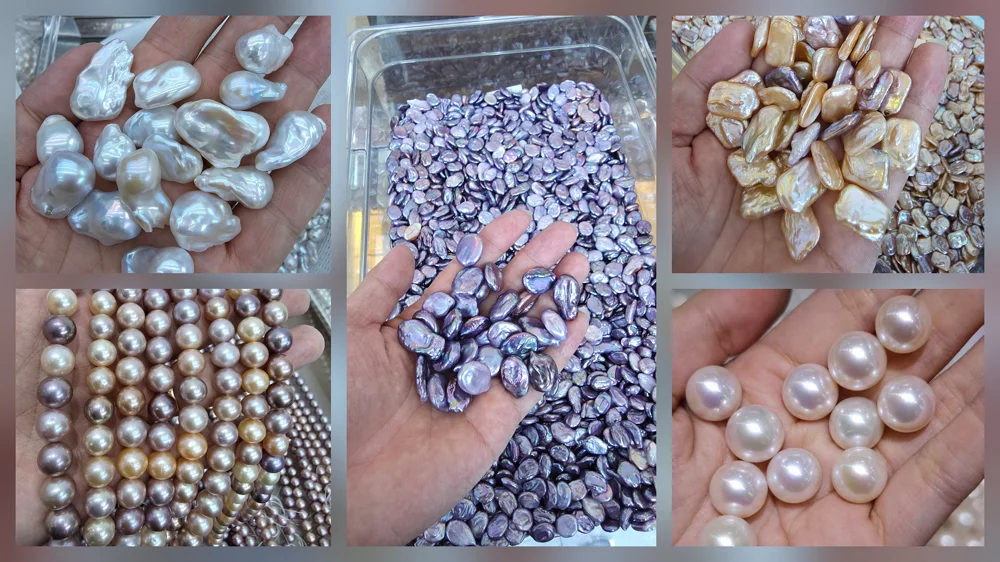
We run a pearl farm in Ma’anshan and a processing factory in Changzhou. This is what happens between a live mussel and a pearl on your desk—not the textbook version of how are pearls made.
The biology behind the gem
A pearl starts as a mussel’s defense mechanism. When something gets inside its shell—a parasite, a piece of shell, a grain of sediment—the mussel can’t remove it. So it coats it instead, demonstrating how are pearls made.
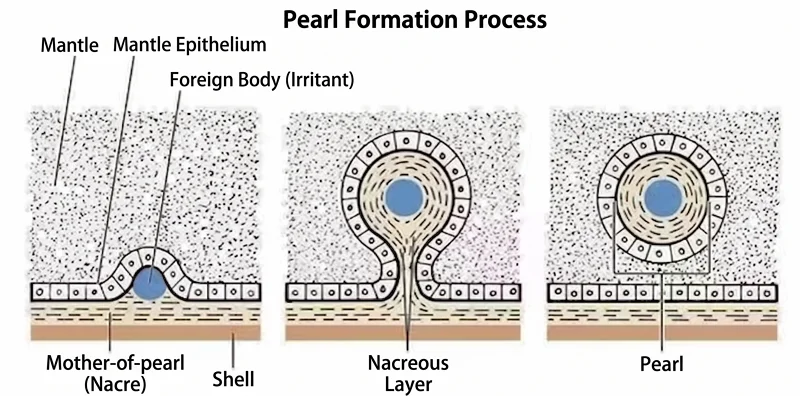
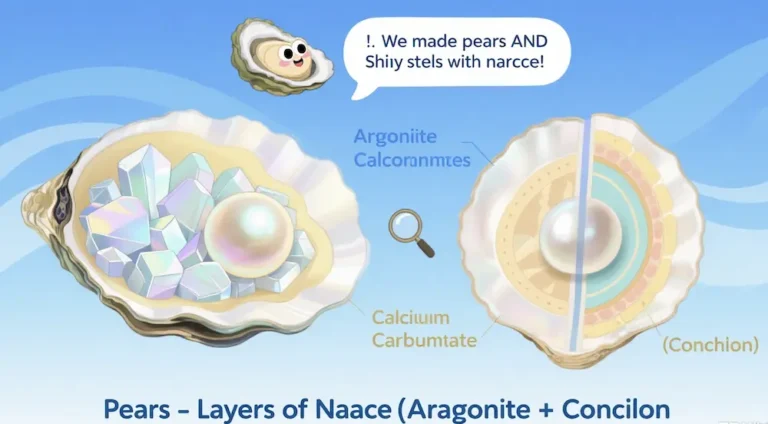
The coating is nacre: layers of aragonite crystals bound together by a protein called conchiolin. The mussel keeps depositing nacre around the irritant, layer after layer, for months or years. Enough layers, and you have a pearl.
That’s the biology in two paragraphs. The interesting part—the part that determines whether a pearl is worth $2 a strand or $200—is everything that happens after.
Natural vs. cultured pearls
Natural pearls form by accident. A wild oyster picks up debris with no human involvement, and maybe, after years, it produces something round. The odds are low enough that natural pearls barely register in today’s jewelry market—almost everything sold commercially is cultured.
Cultured pearls form the same biological way. The difference is who starts the process. A technician inserts the irritant deliberately, under controlled conditions, in a mussel we’ve raised specifically for this. Nature still does the actual work—we just decide when it starts and give the mussel the best possible environment to do it in.
People sometimes assume “cultured” means lower quality. It doesn’t. It means predictable. We can control shape, size range, and timing in a way that wild pearl formation never allows. That’s why a AAAAA cultured pearl can outperform a wild pearl on every physical metric that matters.
Inside the pearl farm: the cultivation process
This is the pearl cultivation process most buyers never see. Here’s what happens on our farm, step by step.
We select the mother mussels first. Not every mussel makes a good pearl producer. We choose based on age, shell thickness, and health—a stressed or undersized mussel produces thin, patchy nacre no matter what you insert into it.
Nucleation comes next, and this is where most articles about how pearls are made get it wrong. There are two distinct methods running in freshwater cultivation today, and they produce different pearls entirely.
Traditional nucleus-free method. This is the original technique and still the one behind most everyday freshwater pearls. A technician inserts only a small piece of mantle tissue—no bead—into the mussel’s own mantle. That tissue graft triggers nacre secretion on its own, with nothing solid at the center. Because there’s no bead to hold a shape, the pearl grows freeform. This is how classic rice, oval, and button-shaped freshwater pearls have always been made.
Caption: Tissue-only nucleation in action. Watch how our technician precisely places a tiny piece of donor mantle tissue into the host mussel. This single graft is what triggers the freeform pearl sac to grow.
Bead-nucleated method. This is newer, and it’s how our large-format pearls are made. A technician inserts a round nucleus bead together with a piece of mantle tissue. The tissue wraps around the bead and forms what we call a pearl sac, then deposits nacre around it in even layers—the bead gives the pearl its round shape, and the tissue supplies the nacre. Where we insert it determines what the pearl becomes:
- Foot muscle insertion produces larger pearls, sold in the market as Edison pearls.
- Mantle edge insertion produces smaller, rounder pearls, sold in the market as freshwater AK Pearls (styled to compete visually with Akoya).
Caption: Bead-nucleation at our Ma’anshan farm. It takes our experienced technicians about 8 seconds per shell to correctly position both the round nucleus and the vital mantle tissue graft. Precision here dictates the shape and quality of the final gem.
Both start from the same bead-and-tissue technique. The insertion site is the only variable, and it’s the reason a 12mm Edison and a small freshwater AK never come from the same procedure. Keshi pearls, by contrast, aren’t deliberately produced at all—they show up when a mussel expels or rejects a bead mid-cycle but the pearl sac keeps secreting nacre anyway, leaving a small nucleus-free pearl as an unplanned byproduct of the bead-nucleated process.
Recovery takes about two weeks. After nucleation, the mussels go into recovery tanks. A meaningful percentage reject the implant or don’t survive the procedure—this is the part that never makes it into generic pearl articles, and it’s a real cost we plan for in every batch.
Then they go back into open water. Mussels that survive recovery move to grow-out cages in our farm ponds. This is where nacre deposition happens, month after month. We monitor water quality weekly—pH, dissolved oxygen, mineral content—because a mussel under stress deposits thinner, duller nacre. Bad water in month eight can ruin eighteen months of growth.
Harvest timing depends on the target. Smaller freshwater pearls can be ready in 10–14 months. Large-format Edison pearls, which need thicker nacre to hit their size, often stay in the water 2–3 years. We pull sample mussels periodically to check nacre thickness before committing to a full harvest—pull too early and the nacre hasn’t built up enough to survive polishing.
This is the stage most competitor articles skip entirely, because it’s the one you can only describe accurately if you’ve done it.
Harvesting and processing: from mussel to grade
Harvest day isn’t glamorous. A crew opens the mussels by hand, removes the pearls, and rinses them immediately in clean water to stop residual proteins from staining the surface.
From there, pearls go through what the industry calls maeshori—pre-processing before grading and drilling. This typically includes:
- Cleaning, to remove organic residue from the mussel
- Sorting by size and shape on mechanical tumblers and by hand for baroque forms
- Optional bleaching, for buyers who want a uniform white base tone rather than natural body color
- Luster polishing, tumbling pearls with fine abrasive media to sharpen surface reflectivity without altering the nacre itself
We wrote a full breakdown of what happens after this stage in our guide to pearl grading standards, including our A–AAAAA factory grading chart and what separates the grades most buyers never see explained accurately. If you’re sourcing wholesale, that’s the article to read next—grading is where the real pricing conversation starts.
One thing worth flagging here: a pearl’s shape at this stage determines what it can become. A near-perfectly round pearl goes toward strand production. Off-round and button shapes often go to earrings and pendants, where slight asymmetry doesn’t affect wear. If you’re assembling matched strands yourself, our pearl strand calculator helps you work out how many pearls you need at a given diameter before you place an order.
How different types of pearls are made
How pearls are made stays consistent across every category—irritant, nacre, time. What changes is the mollusk and the environment.
| Type | Mollusk | Nucleation method | Typical formation time | Where |
|---|---|---|---|---|
| Freshwater (traditional) | Hyriopsis mussel | Tissue only, no bead | 10 months–3+ years | Ponds and lakes, primarily China |
| Freshwater AK | Hyriopsis mussel | Bead + tissue, mantle edge | 18–24 months | Freshwater farms, China |
| Edison | Hyriopsis mussel (large-format) | Bead + tissue, foot muscle | 2–3+ years | Freshwater farms, China |
| Akoya | Pinctada fucata oyster | Bead + tissue | 10–18 months | Coastal Japan and China |
| Tahitian | Pinctada margaritifera oyster | Bead + tissue | 18–24 months | French Polynesian lagoons |
| South Sea | Pinctada maxima oyster | Bead + tissue | 2–4 years | Northern Australia, Indonesia, Philippines |
Freshwater mussels can carry multiple nacre implants per shell—sometimes over a dozen, whether traditional or bead-nucleated—while saltwater oysters typically produce one or two pearls per cycle. That’s part of why freshwater pearls dominate the affordable end of the wholesale market: the yield per mussel is simply higher.
Edison and freshwater AK sit in an unusual spot. Both are freshwater, both use bead nucleation, and both close the visual gap with saltwater varieties that used to separate cheap freshwater pearls from premium Akoya. The difference between them comes down entirely to where the nucleus goes in—foot muscle for the large Edison pearls, mantle edge for the smaller, rounder AK pearls.
A note on sustainability
Water quality determines pearl quality, which means the farming method has to protect the water long-term or the whole operation degrades. We run our Ma’anshan facility on solar power and monitor pond conditions on a fixed schedule rather than reactively—stressed mussels are expensive mussels, and clean water is cheaper than replacing a failed harvest.
That’s not a marketing line. It’s the same logic that governs everything else on this page: the process determines the product, so we manage the process.
FAQ
How are pearls made in nature vs. on a farm?
Both use the same biological process—a mussel or oyster coats an irritant in nacre. Natural pearls form by accident with no human involvement. Farm-cultured pearls start with a technician deliberately inserting a nucleus or tissue graft, then letting the mussel do the rest under controlled conditions.
How long does it take to make a cultured pearl?
Freshwater pearls typically take 10 months to 3 years, depending on target size. Large-format Edison pearls usually need 2–3 years for nacre thickness to build up properly. Saltwater varieties like Akoya run 10–18 months; South Sea pearls can take up to 4 years.
What’s the difference between traditional freshwater pearls, Edison, and freshwater AK?
Traditional freshwater pearls use tissue-only nucleation—no bead—so they grow into freeform shapes like rice or button. Edison and freshwater AK both use bead nucleation, where a round nucleus and a piece of tissue go in together. The only difference between those two is insertion site: foot muscle produces the larger Edison pearls, mantle edge produces the smaller, rounder AK pearls.
How are Keshi pearls made?
Keshi pearls aren’t deliberately cultivated. They form when a mussel expels or rejects an inserted bead during the bead-nucleation process, but the pearl sac keeps secreting nacre anyway. The result is a small, nucleus-free pearl with an irregular shape—an unplanned byproduct rather than a targeted output.
Why do some cultured pearls fail to form properly?
Mussel stress is the main cause—poor water quality, implant rejection, or an unhealthy mother mussel before nucleation. A meaningful percentage of nucleated mussels don’t produce usable pearls, which is a built-in cost factor in wholesale pricing.
Does the type of mollusk affect how a pearl is made?
Yes. Freshwater mussels can carry multiple implants per shell, while saltwater oysters usually produce one or two pearls per cycle. Formation time, typical size, and natural color also vary significantly by species and water environment.
How can I verify a pearl was cultured responsibly?
Ask your supplier about water monitoring practices and mussel welfare during nucleation and recovery. A supplier that can describe specific practices—not general claims—is the one doing it. We’re happy to walk any buyer through our farm process on a call before they order.
Understanding how pearls are made is useful background. Understanding how they’re graded once they’re made is what determines your cost per unit—that’s covered in full in our pearl grading guide.


Thank you for the information. I am doing a devotional on the value of pearls so this has been very helpful.