If you don’t know how to clean pearls correctly, you are losing money on inventory you already paid for.
I’ve watched jewelers unbox strands from us at the Changzhou factory, display them under spotlights for six weeks, and then call me asking why they’ve turned yellow. The pearls weren’t defective. The handling was. This guide exists so that doesn’t happen to your stock.
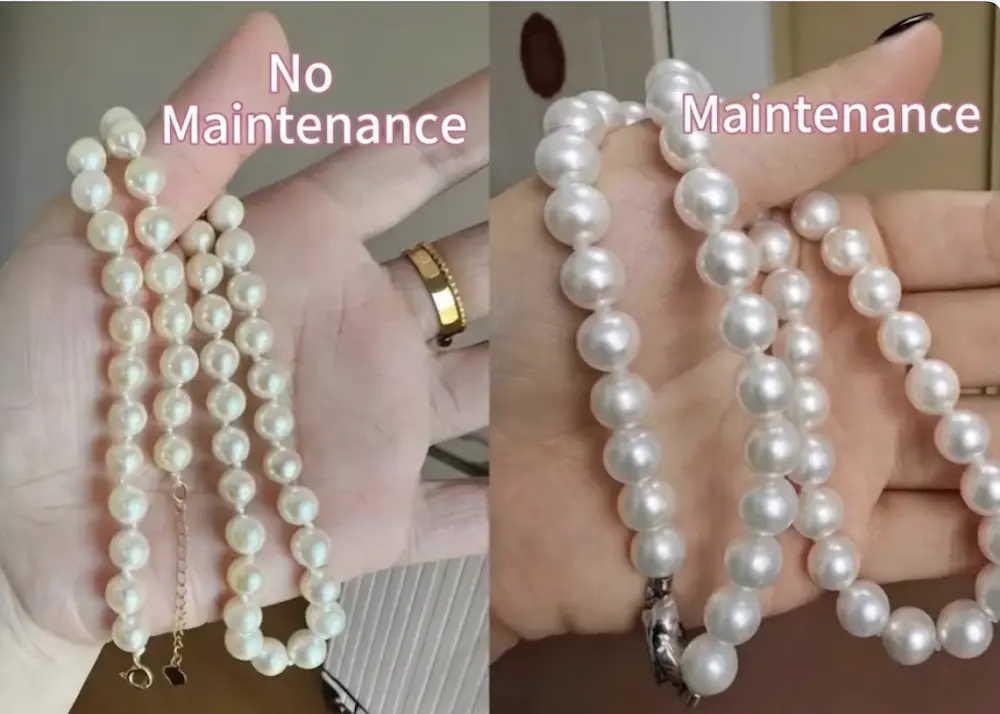
Why nacre is your biggest asset risk
Pearl nacre is organic. It’s a protein-mineral composite — conchiolin and calcium carbonate — secreted in layers by the mollusk. That’s not a biology lesson. That’s a risk profile.
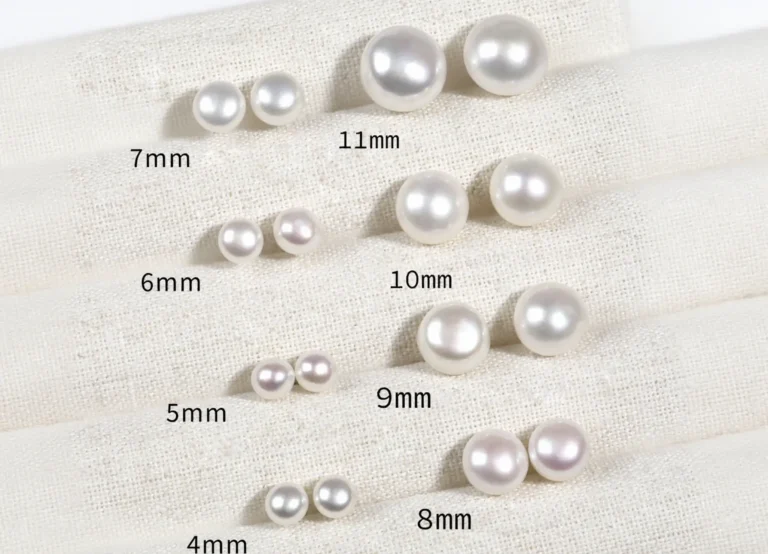
Because nacre is organic, it reacts to acids, desiccation, UV exposure, and chemical solvents in ways that a cubic zirconia or a stainless steel bead never will. For a consumer buying one strand, that’s an inconvenience. For a buyer holding 500 strands of 7-8mm freshwater pearls in a warehouse, that’s an asset depreciation problem.
The goal of how to clean pearls at a professional level is not cosmetic. It’s inventory protection.
The 7-step professional cleaning protocol
This is the protocol we run before anything ships from Changzhou. Adapt it to your volume.
Step 1: Macro-inspection
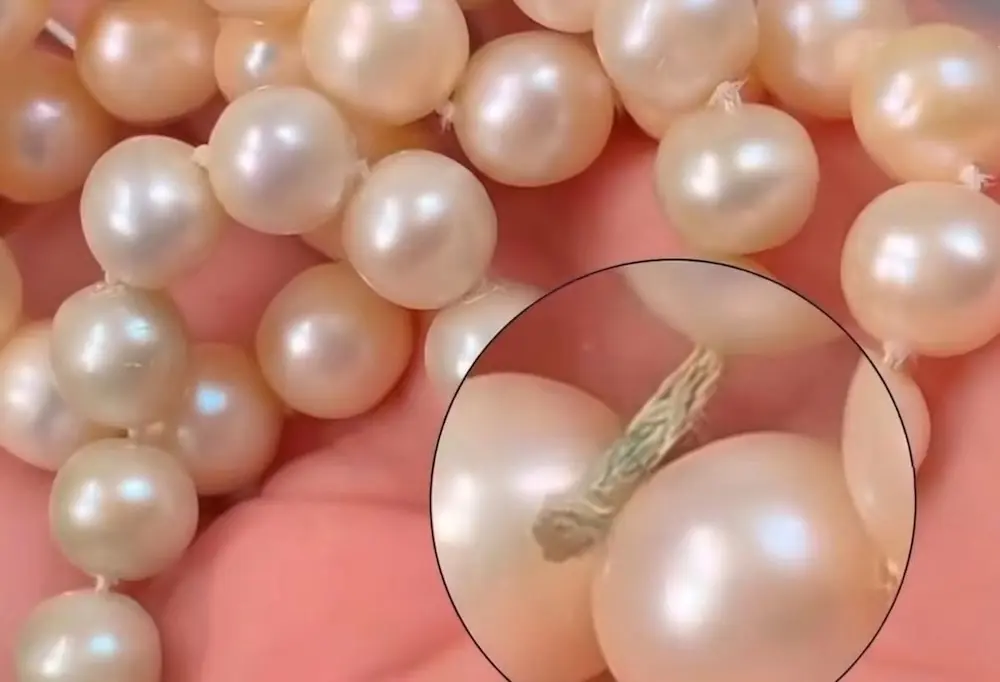
Before touching anything, inspect the strand. A standard 5.5-6mm strand holds around 70 pearls on a single silk thread. Run it between your fingers and feel for loose knots, flat spots, or pearls with a chalky surface patch. Chalky patches mean the nacre is already compromised. Flag those strands separately — cleaning them the same way as healthy stock is a waste of time.
Step 2: Cloud-touch wipe
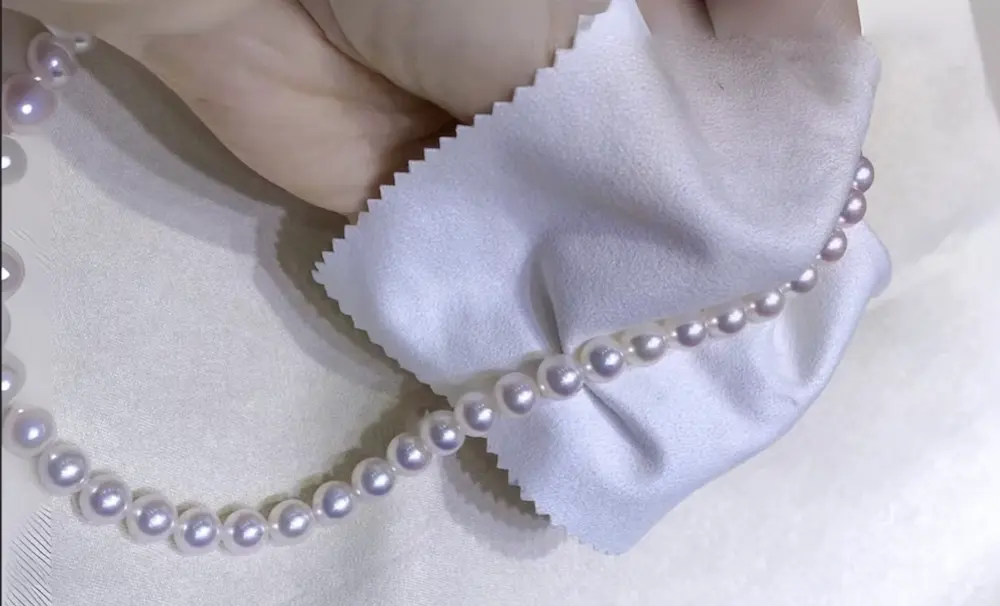
Use a clean, dry microfiber cloth. Wipe each strand with zero pressure — you’re removing surface dust, not scrubbing. Don’t use a chamois. Don’t use a paper towel. The fiber weave on paper products is abrasive enough to create micro-scratches on softer nacre grades.
Step 3: pH-neutral bath prep
Mix lukewarm water (25-28°C) with a single drop of pH-neutral soap — baby shampoo or a dedicated pearl-safe formula. The water should feel slightly slick, not sudsy. If you can see lather, you used too much.
Step 4: No-soak technique
Do not submerge the strand. This is the mistake I see most often from buyers who’ve only handled hard gemstones before. Soaking weakens silk thread and causes the knots to swell. Dip the microfiber cloth into your pH-neutral solution and wipe pearl by pearl. Takes longer. Protects your investment.
Step 5: Targeted rinse
Dampen a second clean cloth with plain water. Wipe each pearl to remove any soap residue. Again — damp, not dripping. You’re removing the cleaning solution, not washing the strand under a tap.
Step 6: Controlled air-dry
Lay the strand flat on a clean cotton towel. Do not hang it. Hanging a wet strand stretches the silk and compromises the knot tension. Let it air-dry for a minimum of two hours before repackaging or restringing.
Step 7: Luster verification
Hold the dry strand under a single-point light source — a desk lamp is fine. Rotate it. A well-maintained pearl shows a sharp, clean reflection called the “orient.” If the reflection looks diffused or waxy, you have nacre-level residue from incorrect cleaning agents, or the pearls need restringing because cotton fiber from the thread has migrated to the surface.
The Gemological Institute of America (GIA) says that you should never clean pearls with ultrasonic or steam cleaners because these methods can permanently damage the delicate nacre structure.
Freshwater Pearl Cleaning Comparison Table
| Cleaning Method | Safe for Pearls? | Notes |
|---|---|---|
| Soft damp cloth | ✓ Yes | Best daily method |
| Mild soap + water | ✓ Yes | For deeper cleaning only |
| Ultrasonic cleaner | ✗ No | Can crack nacre |
| Steam cleaner | ✗ No | Heat damages pearls |
| Vinegar | ✗ No | Dissolves nacre |
| Commercial cleaners | ✗ Usually No | Unless pearl-specific |
Bulk storage: the two rules most buyers ignore
The humidity rule
Pearls need ambient moisture to stay stable. In dry warehouse conditions — especially in air-conditioned facilities in Singapore, Dubai, or Northern China in winter — nacre desiccates. It micro-cracks. Those cracks are permanent.
The fix is simple. Place a small open container of water inside your storage box, or use a humidity packet rated to 45-55% RH. We do this in our own inventory rooms. It costs almost nothing and it prevents cracks that no amount of knowing how to clean pearls will fix.
Say no to plastic bags
Sealed plastic bags trap off-gassing from the nacre itself. Over months, this creates an acidic microenvironment inside the bag. That’s the primary cause of yellowing in stored pearl inventory. The pearls aren’t old — they were just suffocating in their own waste.
Use soft pouches (cloth or non-woven fabric) or open-slotted trays. Never sealed zip-lock bags, never airtight acrylic boxes.
Troubleshooting: diagnosing yellowed pearls
| Cause | Visual sign | Reversible? |
|---|---|---|
| Nacre dehydration | Uniform dull yellow across strand | Partially — rehydrate slowly with 55% RH storage for 4-6 weeks |
| Cosmetic/chemical contact | Yellow concentrated near drill hole | No |
| UV/heat exposure | Yellowing on one face of pearl | No |
| Acidic storage environment | Uniform yellow with slight texture change | No |
I’ll be direct: most yellowing from long-term improper storage is permanent. Knowing how to clean pearls at that point only removes surface grime — it won’t reverse nacre discoloration. The math on prevention is better. That’s it.
What never to use: the industry voids
Ultrasonic cleaners
I know they’re everywhere in jewelry workshops. Use them for diamonds, use them for metal settings, use them for hard stones. Do not use an ultrasonic cleaner for pearls.
The ultrasonic frequency creates cavitation — microscopic implosions in the liquid. Those implosions are designed to dislodge debris from hard surfaces. Nacre is a layered structure deposited over years. Cavitation disrupts those layers at a molecular level. The pearl may look fine immediately afterward. Six months later the surface begins to flake.
Steam cleaning
Same problem, different mechanism. High-pressure steam pushes moisture and heat into the nacre structure faster than it can equilibrate. This causes micro-expansion, then micro-cracking when it cools. One steam treatment probably won’t destroy a pearl. Repeated treatments will.
Retail display maintenance
If you sell through retail counters, two things will degrade your display stock faster than anything else.
The 2-hour spotlight rule. Halogen and some LED spotlights generate localized UV and heat. Don’t leave pearl displays directly under a spotlight for more than two hours at a stretch. Rotate stock or use UV-filtering display covers.
Post-try-on wipe. Skin oils are slightly acidic. Every time a customer tries on a strand, body oils transfer to the surface. Wipe the strand with a dry microfiber cloth before returning it to the display. This takes four seconds. Skipping it across dozens of daily try-ons adds up to dull, oil-filmed pearls within a few months.
Quick reference: how to clean pearls by pearl type
| Pearl type | Safe cleaning method | Avoid |
|---|---|---|
| Standard freshwater | pH-neutral damp wipe | Ultrasonic, steam, soaking |
| Edison/nucleated | Same as above — nacre is thicker but the rule holds | Abrasive cloths |
| Keshi | Damp wipe, extra gentle — no nucleus, all nacre | Any chemical cleaner |
| Dyed freshwater | Dry wipe only — dye is surface-level | Any liquid contact |
| Coated/treated | Check with supplier before cleaning | Anything solvent-based |
FAQ
How often should pearl strands be restrung?
For display or demo stock that gets regular handling: once a year minimum. For warehouse inventory that’s stored correctly and rarely touched: inspect the thread before each sale, and restring if you see any fraying, stretching, or loose knots. Silk is the standard; nylon is acceptable for budget lines.
Do Edison pearls need different care?
Edison pearls have a thicker nacre layer than standard freshwater pearls, which makes them more forgiving. The cleaning protocol is identical. The one extra caution: Edison pearls are often larger (10-14mm), which means the drill hole is wider and more exposed to moisture penetration during cleaning. Keep the no-soak rule strict.
Can I use olive oil or mineral oil to restore luster?
No. Oil creates a temporary surface sheen that looks good for about three days, then attracts dust, clogs the nacre surface, and accelerates yellowing. This is folk advice that causes real damage.
Work with a factory that already does this
We apply every protocol in this guide before product ships from Changzhou. Our wholesale pearls arrive sorted, cleaned, and packaged in breathable pouches — not plastic bags.
If you’re sourcing direct from a Pearl Manufacturer and still dealing with yellowing or luster loss after 90 days, the problem is upstream. Either the nacre quality was marginal from the start, or the packaging between factory and your warehouse is wrong.
We’re happy to walk through your current storage setup if you’re a wholesale buyer. Contact us!!!
The bottom line: knowing how to clean pearls is not optional for anyone holding inventory at scale — it’s the difference between selling premium stock and discounting damaged goods.