Freshwater pearl jewelry styling is now a direct revenue driver — not a mood board exercise, not an afterthought for your Instagram grid.
In 2026, the brands outperforming their category aren’t spending more on ads. They’ve built a tighter sourcing brief and a sharper merchandising logic. At Xinye Pearl, we run a farm in Ma’anshan and a factory in Changzhou. We ship to DTC startups and department store buyers in over 30 countries. What we see from the supply side is consistent: buyers who understand freshwater pearl jewelry styling logic place larger orders and come back with tighter, better-informed briefs.
This guide covers the core pearl jewelry trends 2026 that matter for buying teams — and the technical specs you need to act on each one.
Styling as a sales driver
The old product page model — one strand on a velvet tray — is dead.
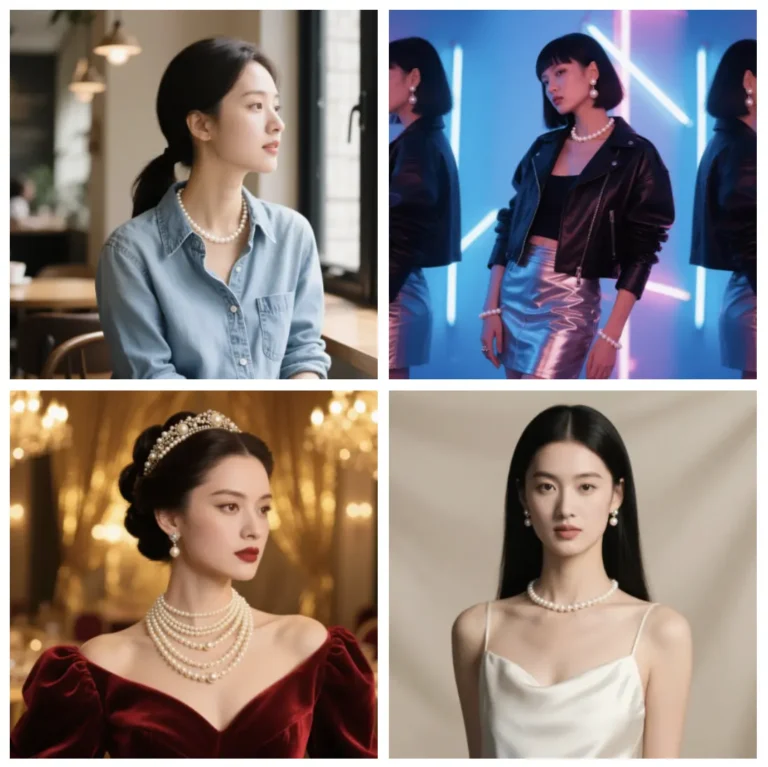
Today’s customer buys a look. If your product listing doesn’t answer “how do I wear this?”, your bounce rate will tell you. Freshwater pearl jewelry styling on your website or in-store display has to do one job: close the gap between “I like this” and “I know where this goes in my wardrobe.”
We see the revenue impact in real buying behavior. One of our retail partners redesigned their product pages around layering combinations instead of solo shots. Average order value increased 38% in a single quarter. Same products. Different presentation.
As a Pearl Manufacturer, we adjust our sourcing specifically around what brand partners tell us is moving. Right now, mixed-size sets and irregular shapes are the volume drivers. That is a direct consequence of smarter pearl jewelry styling at the retail level. The factory responds to what the floor sells.
Trend #1: Layering to increase average order value
If your catalog has only single-piece SKUs, you are structurally leaving money behind.
The layering technique that is working in 2026: pair a 3mm–4mm seed pearl strand with a 12mm–13mm Edison centerpiece. The size contrast creates visual weight. The surface contrast — matte seed pearls next to a mirror-luster Edison — creates depth. The look photographs well and reads as premium. The customer gets a clear reason to buy two pieces in one transaction. Layering freshwater pearl necklaces for retail is the single highest-AOV tactic we see brand buyers request right now — and the one most buyers haven’t built a sourcing brief around yet.
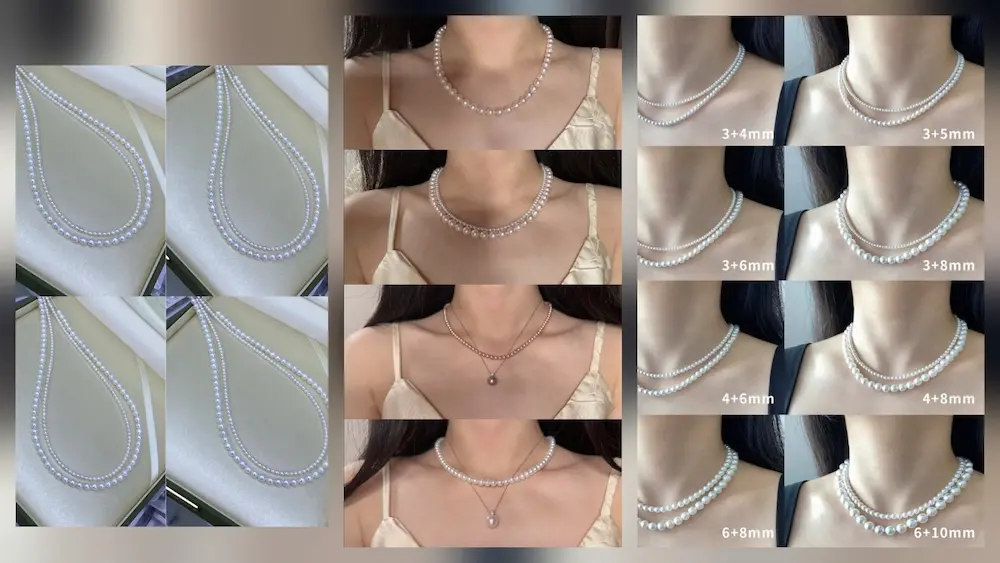
A $40 seed strand paired with a $75 Edison becomes a $130 set sale. Same production cost. Higher ticket.
Here is how we structure layering sets for brand buyers sourcing wholesale pearls:
| Layer position | Pearl type | Size range | Surface finish | Price tier |
|---|---|---|---|---|
| Base (shortest) | Seed/rice freshwater | 3mm–4mm | Satin or matte | Entry |
| Mid layer | Potato/round freshwater | 7mm–8mm | High luster | Mid |
| Statement piece | Edison freshwater | 11mm–13mm | Mirror/metallic | Premium |
One sourcing mistake I see often: buyers order each size separately from different lots and expect them to look cohesive. They don’t. For layering sets, ask your supplier to match overtones across sizes. A green-overtone seed pearl next to a pink-rose Edison looks like a sourcing error, not a design choice. Matched overtones — even across very different sizes — tie the look together and reduce your return rate.
We pre-bundle layering sets in Changzhou and tag them as ready-to-display units. That removes one step for your merchandising team.
Trend #2: Gender-neutral pearls
Men are buying pearls. This is not a niche anymore.
The unisex pearl styling trends 2026 category is underdeveloped at most jewelry brands. The male pearl customer exists, spends real money, and is largely ignored by product pages photographing everything on feminine wrists.
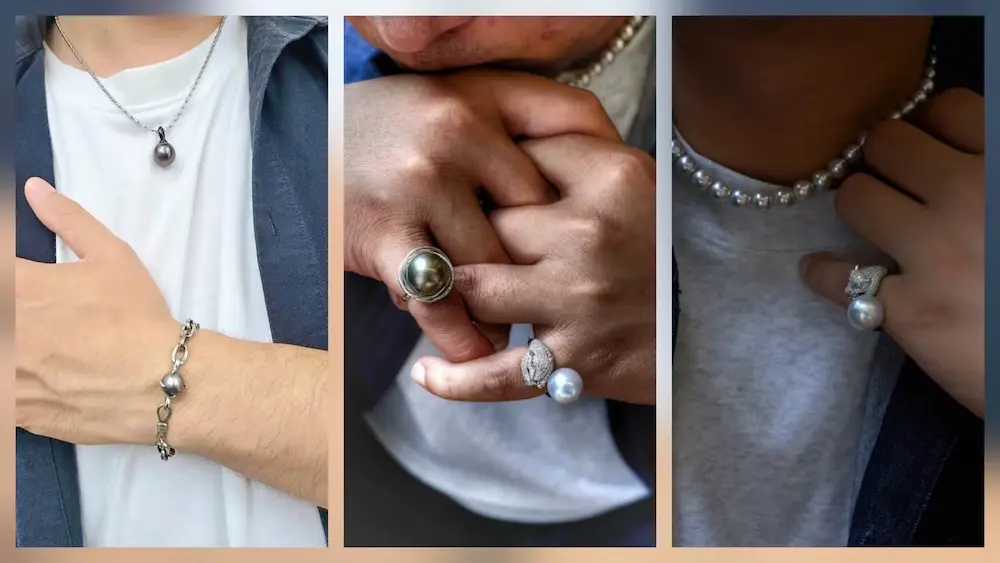
Freshwater pearl jewelry styling for a male or gender-neutral audience requires a different product brief. Here is what actually moves for that customer segment, including when you are merchandising pearls for Gen Z:
- Darker overtones. Peacock green and steel gray freshwater pearls consistently outperform cream and blush with male buyers. This is purchase data, not an aesthetic opinion.
- Heavier construction. A 10mm–12mm baroque on a thick cord sells to male buyers. A delicate wire-wrapped setting does not.
- Single-piece styling. Male buyers typically shop for one statement piece, not a layered set. Design your unisex SKUs around that buying behavior.
- Non-precious metal pairings. Oxidized brass or blackened silver set against a dark freshwater pearl is the combination Gen Z buys. A standard gold-filled setting undercuts the aesthetic.
| Customer segment | Preferred overtone | Size preference | Construction style |
|---|---|---|---|
| Female | Cream, rose, blush | 6mm–10mm | Wire wrap, delicate chain |
| Male | Peacock green, steel gray | 10mm–14mm | Cord, oxidized metal chain |
| Non-binary/Gen Z | Mixed, dark, iridescent | 7mm–13mm | Mixed material, asymmetric |
The merchandising shift is simple: photograph the product on a male or androgynous model in a non-jewelry context — streetwear or workwear. Add “unisex” to the product title. That alone changes which search audience your listing reaches organically.
Supply note: darker peacock freshwater pearls in 10mm+ sizes are tighter than most buyers expect. If you want to build a gender-neutral collection for fall 2026, source at least six months ahead. I have had brand buyers come to us in August asking for peacock Edison in quantity. We could not fill the order in time.
Trend #3: Baroque pearls and the organic luxury argument
The round, perfectly matched pearl strand is a technical achievement. It is also invisible on a crowded product page.
A baroque pearl is impossible to replicate. No two are the same shape. That is the merchandising argument, not a consolation for irregular inventory. Modern buyers at the $150–$400 retail price point are actively searching for products that feel individual. The baroque pearl is one of the few jewelry items that delivers genuine uniqueness at production scale.
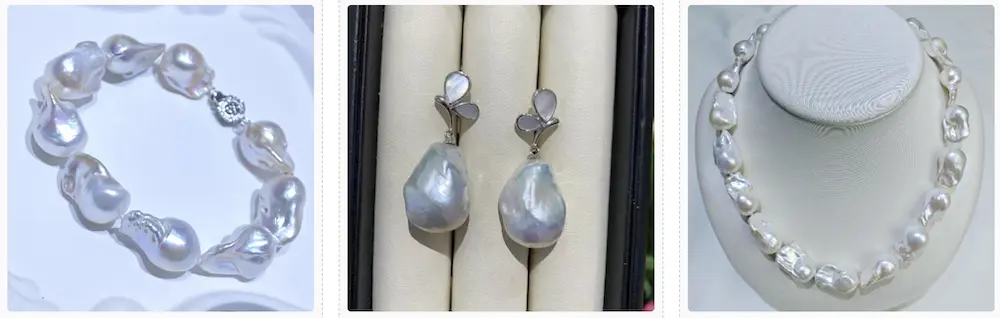
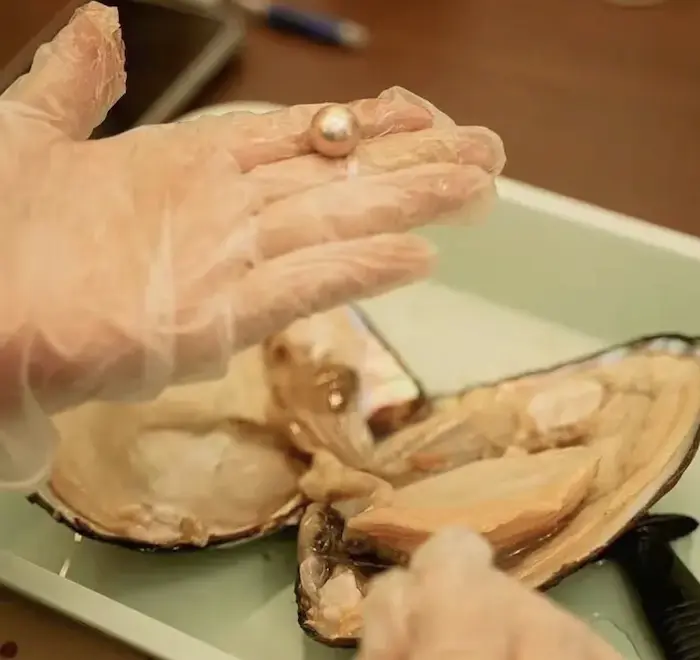
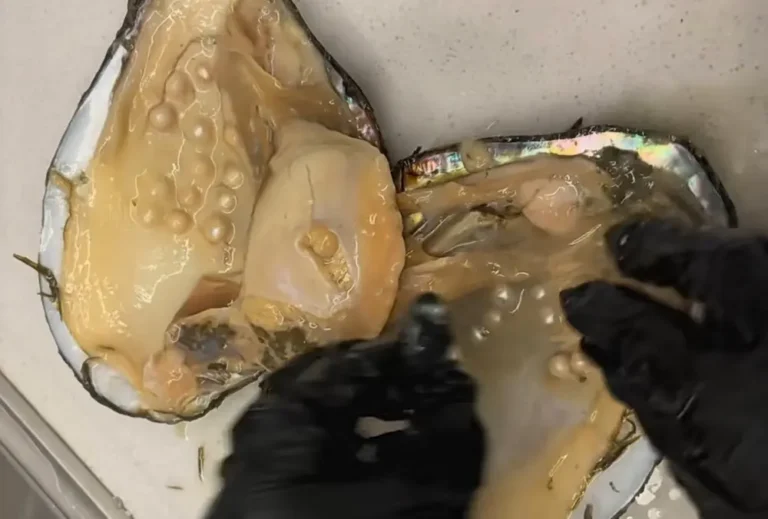
At our Ma’anshan farm, every baroque we harvest is different. We cannot standardize them the way we standardize round or near-round strands. That variability is the selling point. When your customer reads “this piece is a natural form — no two are identical,” it is accurate copy, not marketing language.
How to merchandise Edison pearls for luxury collections is one of the questions we get most from brand buyers. The answer: sell the sourcing story before the product spec. Your page should explain that Edison pearls are nucleated freshwater pearls grown specifically for size and high luster — not dye-enhanced, not simulated. That transparency justifies the price premium.
Here is a comparison table buying teams use to brief their retail staff on freshwater pearl jewelry styling by category:
| Pearl type | Shape control | Luster range | Size range | Retail positioning |
|---|---|---|---|---|
| Round freshwater | High | AAAA–AA | 6mm–10mm | Classic, everyday |
| Baroque freshwater | None (natural) | AAAA–A | 9mm–18mm | Statement, artisan |
| Edison freshwater | Medium | AAAAA–AAAA | 11mm–16mm | Luxury, premium gift |
| Keshi freshwater | None | AAAA–AAA | 5mm–12mm | Designer, fashion-forward |
One hard rule: do not source baroque lots without seeing photos of the actual inventory. We send photos and video of every baroque lot before shipment. Any Pearl supplier who skips that step is hiding a grading problem.
Technical tips: luster matching for multi-piece sets
This is where most brands make a sourcing mistake that surfaces as a merchandising problem.
Luster grading is not standardized across factories. What one supplier grades AAAAA, another grades AAA. When you build a set — necklace and matching earring pair — sourcing each piece from a different lot, you can end up with components that look like two separate product lines under store lighting. This is one of the most common sourcing errors we see in freshwater pearl jewelry styling for capsule collections.
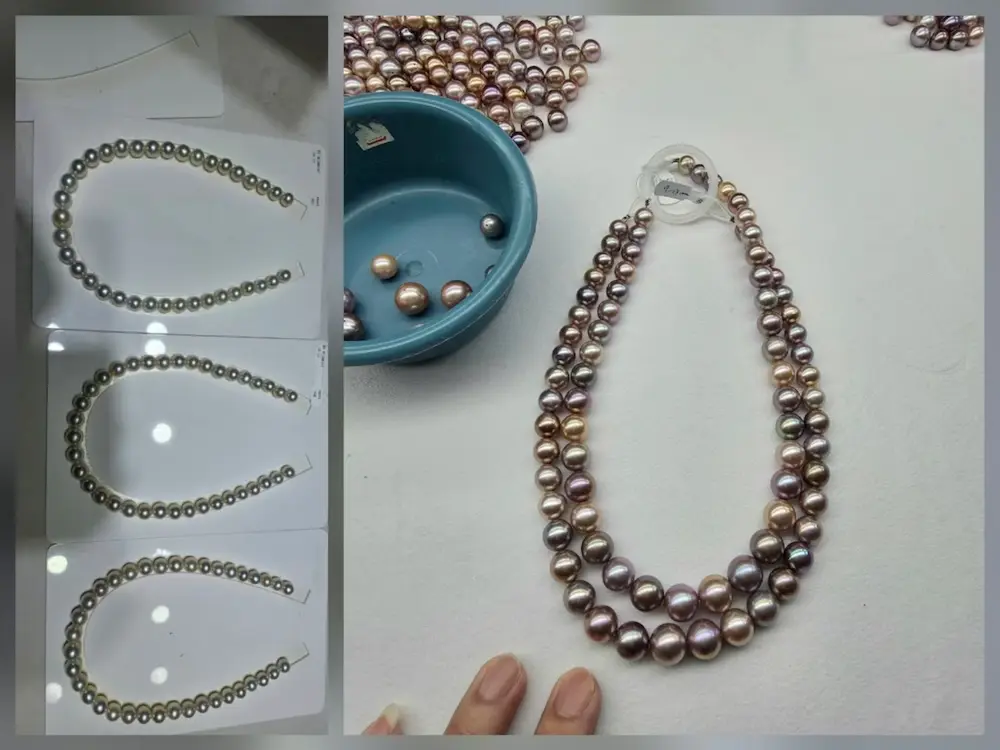
The fix: source set components from the same production batch, graded under the same lighting conditions. In our factory, we use 5000K daylight-balanced lighting for all luster grading. That matches the standard used by the Gemological Institute of America, which publishes free trade guidance on pearl luster evaluation. It is worth bookmarking if you are building a staff training reference.
Here is the grading framework we use when building matched sets:
| Luster grade | Surface reflection quality | Recommended use |
|---|---|---|
| AAAAA | Mirror-sharp, zero diffusion, sharp halo | Top-tier fine jewelry, flagship gift SKUs |
| AAAA | Sharp reflection, minimal blur at edges | Premium retail, branded collections |
| AAA | Clear reflection, slight surface haze | Mid-to-upper retail, everyday luxury |
| AA | Soft reflection, visible diffusion | Mid-market retail, everyday wear |
| A | Chalky or flat surface | Price-point retail, craft supply |
For a set to look cohesive at retail, every component must be within one luster grade of each other. A necklace graded AAAA next to earrings graded AA looks like a clearance mismatch. The earrings will look dead. The customer notices even if they cannot name the problem.
For brands building minimalist vs. maximalist pearl styling collections — say, a capsule line with a clean 7mm round strand alongside a fully stacked baroque collar — we recommend ordering all components as matched lots. The logistics step takes an extra week. Your return rate will drop. The tradeoff is obvious.
The International Colored Gemstone Association tracks pearl market pricing quarterly. Their data is useful when you are forecasting inventory cost for Q3 and Q4 buying cycles.
Frequently asked questions
Are freshwater pearls worth anything?
Yes. Value depends on quality grade, size, and surface condition.
Are freshwater pearls considered real pearls?
Yes. They are real cultured pearls.
Why are freshwater pearls so cheap?
Volume and farming efficiency. China produces the majority of the world’s freshwater pearl supply.
Can you find freshwater pearls in the United States?
Yes. Freshwater mussels in US rivers and lakes — particularly in the Mississippi River basin — do produce pearls naturally. American freshwater pearls have a long history, and the US was actually a major pearl source before overharvesting depleted mussel populations in the early 20th century. Today, wild US freshwater pearls are rare and carry collector value. They are not a commercial supply source. If you are sourcing wholesale pearls for retail volume, China-farmed freshwater pearls are the practical answer.
Freshwater pearl jewelry styling is a sourcing decision before it is a marketing decision. The brands winning in 2026 are not outspending on ads. They are buying smarter — matched lots, layering-ready size ranges, darker colorways for gender-neutral SKUs, and baroque shapes that sell their own story.
If you want to build a sourcing program around a specific styling brief for your brand, contact our team at pearlswholesaler.com. We work directly with brand buyers. No intermediaries. No surprise substitutions on baroque lots.
Freshwater pearl jewelry styling in 2026 rewards brands that treat sourcing and merchandising as the same decision. Start there.