
You’re about to drop serious money on a bulk pearl order. The photos look pristine, the price seems right, but then reality hits—those “AAA grade” pearls arrive with more spots than a dalmatian. Sound familiar?
Here’s the truth: acceptable blemishes in pearl grading aren’t about finding flawless pearls—they don’t exist. They’re about knowing which flaws you can live with and which ones will tank your profit margins. After 15 years sourcing pearls from Chinese farms to global retailers, I can tell you that understanding pearl surface flaws separates successful wholesale pearls buyers from those who constantly deal with returns.
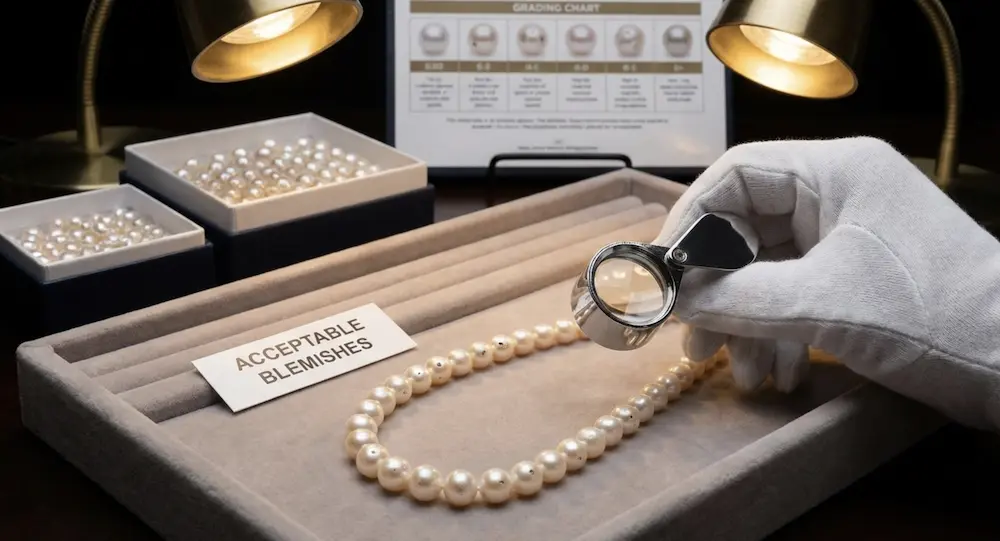
Let’s cut through the confusion and talk about what really matters when you’re inspecting pearls at scale.
Why Pearl Blemishes Actually Matter in Wholesale
Every pearl has imperfections. Even museum-quality specimens show tiny marks under magnification. The question isn’t whether blemishes exist—it’s whether they’re acceptable for your market segment, which is the core concept of acceptable blemishes in pearl grading.
When you’re buying thousands of pearls, each blemish type impacts your bottom line differently. Some flaws are purely cosmetic. Others? They’re ticking time bombs that’ll crack or peel within months.
The wholesale pearl industry operates on razor-thin margins. A 5% difference in blemish tolerance can mean the difference between a profitable container and writing off inventory. That’s why serious buyers need standardized systems for evaluating Pearl Surface Flaws.
I watched a retailer lose $40,000 on a South Sea order because they didn’t understand acceptable blemishes in pearl grading. The supplier called them “A grade” (90% clean surface). The buyer expected “AAA” perfection (95%+ clean). Both were technically correct—they were just using different grading scales.
This happens constantly because unlike diamonds, pearls don’t have a universal standard. What one Pearl Manufacturer calls AAA, another might label AA+ or AA.
Decoding the Pearl Blemish Tolerance Chart
There are different levels of blemishes that different varieties of pearls can handle. This is what acceptable looks like across different grade systems:
Freshwater Pearls (AAAAA-A Scale):
- AAAAA: 99-100% clean surface, virtually flawless under 10x magnification
- AAAA: 95-99% clean surface, maybe 1-2 tiny pinpricks near the drill hole
- AAA: 90-95% clean, allows 2-3 minor spots, no deep pits
- AA: 80-90% clean, visible marks but maintains good luster
- A: 70-80% clean, multiple visible blemishes, acceptable for budget market
Akoya Pearls (Traditional Japanese System):
- AAA: 95%+ clean surface, reflections should be sharp
- AA+: 85-90% clean, some minor abrasions acceptable
- AA: 70-80% clean, blurry reflections tolerated
South Sea & Tahitian (A-D System):
- A Grade: Less than 10% surface affected, very high luster
- B Grade: 10-30% surface marks, medium-high luster
- C Grade: 30-60% affected area, medium luster
These percentages might not make sense until you have to call someone and look at an invoice. It’s not about being flawless; it’s about being consistent with the Pearl Blemish Tolerance Chart, which defines the acceptable blemishes in pearl grading.
Types of Blemishes: The Good, The Bad, The Deal-Breaker
Not all pearl surface flaws are created equal. Some add character. Others spell disaster.
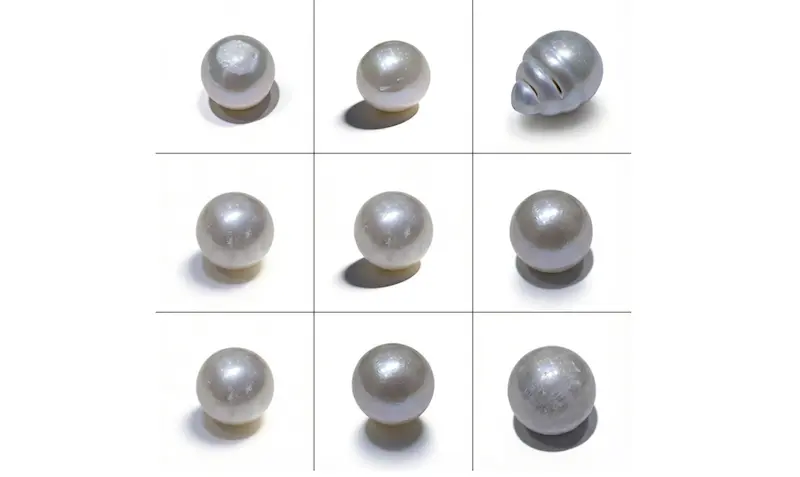
Acceptable Blemishes:
- Pin Pricks & Pits – Little holes that seem like someone stabbed the pearl with a needle. You should be fine if they are less than 0.5mm and you can see fewer than 3–4 of them. These are normal nacre flaws that happen.
- Mottling/Bulleting – That rippled texture you see on some pearls? It’s not a flaw—it actually indicates thick nacre. Rookie mistake: rejecting perfectly good pearls because of natural growth patterns.
- Score Marks – Hairline scratches that are colorless and barely visible. Usually you need a loupe to spot them. They don’t affect durability or resale value.
- Wrinkles – Those little ridges on the surface. Common in baroque shapes, don’t impact longevity. Actually quite popular in contemporary designs.
Problem Blemishes:
- Cracks – Red flag. Visible cracks mean thin nacre that’ll keep spreading. I don’t care if the supplier offers a 30% discount—walk away. These will fail on your customers.
- Chips & Gaps – Missing nacre chunks. Unacceptable in any grade above commercial. These pearls won’t last, period.
- Heavy Chalky Spots – Dull, powdery patches indicate poor nacre quality. Acceptable in lower grades, but they’ll never develop that mirror-like luster buyers want.
- Deep Discoloration – Dark spots that penetrate the surface. Different from natural color variation—these suggest internal issues.
According to the Gemological Institute of America, the surface quality classification breaks down into four categories: Clean, Lightly Spotted, Moderately Spotted, and Heavily Spotted. But here’s what they don’t tell you: “Lightly Spotted” covers a huge range. Two pearls can both be “lightly spotted” yet look completely different.
How to Inspect Pearls for Blemishes: The Wholesale Buyer’s Protocol
You’re not buying one pearl—you’re buying hundreds or thousands. You can’t examine each one individually, but you absolutely need a sampling protocol that aligns with the standards for acceptable blemishes in pearl grading.
Step 1: Environment Setup Inspect under diffused natural light and a focused LED. Check against both white and black backgrounds. Different lighting reveals different flaws. That “clean” pearl under soft light? It might be moderately spotted under direct examination.
Step 2: The 3-Zone Check Examine three areas: the visible hemisphere (what customers see), the drill hole area, and the back. Most suppliers will ensure the front looks clean. The back and drill hole tell the real story.
Step 3: Random Sampling Pull 10% of the lot randomly. Not from the top where they put the best ones—dig deep. If your sample shows consistent grading, you’re probably good. If there’s wild variation, negotiate or walk.
Step 4: Magnification Test Use a 10x loupe on your sample. Count blemishes per pearl. Record types and locations. This creates accountability and gives you negotiation leverage if quality doesn’t match claims.
Step 5: The Balance of Luster and Blemish High luster can hide small flaws. A pearl with great shine and a few tiny pits might look nicer than a pearl with poor shine and a totally clean surface.This is Wholesale Pearl Quality Control 101.
Real-World Grading Scenarios for Wholesale Pearl Quality Control
Scenario 1: Freshwater Strand for Mid-Market Retail
You need AA+ to AAA quality freshwater pearls. What’s acceptable? 2-3 minor pinpricks per pearl, positioned where they can be hidden by jewelry settings. Small wrinkles are fine. No cracks, no chips, no heavy chalking.
Your Pearl Blemish Tolerance Chart should allow: 85-92% clean surface per pearl, with the understanding that strand matching matters more than individual perfection. AAAAA, AAAA grade (95-100% clean) is ideal for premium retail, but realistically, AAA grade (90-95% clean) offers the best value-to-quality ratio for most markets.
Scenario 2: Akoya Pearls for High-End Jewelry
You’re competing with Japanese brands, so standards are higher. AAA grade minimum—that means 95%+ clean surface. You might find one pearl in twenty with a visible spot. That’s acceptable. Five pearls? Reject the lot.
The nacre must be thick (0.4mm+), the luster must be sharp enough to reflect facial features clearly. Minor score marks are okay if they’re only visible under magnification.
Scenario 3: Tahitian Pearls for Contemporary Designs
These naturally have more surface texture, so acceptable blemishes in pearl grading shift. A-B grade works for most applications. You’re looking for 70-90% clean surface, but the blemishes should be consistent across the lot.
One pearl with 5 spots and another with 15? That’s inconsistent grading and will create matching headaches. Better to have all pearls with 7-8 minor marks than wildly varying quality.
The Grading Gaps Nobody Talks About
Here’s something frustrating: two suppliers can show you “AAA grade” pearls that look completely different. Why? Because grading standards vary by:
- Geographic origin – Chinese, Japanese, and Australian grading systems don’t align perfectly
- Pearl type – Akoya standards are stricter than freshwater for the same grade designation. Freshwater uses a 5-tier system (AAAAA to A), while Akoya typically uses a 3-tier system (AAA to A)
- Supplier interpretation – Some grade conservatively, others optimistically
At Xinye Pearl, we’ve standardized our internal grading to match international wholesale standards. When we say AAAA for freshwater pearls, we mean 95-99% clean surface with exceptional luster. AAA means 90-95% clean. Not some inflated marketing grade.
But many suppliers aren’t this transparent. You need to see actual samples, not just rely on grade labels to understand the true impact of acceptable blemishes in pearl grading on the final product.
FAQs About Acceptable Blemishes in Pearl Grading
Can I negotiate price based on blemish levels?
Absolutely. If a supplier grades freshwater pearls as AAAA but you’re seeing closer to AAA quality, that’s a 15-25% price difference. Document the blemishes, reference industry standards (like GIA classifications), and renegotiate. Legitimate wholesalers expect this. The jump between grades (A to AA to AAA to AAAA to AAAAA) represents significant value differences.
Do natural pearls have more blemishes than cultured pearls?
Actually, it varies. Some natural pearls are incredibly clean. Others are heavily marked. Cultured pearls have more predictable blemish patterns because farmers can control growing conditions. But all pearls—natural or cultured—will have some surface characteristics.
How do I know if a blemish will affect durability?
Cracks and chips are durability issues. They’ll worsen over time. Spots, pits, wrinkles, and score marks? Purely cosmetic. They won’t change. Focus on the type of blemish, not just the number.
What’s the difference between a flaw and a growth characteristic?
Mottling, some types of banding, and growth rings aren’t technically flaws—they’re natural features of nacre formation. But inexperienced buyers often reject pearls with these characteristics, missing out on perfectly good inventory.
Should wholesale buyers use the same grading standards as retail?
No. Wholesale standards should be slightly more lenient because you’re buying volume and will sort for different retail tiers. What works for a discount brand won’t work for luxury. That’s why your Pearl Blemish Tolerance Chart needs multiple categories.
Building Your Pearl Inspection System
Stop leaving money on the table by accepting supplier grades at face value. Build your own inspection protocol to accurately assess the acceptable blemishes in pearl grading:
- Create Reference Standards Buy samples of each grade from trusted sources. These become your comparison points. When a new shipment arrives, you’re not guessing—you’re comparing against known benchmarks.
- Document Everything Photos, measurements, blemish counts. Boring? Yes. Essential? Absolutely. This data protects you in disputes and helps you identify suppliers who consistently deliver what they promise.
- Train Your Team If you’re scaling, everyone needs to use the same evaluation criteria. What one person calls “acceptable” can’t be another’s “reject.” Standardization is the only way How to Inspect Pearls for Blemishes at wholesale volumes.
- Adjust for Market Segment High-end boutiques need stricter standards than mass-market retailers. Your grading should flex based on your customer base, but stay consistent within each category. Luxury retailers might only accept AAAA-AAAAA freshwater pearls, while mid-market stores can successfully retail AAA-AA grades.
The Bottom Line on Acceptable Blemishes in Pearl Grading
Perfect pearls don’t exist at any price point. Acceptable blemishes in pearl grading are about understanding which imperfections your market can absorb and which ones will come back to haunt you.
The most successful wholesale pearls buyers I know don’t chase perfection—they chase consistency. They’d rather have 100 freshwater pearls at a consistent AAA level than 50 AAAA pearls mixed with 50 AA pearls for the same price.
Know your tolerance levels. Build your inspection system. Document your standards. And never, ever trust a supplier who claims their pearls are “flawless.” Because acceptable blemishes in pearl grading start with accepting reality—these are organic gems grown in living creatures, not manufactured products.
That rippled texture, those tiny pits, the subtle marks near the drill hole? They’re proof you’re buying real pearls, not plastic imitations. The trick is knowing which marks add character and which ones add problems to your inventory.
Master that distinction, and you’ll build a profitable Pearl Manufacturer relationship that lasts decades, not just one disappointing shipment.



 EN
EN  JA
JA  AR
AR  IT
IT  ES
ES  DE
DE  KO
KO