
Table of Contents
If you source pearls for jewelry production, you have probably noticed a new category appearing in supplier catalogs: Freshwater AK Pearls, sometimes listed as Freshwater Akoya. This article explains what these pearls are, how they physically compare to Japanese saltwater Akoya, and why they are changing the math for designers and retailers in 2026.
The term “Freshwater AK Pearl” (also known in the market as Freshwater Akoya) refers to a newly emerged category of premium freshwater pearls produced using bead-nucleation technology. The name comes from the visual result: the luster, roundness, and mirror-like surface reflection are close enough to Japanese saltwater Akoya pearls that even experienced buyers do a double-take.
These pearls grow in Hyriopsis cumingii (the triangle sail mussel), China’s primary pearl-cultivation species. By implanting a round bead nucleus rather than just a tissue graft, farmers force the mussel to deposit nacre in tight, even layers around a precise center. That process is what separates Freshwater AK from conventional non-nucleated freshwater pearls, and it is the reason the surface quality and roundness are so different.
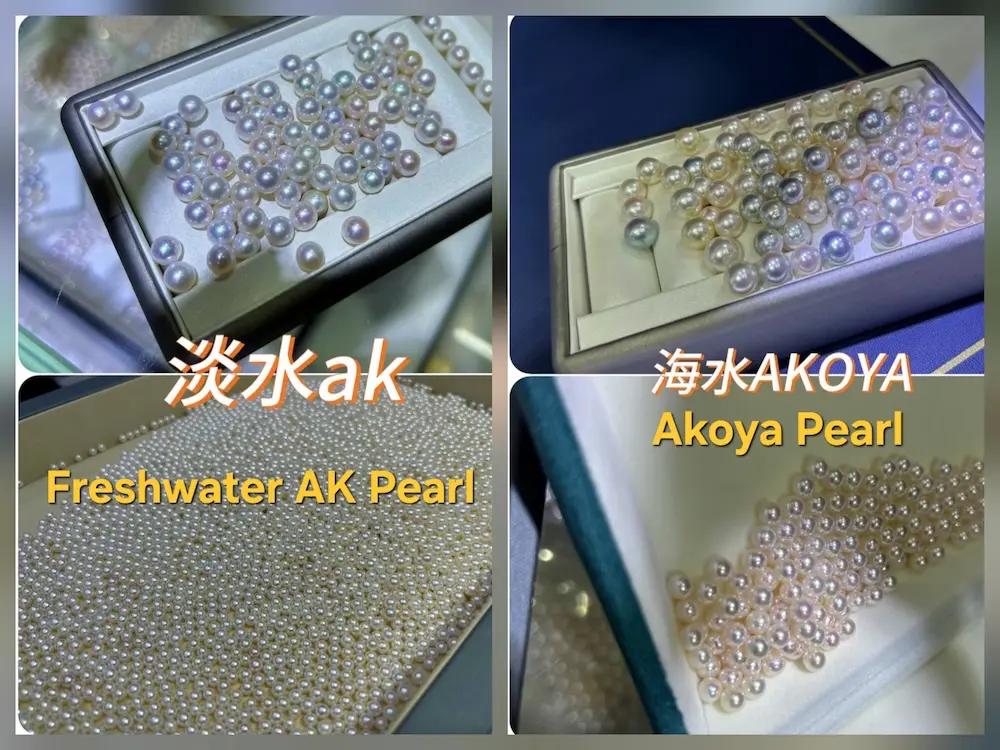
The cost gap is the part that gets most buyers’ attention. According to the American Gem Trade Association, Japanese Akoya prices have risen 30–80% in recent years as harvest volumes dropped from 67 tons in 1990 to roughly 9.5 tons. Freshwater AK pearls carry none of that supply pressure. At wholesale, they typically run 1/8 to 1/10 the per-strand cost of comparable Akoya grades. For a jewelry line targeting mid-market consumers who want the look of fine pearls without the fine-pearl price tag, that spread matters enormously.
1/8–1/10
The wholesale cost of equivalent Japanese Akoya
2mm+
Typical nacre thickness vs. 0.4–0.6mm on Akoya
3–9mm
Standard size range, same as Akoya commercial sizes
The core characteristics of Freshwater AK pearls
Here is what the physical data actually shows. These figures come from grading reports and supplier specifications, not marketing copy.
| Property | Freshwater AK (typical) | Notes |
|---|---|---|
| Size range | 3mm – 9mm | Perfect rounds above 7mm are rare and priced accordingly |
| Colors | White, pink, lavender | All natural; overtones include green and rose |
| Nacre thickness | 1.5mm – 2mm+ | 3–5x thicker than Akoya nacre |
| Roundness deviation | ≤8% | Akoya averages ≤12%; standard freshwater ≤25% |
| Luster type | Fine metallic / iridescent | Cold, sharp reflection similar to Akoya |
| Surface quality | Very smooth, no wrinkle texture | Akoya surface often shows faint ridges even at AA+ grade |
Size and color
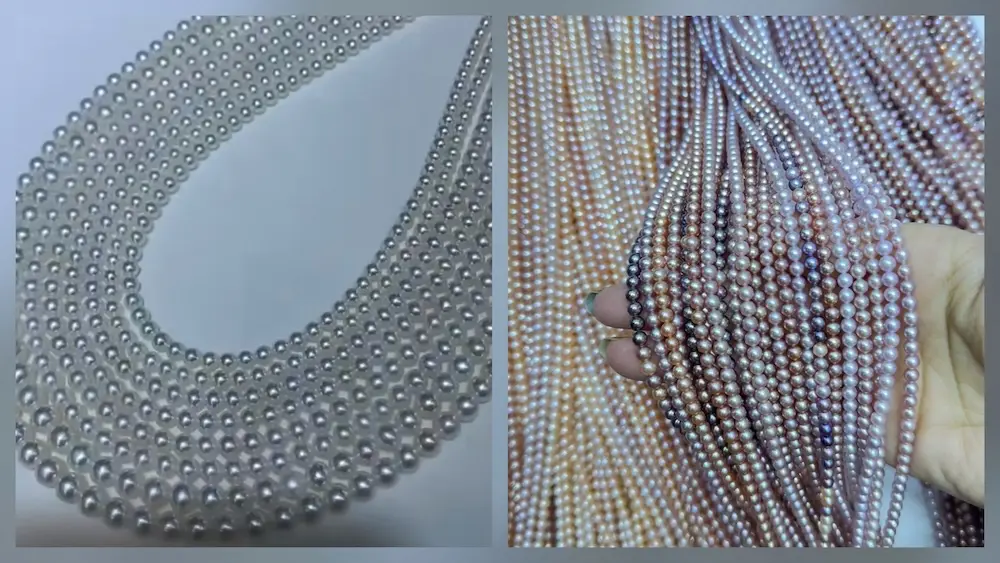
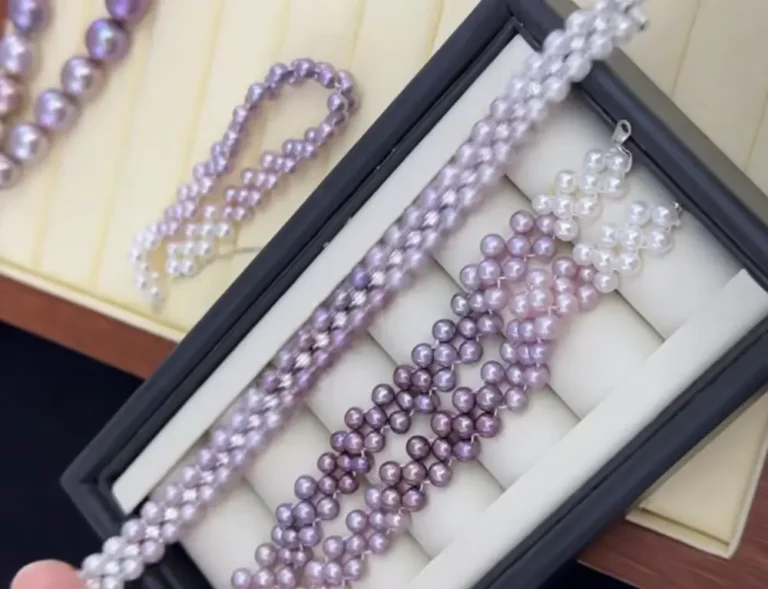
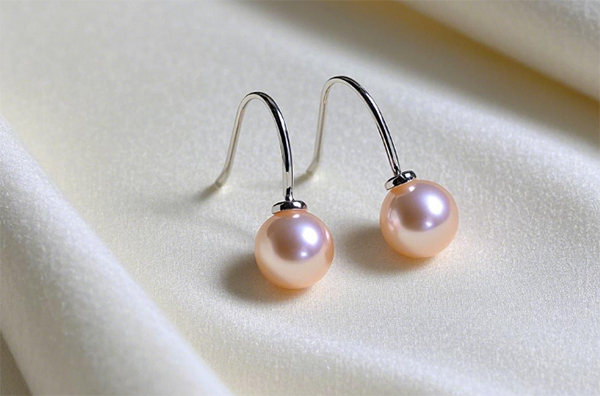
The 3–9mm range lines up almost perfectly with commercial Akoya sizes. White is the most in-demand, but natural pink and lavender are available from the same cultivation cycle. The pink and lavender tones come from the mussel’s own nacre chemistry, not dye or irradiation.
Luster and nacre
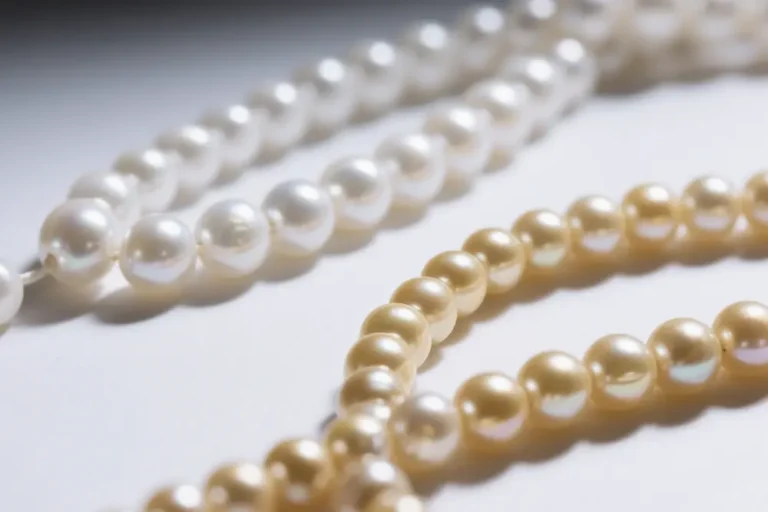
The bead nucleus changes everything about how nacre builds. Without a central bead, conventional freshwater mussel nacre grows outward from a tissue graft in a less organized pattern. With the bead in place, each layer deposits concentrically, producing the tight density that creates a sharp, cold mirror reflection. That reflection is what the market calls “Akoya luster” and what buyers now get from a freshwater pearl manufacturer at a fraction of the saltwater cost.
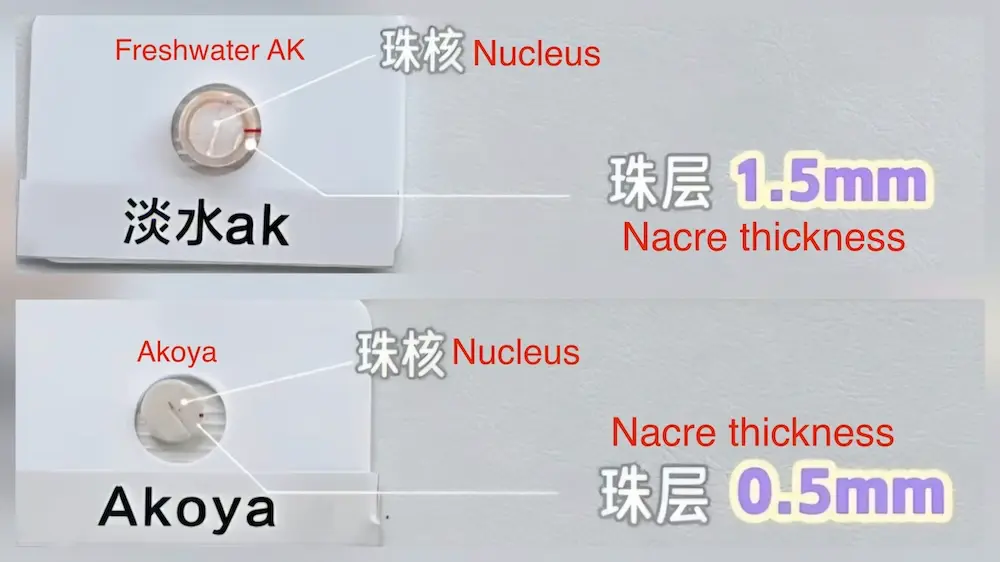
Nacre thickness on Freshwater AK pearls typically runs 1.5mm to over 2mm. A standard Japanese Akoya pearl has roughly 0.4mm to 0.6mm of nacre. That is not a small gap.
Freshwater AK vs. Japanese saltwater Akoya: an objective comparison
Below is a direct comparison across the dimensions that matter most for B2B sourcing decisions. The “Freshwater AK vs Japanese Akoya” question comes down to what you are actually optimizing for: margin, durability, or heritage brand value.
| Dimension | Freshwater AK pearl | Japanese saltwater Akoya |
|---|---|---|
| Origin / water type | Freshwater lakes and ponds (China) | Saltwater coastal bays (Japan, Vietnam) |
| Host species | Hyriopsis cumingii (triangle sail mussel) | Pinctada fucata (Akoya oyster) |
| Nucleation method | Bead-nucleated (same as Akoya) | Bead-nucleated |
| Nacre thickness | 1.5mm – 2mm+ (thicker) | 0.4mm – 0.6mm (thinner) |
| Luster type | Fine metallic, iridescent mirror | Sharp cold mirror (the classic Akoya look) |
| Visual difference (naked eye) | Near-identical at comparable grade. Requires side-by-side under magnification to distinguish reliably. | |
| Durability / wear resistance | Higher (thicker nacre, harder surface) | Lower (thin nacre chips with heavy daily wear) |
| Size range | 3mm – 9mm | 3mm – 10mm (above 9mm is very rare) |
| Supply stability | Stable; freshwater farming is controllable | Declining; Japanese production dropped from 67t to 9.5t since 1990 |
| Wholesale cost (per strand) | 1/8 to 1/10 of equivalent Akoya | High and rising; up 30–80% in recent years |
| Ideal use case | Daily-wear lines, fashion jewelry, high-volume retail | Bridal, heirloom, prestige positioning |
One point that surprises many buyers: because Freshwater AK nacre is substantially thicker than Akoya nacre, the long-term surface durability is actually better. Akoya’s thin nacre layer is the category’s main vulnerability for daily-wear jewelry. An AK-grade freshwater pearl worn every day holds its surface longer than a mid-grade Akoya will.
The conclusion is straightforward. If your customer is buying a pearl necklace to wear three or four times a year and expects to hand it down someday, Japanese Akoya’s heritage and brand story may be worth the price. If your customer is buying pearl jewelry to wear regularly and wants to spend under $300, the Freshwater AK delivers the same visual result without the fragility or the markup.
Why jewelry designers are switching in 2026 (the business case)
Jewelry retail margins were already thin before Akoya prices started climbing. The American Gem Trade Association reported that some dealers paid 30–80% more for AAA Akoya goods at recent trade shows, with suppliers forecasting further price hikes as Japanese production continues to fall. A 9mm Akoya pearl that sold for $250 wholesale a few years ago now runs closer to $400 at wholesale before any retail markup is added.
That math breaks the mid-market pearl category. Consumers in the $150–$400 retail range are not going to absorb those increases. They will switch to non-pearl alternatives. Designers who anchor their lines to Japanese Akoya sourcing are either raising prices and losing customers or holding prices and losing margin. Neither is a good place to be.
Premium bead-nucleated freshwater pearls at AK grade solve this problem directly. The material cost drops 80–90% compared to Japanese Akoya at equivalent visual grade. A strand of 7–8mm AAA Freshwater AK pearls that costs a fraction of the equivalent Akoya strand gives a designer room to price the finished piece at $180–$250 retail with healthy margin intact.
80–90%
Potential material cost reduction vs. equivalent Akoya grade
67t → 9.5t
Japanese Akoya production decline since 1990 (source: AGTA)
30–80%
Akoya price increase at recent wholesale trade shows
The luxury aesthetic does not disappear. Customers looking at a well-matched strand of AK-grade freshwater pearls see the same round, high-luster, white pearl they associate with fine jewelry. The product story changes from “rare Japanese saltwater pearl” to “premium cultured pearl” — which is honest, accurate, and works perfectly for daily-wear and fashion-forward collections.
Several mid-volume designers sourcing from us have rebuilt their core pearl lines around Freshwater Akoya material over the past 18 months. The feedback is consistent: customers cannot tell the difference at the counter, margins recovered, and the pieces hold up better in post-sale because the nacre is thicker. That last point matters for returns and reputation. A thin-nacre Akoya worn daily for two years can show surface wear. A 2mm-nacre Freshwater AK pearl in the same conditions does not.
Interactive Profit Margin Calculator
Adjust the sliders to see how sourcing Freshwater AK pearls transforms your retail margins.
Calculate Your Potential Profit Increase:Don't just take our word for it. Use the interactive calculator below to see exactly how much more money you keep per piece when switching to Freshwater AK pearls. Simply adjust the sliders to match your target retail selling price and your current material costs.
FAQs
Are Freshwater AK pearls real pearls?
Yes. Freshwater AK pearls are 100% naturally cultivated pearls. They grow in live Hyriopsis cumingii mussels in freshwater farms using the same bead-nucleation process used for Japanese Akoya. They are genuine cultured pearls, not shell beads, not glass, not imitations. The nacre is real nacre secreted by a live mussel over a 1–2 year cultivation period.
How do Freshwater AK pearls hold up over time compared to Japanese Akoya?
They typically hold up better for daily wear. Freshwater AK nacre is 1.5mm to over 2mm thick. Akoya nacre on commercial-grade strands runs 0.4mm to 0.6mm. When a pearl with thin nacre gets worn regularly — contact with perfume, body oils, friction — the nacre layer can dull or chip over years. Thicker nacre means a larger buffer before any surface degradation becomes visible. For jewelry lines marketed as everyday pieces, this durability advantage is real and measurable.
What is the Freshwater AK pearl price compared to Japanese Akoya?
At wholesale, Freshwater AK pearls typically cost 1/8 to 1/10 the price of comparable Japanese Akoya pearls. The gap widens at larger sizes and higher grades because Akoya supply at those specs is increasingly constrained. Freshwater AK pricing is more stable because freshwater mussel farming is not subject to the ocean temperature, disease, and production control variables that affect Japanese Akoya supply.
Can I order Freshwater AK pearls fully drilled or half-drilled?
Yes. We offer fully drilled, half-drilled, and undrilled options. Drill hole diameter can also be specified for custom settings. If you are working with specific mounting hardware or setting a strand for a particular clasp type, contact us with your specs before ordering. Our factory handles custom drilling requests directly, so you are not paying a third-party processing fee on top of the pearl cost.
What sizes do Freshwater AK pearls come in?
Standard inventory runs 3mm to 9mm, matching the Akoya commercial size range. Perfect round specimens above 7mm are rarer in any harvest and priced accordingly, but they are available. For sizes above 9mm in a round form, you are looking at Edison pearl territory rather than AK-grade freshwater pearls.
Source directly from the farm
High material costs should not limit your designs. If you are still building pearl lines around Japanese Akoya at 2025–2026 prices, you are giving away margin on every piece you sell.
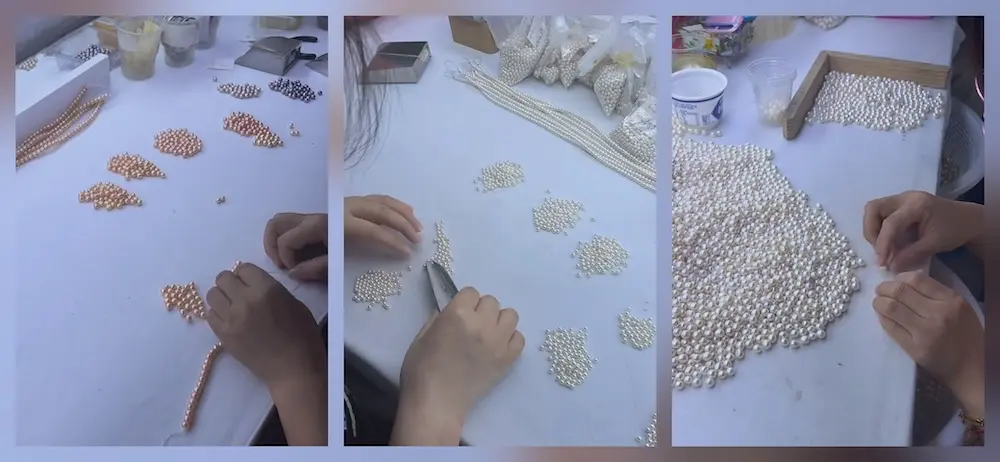
We are a direct pearl manufacturer and wholesaler. No middlemen. No markups on top of markups. You buy directly from the source at factory pricing, with full control over size, grade, color, and drill specification.
Browse our current inventory of wholesale freshwater AK pearls or contact us to discuss volume pricing for your production run.Shop wholesale Freshwater AK pearls


3 Comments