Would you like me to help you create a quality-assurance template to send to suppliers before you buy your next batch of wholesale pearl strands?
I’ve watched this cycle repeat for 15 years. A jewelry designer orders 100 wholesale pearl strands at $18 each because another supplier quoted $23. The cheaper batch arrives. She starts sorting. Out of every strand, maybe 12-15 pearls are actually usable. The rest have chips, flat spots, or mismatched luster. Her “savings” just turned into a 40% waste rate.
The real cost isn’t the price per strand. It’s the usable yield. A $23 strand with 85% good pearls beats a $18 strand with 50% every time. But most suppliers won’t tell you this up front because they don’t actually know their own waste rates.
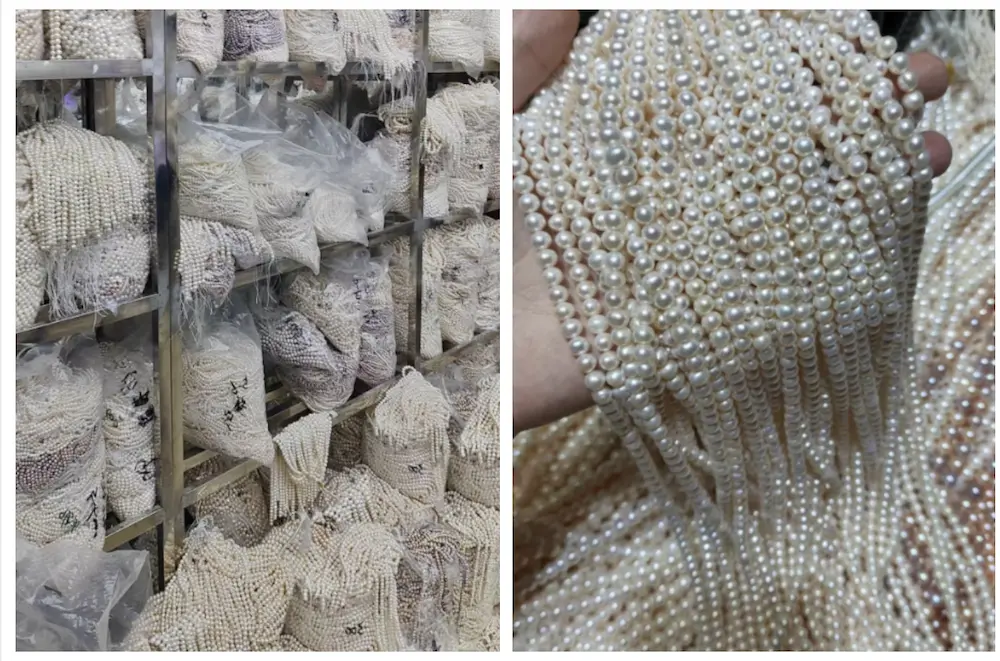
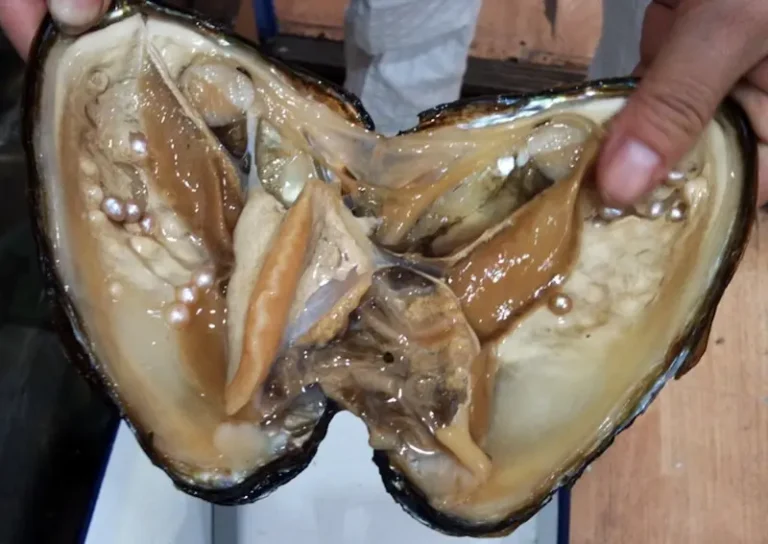
We do. At Xinye Pearl, we measure it on every production batch. Our factory is in Zhuji, where 80% of global freshwater pearls come from, and we’ve been processing pearls since 1998. This guide pulls back the curtain on how wholesale pearl strands actually get made, graded, and priced—and what you need to check before you wire payment.
Secret #1: The “End-to-End” Consistency Test
Here’s how the bait-and-switch works. A trader buys mixed-grade pearls from multiple farms. To make the wholesale pearl strands look better, they hand-pick the cleanest, roundest pearls and string them on both ends where buyers will see them first. The middle? That’s where the lower-grade pearls are hidden. You don’t notice until you cut the strand open to make earrings or a bracelet.
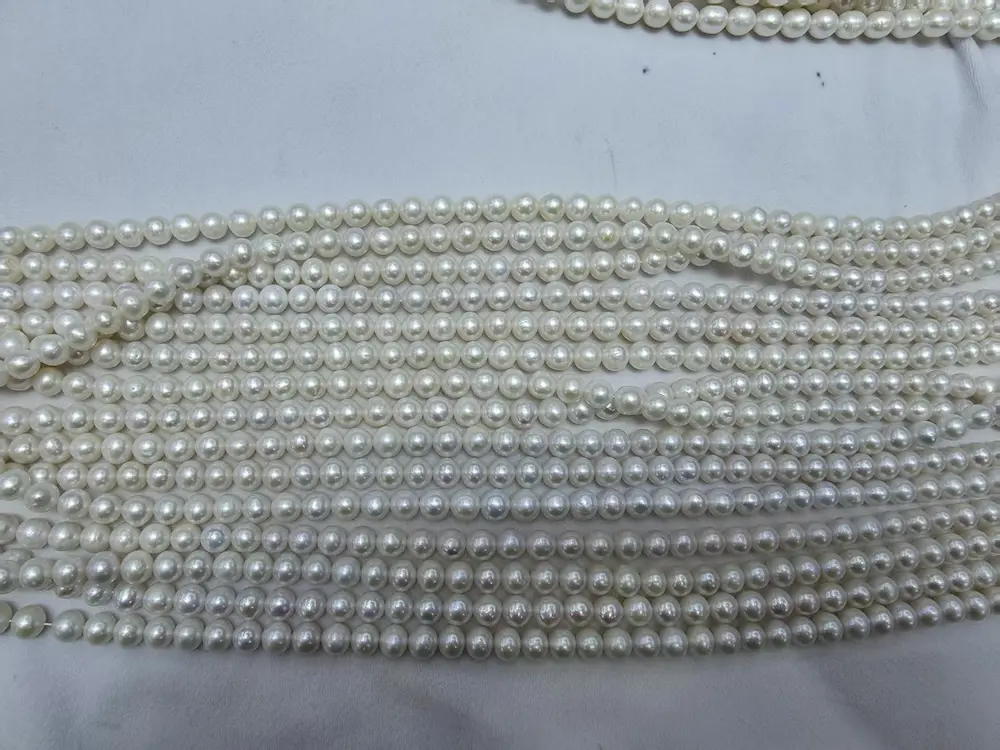
This is standard practice in Chinese pearl markets. I’m not saying every trader does it, but enough do that you need to check.
The test: When your sample arrives, don’t just look at the clasp area. Cut the thread (or ask for an unstrung sample) and examine pearls from positions 8-12 and 28-32 on a 40cm strand. Compare them to the ends. If the luster drops or surface quality changes, that’s inconsistent grading.
At Xinye, we grade the entire strand uniformly. If it’s sold as AAA grade, every pearl meets AAA standards—not just the visible ones. We photograph random sections during QC and can send those images before shipping.
Table 1: Consistency Check Points for a 16-inch Strand
| Position | What to Check | Red Flag |
|---|---|---|
| Pearls 1-3 (near clasp) | Surface quality, luster | Too perfect compared to middle |
| Pearls 8-12 (early middle) | Blemishes, shape consistency | Noticeable quality drop |
| Pearls 18-22 (center) | Color matching, nacre thickness | Thin nacre, color variation |
| Pearls 28-32 (late middle) | Luster uniformity | Chalky or dull patches |
| Pearls 38-40 (end) | Overall grade match | Matches start but not middle |
Secret #2: Luster Longevity (Why Cheap Pearls Turn Chalky)
Six months from now, will your pearls still look good? Some won’t. And the reason is bleach.
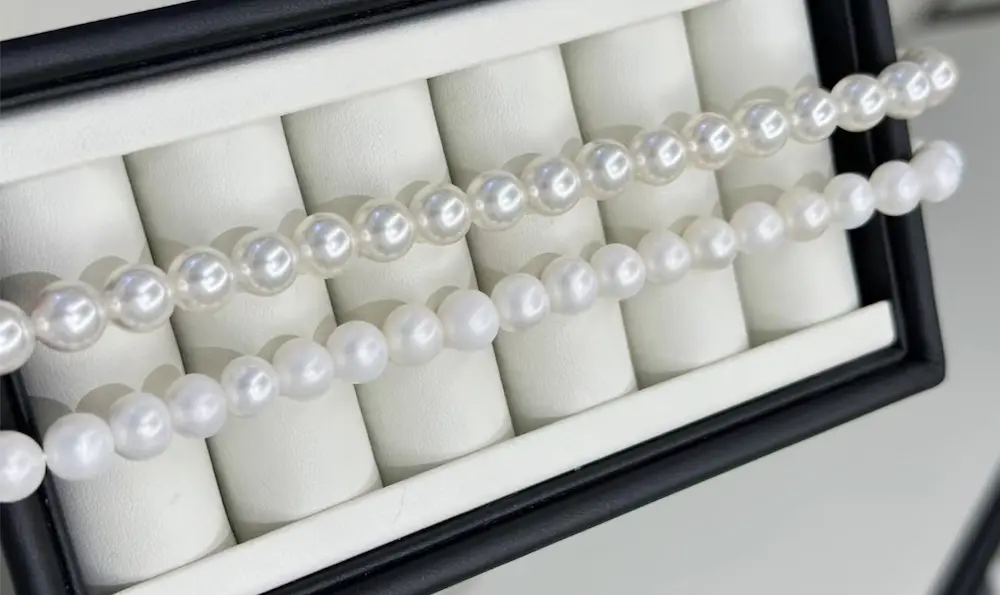
Lower-grade freshwater pearls—the ones with yellowish tones or uneven color—can be chemically bleached to look white and bright. It works. For a while. The problem is that aggressive bleaching dissolves the protein matrix (conchiolin) that holds the aragonite crystals together. The nacre becomes porous. Within 6-12 months, the pearls lose their shine and turn chalky white, like old paint.
Your customers notice. You get returns. Your Etsy reviews tank.
We use hydrogen peroxide in low concentrations (3-5%) and only on pearls that need minor color correction. The process takes longer—3-4 days instead of 8 hours—but it doesn’t compromise the nacre structure. Pearls treated this way hold their luster for years, not months.
The test: Ask your supplier about their bleaching protocol for their wholesale pearl strands. If they say “standard industry process,” that’s not an answer. If they say they don’t bleach at all, they’re probably lying (almost all commercial pearls get some level of treatment). What you want to hear is a specific chemical name, concentration, and duration.
If they can’t tell you, assume the pearls are over-bleached.
Secret #3: The Profit Math (Why Buy Strands vs. Finished Jewelry)
This is where bulk pearl strands turn into actual margins.
Let’s say you’re a bridal jewelry designer in the US. You can buy a finished pearl necklace from a wholesaler for $65. Or you can buy high-quality wholesale pearl strands in a 16-inch length for $22, string them yourself (or pay someone $8), add a clasp ($3), and sell the final piece for $120.
Which option leaves you with more profit?
Cost Breakdown:
| Option | Material Cost | Labor | Clasp | Total Cost | Sell Price | Margin |
|---|---|---|---|---|---|---|
| Pre-made necklace | $65 | $0 | included | $65 | $120 | $55 (46%) |
| DIY from strand | $22 | $8 | $3 | $33 | $120 | $87 (73%) |
But here’s where it gets better. That same $22 strand can make:
- 1 necklace (16 inches)
- OR 2 bracelets (7-8 inches each)
- OR 20 pairs of stud earrings (40 pearls total)
- OR 4 pairs of drop earrings
If you’re selling on Etsy, stud earrings retail for $18-28 per pair. From a single $22 strand, you can make 20 pairs. That’s $360-560 in potential revenue from $22 in materials.
Wholesale pearl strands are the highest ROI inventory form in the pearl business. Finished jewelry locks you into one product. Strands give you flexibility to respond to what’s actually selling.
Secret #4: Drill Hole Quality (The Detail Nobody Mentions)
I’ve seen beautiful AAA strands ruined by bad drilling.
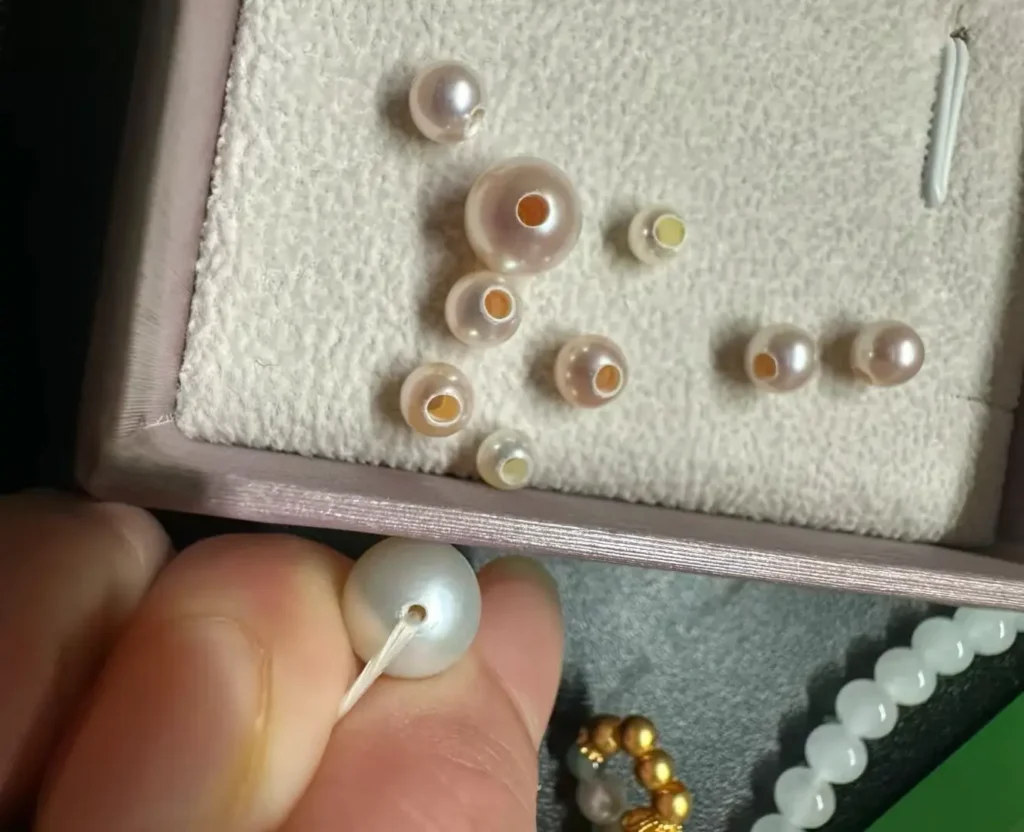
When pearls are drilled too fast or with worn-out bits, the drill exit creates a “blow-out”—a rough, chipped edge around the hole. This is a common issue found in lower-quality wholesale pearl strands that can ruin your production. If you’re making stud earrings, the post will catch on this rough edge; if you’re stringing a necklace, the thread will fray faster.
Professional jewelry makers check drill holes before buying. Most hobbyists don’t know to look.
What to check:
- Center alignment: The hole should run through the center axis of the pearl, not off to one side. Off-center drilling makes pearls hang crooked.
- Smooth edges: Run your fingernail around both hole openings. You shouldn’t feel sharp edges or chips.
- Consistent diameter: Holes should be 0.7-0.9mm for most stringing applications. Too small, and you can’t fit thicker thread. Too large, and the pearl slides around on the wire.
Xinye uses diamond-tipped drill bits and a two-stage drilling process (pilot hole + finishing pass) to get clean edges. We drill at 8,000 RPM with water cooling to prevent nacre from cracking due to heat. This costs us about 15% more in equipment and time compared to fast drilling, but the reject rate drops from 8% to under 2%.
If your supplier can’t tell you their drill bit type or RPM speed, their quality control is probably loose.
Secret #5: Grading Standards Are Not Standardized
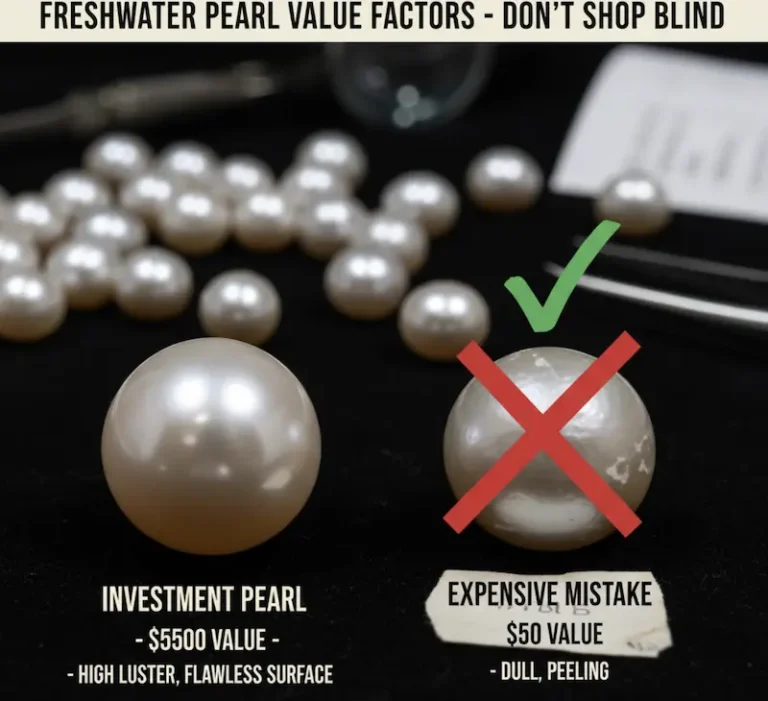
Here’s the uncomfortable truth: there is no global standard for freshwater pearl grading.
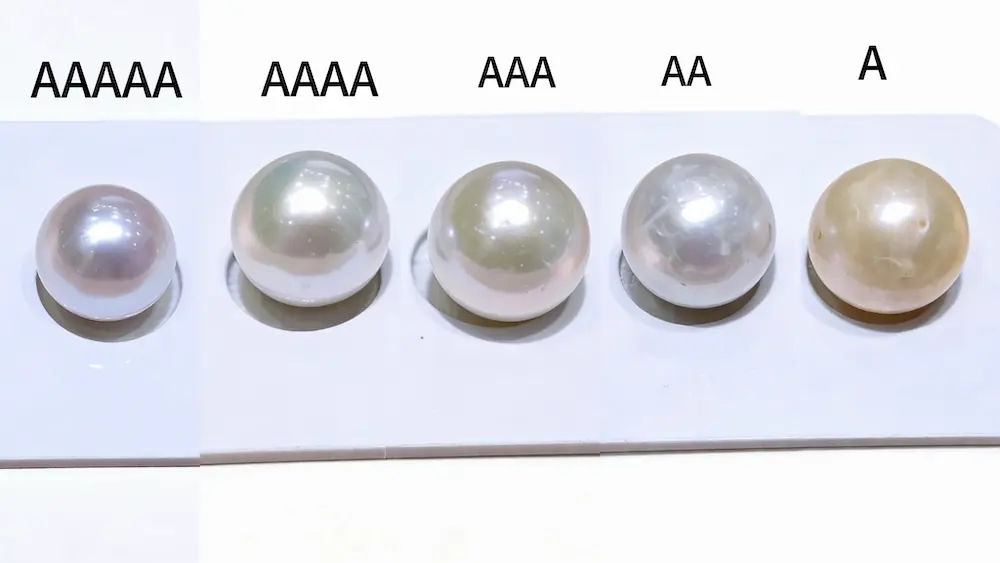
One supplier’s AAA is another supplier’s AA. Some factories use a 4-tier system (A, AA, AAA, AAAA). Others use 5 tiers (A, AA, AAA, AAAA, AAAAA). Some add plus signs (AA+). Some use letters and numbers (A1, A2). It’s chaos.
The Gemological Institute of America (GIA) has grading guidelines for pearls, but they’re descriptive, not binding. Most wholesalers don’t follow them because it would disqualify half their inventory.
So what do you do?
Stop relying on letter grades. Ask for specifics of round pearls:
- Surface: How clean is the skin? For AAAA, you want 95% of that surface spotless.
- Luster: Can you see your face in it? AAA needs a sharp, mirror-like reflection, not just a soft glow.
- Shape: Are they actually round? We check that the pearls don’t deviate more than 5% from a perfect circle.
- Color Consistency: The strand shouldn’t look like a patchwork quilt. All the pearls need to sit within the same shade.
- Size: Precision matters. If it’s listed as 9–10mm, the actual variance shouldn’t exceed 0.3mm.
We photograph our grading standards and send them with quotes so buyers know exactly what they’re getting.
Table 2: Xinye Pearl Grading Reference (Freshwater)
| Grade | Surface Clean | Luster | Roundness | Typical Use |
|---|---|---|---|---|
| AAAAA | 99-100% | Mirror (sharpest) | 95%+ round | Ultra-luxury, collectors, museum quality |
| AAAA | 95-98% | Mirror | 92%+ round | High-end bridal, luxury boutiques |
| AAA | 90-95% | Sharp reflection | 90%+ round | Bridal, fine jewelry |
| AA | 85-90% | Good reflection | 75%+ round | Fashion jewelry, daily wear |
| A | 70-84% | Moderate shine | 60%+ round | Costume jewelry, craft projects |
Top Picks: Which Wholesale Pearl Strands Should You Stock in 2026?
The market is splitting. On one end, you’ve got brides willing to pay $300-800 for a classic white pearl necklace made from top-tier wholesale pearl strands. On the other end, you’ve got Gen Z buyers on TikTok who want baroque pearls, keshi pearls, and anything that doesn’t look like their grandmother’s jewelry.
Here’s what we’re seeing move fastest from our factory:
For High-End Retail and Bridal
Edison Pearl Strands (9-14mm)
These are the big, round, metallic-luster pearls that photograph well and justify premium pricing. Edison pearls are nucleated freshwater pearls (unlike most freshwater which are tissue-nucleated), so they grow larger and rounder.
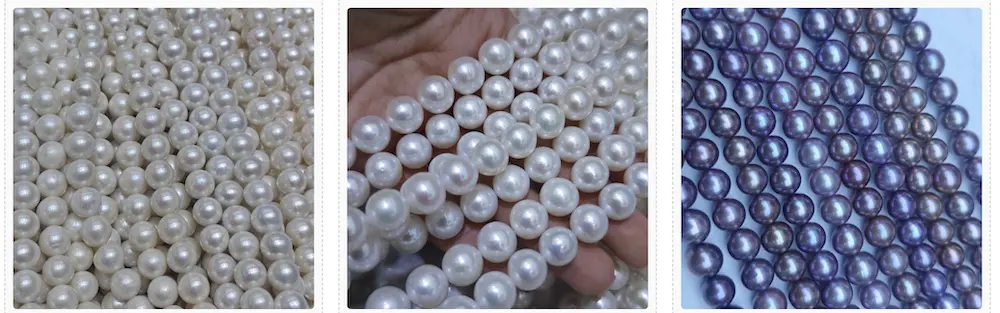
We sell 11-12mm Edison strands for $180-240 per strand depending on color. Retail jewelers mark these up to $600-1,200 for finished necklaces.
Best colors for 2026: Natural purple, peacock green, and white with pink overtones.
→ See our Edison Pearl collection here
For Bridal Designers
White Freshwater Round/Near Round Strands (7-8mm, 8-9mm AAA grade)
Still the most requested size for classic bridal necklaces. Brides want them, mothers of the bride want them, and they never go out of style.
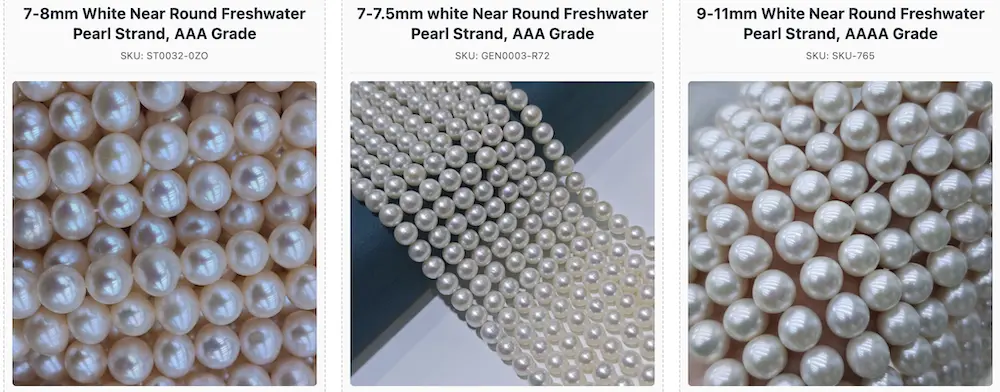
We price these at $28-80 per strand for AA/AAA/AAAA grade. You can string a 16-inch necklace, add a 14k gold clasp or S925 Silver clasp, and retail it for $150-400.
The margins aren’t huge, but the volume is consistent. Bridal season runs February-October, and these strands move steadily.
→ Browse white freshwater pearls
For Etsy Sellers and Trendy Boutiques
Baroque and Keshi Strands
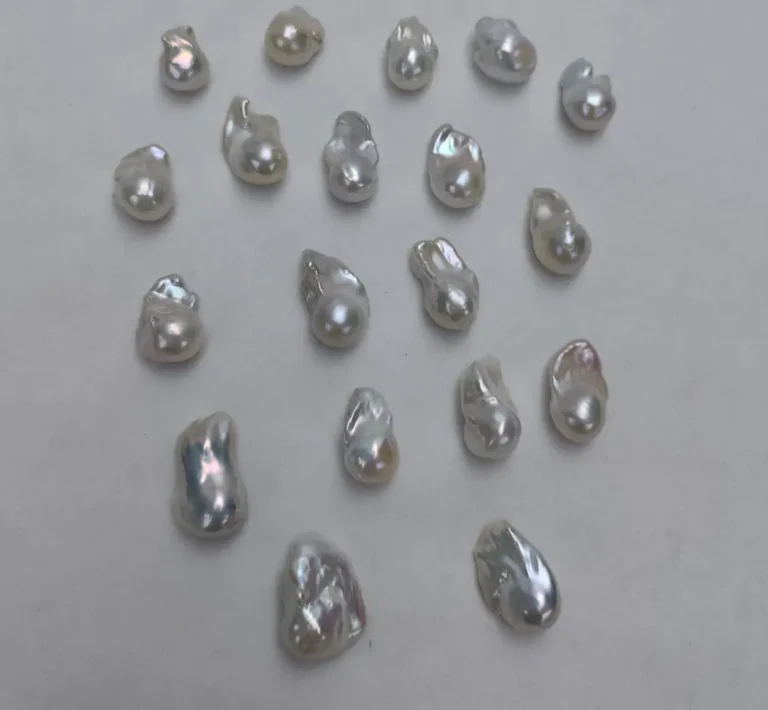
This is where the volume has shifted in the last two years. Irregular pearls—baroques, keshis, potato-shaped, rice-shaped—are selling faster than rounds because they photograph as “unique” and “handmade.”
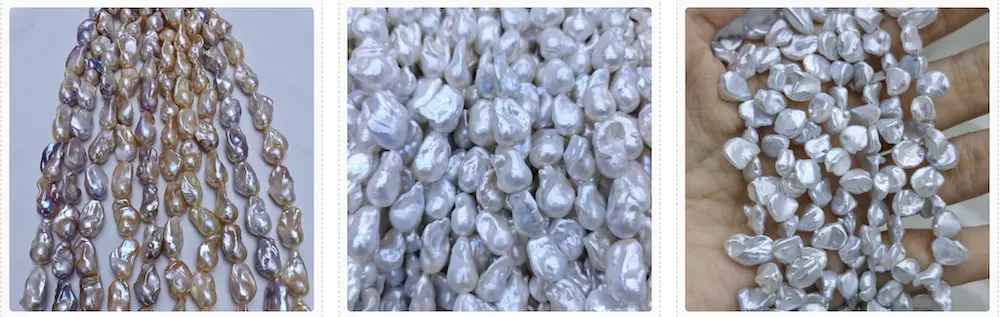
Our baroque strands run $12-22 depending on size and color. Etsy sellers make single-pearl pendants, asymmetric earrings, and layered necklaces from these. The markup is lower per piece, but the perceived value is higher because each pearl looks different.
Best styles: Large baroque (12-15mm), natural color keshi (no dye), and stick pearls for modern designs.
→ Check out baroque and keshi options
How to Actually Source Wholesale Pearl Strands (Without Getting Burned)
You’ve read the secrets. Now here’s the process.
Step 1: Request graded samples
Don’t buy based on photos alone. Pay for samples ($30-60 including shipping). You need to see the actual product, check drill holes, and test luster under different lighting.
Step 2: Cut one strand open
Yes, destroy a $20 sample. String the pearls out in a line and photograph them. This shows you the consistency from end to end. If quality drops in the middle, don’t order in bulk.
Step 3: Start with a small bulk order
Start with 20 or 50 strands, never 500. It’s easy for a supplier to send one perfect sample, but maintaining that quality across a bulk order is a different story. Verify the production consistency with a small run before you sink capital into real inventory.
Step 4: Negotiate payment terms
Expect to pay the full amount upfront for your first order. But once you’ve established a relationship—usually after two or three clean shipments—switch to a 50% deposit with the balance due upon shipping. You can also use a Letter of Credit (L/C) to secure the order.
FAQs about Wholesale Pearl Strands
How many pearls are in a 16-inch wholesale strand?
It depends entirely on the diameter. Assuming a standard 16-inch temporary strand, here is the math: 6–7mm: ~65–70 pearls; 8–9mm: ~50–55 pearls; 10–11mm: ~40–45 pearls; 12–13mm: ~32–36 pearls
Keep in mind these aren’t exacts. “8mm” pearls are rarely exactly 8.0mm—they fluctuate within the lot—and the specific spacing on the temporary string can throw the count off by one or two or more.
What’s the difference between “loose pearls” and “pearl strands”?
Loose pearls are sold individually or in bulk bags, unstrung. You buy them by weight (grams) or by piece count. Loose pearls give you total flexibility but require more sorting and matching work on your end. Pearl strands are pre-sorted and temporarily strung (usually on nylon thread). Pearls in a strand are already matched for size and color, which saves you hours of work. The temporary stringing also makes it easier to visualize the finished product. For most jewelry makers, strands are more practical unless you’re doing custom one-of-a-kind designs where you need to hand-select each pearl.
Do you ship wholesale pearl strands to the USA/UK?
Yes, we ship globally. We typically use DHL, UPS or FedEx for speed (4–7 days); it runs about $25–45 for packages under 2kg. If you aren’t in a rush, China Post is cheaper ($12–18) but takes 2–3 weeks.
Can I request custom sizes or colors?
Yes, though the minimums vary. If you stick to standard stock—like 7–8mm white or 9–10mm natural—you can order as few as 10 strands.
What’s your return/exchange policy?
If we missed the mark on grading or the pearls don’t match the approval photos, we’ll replace them or refund you. Just email us within a week of delivery with pictures of the problem.
We don’t accept returns for preference changes or slight color variations. Pearls are organic; they look different under warehouse lights than they do in daylight. This is why we generally insist on samples before locking in a large order—it prevents surprises.
How should I store wholesale pearl strands?
Keep them in a cool, dry place away from direct sunlight. Don’t store pearls in airtight plastic bags—they need some moisture to prevent the nacre from drying and cracking. Wrap the strands in soft cloth and store them in wood (boxes or drawers work fine). Avoid plastic bags or airtight containers—pearls are organic and need to breathe. Keep them away from chemicals, particularly perfume and hairspray, which eat into the nacre. If you’re holding stock for more than six months, put a damp cloth in the box to keep the humidity up. If they dry out, they crack.
What’s the difference between freshwater and saltwater wholesale strands?
aroque or near-round, have thick nacre, and come in a wide range of natural colors. Price range: $10-300 per strand. Saltwater pearls (Akoya, Tahitian, South Sea) come from oysters in oceans. They’re usually rounder, have thinner nacre, and are more expensive. Price range: $100-5,000+ per strand. For wholesale buyers, freshwater offers better margins because material costs are lower, but you can still achieve high-end looks with top-grade freshwater pearls.
Ready to Source Smarter?
Stop paying for waste. Stop gambling on inconsistent quality.
The difference between profitable pearl jewelry and money-losing inventory comes down to knowing what questions to ask and what details to check. Don’t buy based on price alone. Don’t trust letter grades without seeing photos. And don’t order 500 strands before you’ve tested 50.
If you’re serious about stocking wholesale pearl strands, start with samples. We’ll send graded strands with QC photos so you can see exactly what you’re getting before you commit to bulk orders.
Questions about grading, MOQs, or shipping? Email us at info@pearlswholesaler.com or use the whatsapp chat . We’re in Changzhou, China (GMT+8), and typically respond within 3 hours on business days.