
How Big is a Pearl? Understanding Actual Pearl Sizes in mm
When sourcing wholesale freshwater pearls or designing jewelry, understanding the actual pearl size in mm is crucial for making the right choice. Because pearl volume increases exponentially with diameter, even a 1mm or 2mm difference creates a massive visual impact.
Side-by-Side Size Comparator
Select device, place a standard credit card on screen, and adjust slider to match its physical width.
How to Use the Pearl Size Comparator:
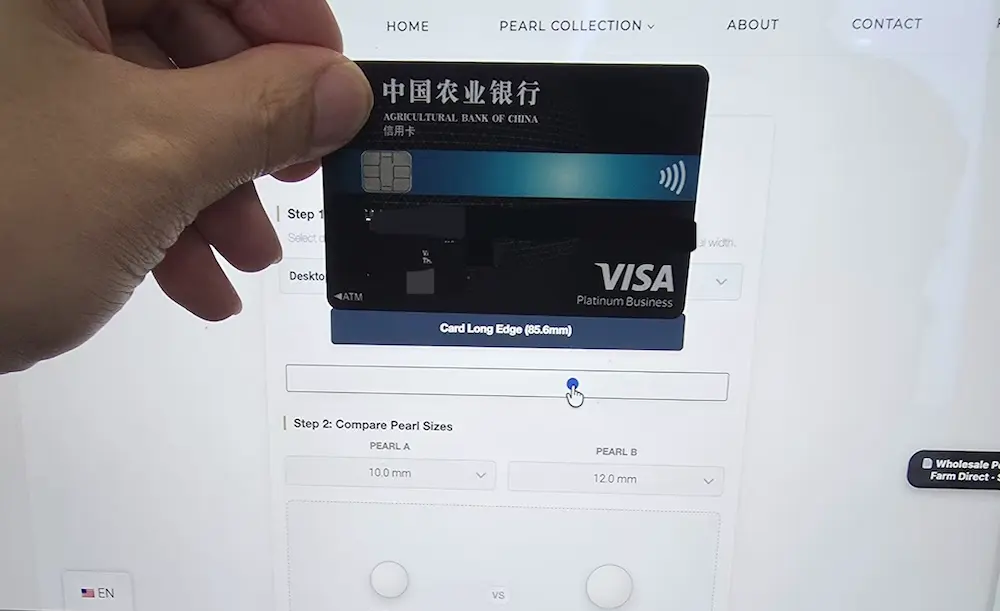
- Grab a Standard Card: Get a standard credit card, ID card, or driver's license (they are universally 85.6mm wide).
- Calibrate Your Screen: Place the card flat against your monitor. Drag the slider until the box exactly matches the physical width of your card.
- Compare Sizes: Select 'Pearl A' and 'Pearl B' from the dropdown menus. The virtual pearls will instantly resize to show you their exact real-world volume and proportions side-by-side.
Chrome Browser Extensions: https://chromewebstore.google.com/detail/pearl-sizer-reference/njhohhkkbfcoiefponficdkdjeijknnc
Stop guessing sizes. Use our interactive on-screen pearl sizer tool above to calibrate your monitor and visualize the exact physical proportions side-by-side.
- 8mm to 10mm Pearls: This is the classic, most popular size range. A 10mm pearl is roughly the size of a standard green pea. It is universally elegant and perfect for everyday stud earrings, classic pearl strands, and understated rings.
- 11mm to 13mm Pearls: Moving into the luxury category. The 10mm vs 12mm pearl size comparison is one of our most asked questions. A 12mm pearl is significantly larger and heavier, making it ideal for statement pendants, premium cocktail rings, and luxurious single-pearl necklaces.
- 14mm to 18mm Pearls: These are rare, giant pearls. Premium freshwater pearls (often known in the market as Edison pearls) are famous for achieving these massive sizes with stunning metallic lusters. They are strictly used for high-end, bold jewelry designs.
Ready to source premium materials for your next design? Explore our complete inventory of Wholesale Freshwater Pearls .
FAQs
Are the pearl sizes on screen accurate?
Yes, but only after you run the credit card calibration step. Screen pixel density varies a lot between devices — the same 10mm image can look noticeably larger on a high-DPI laptop than on a budget phone. The calibration tool measures your screen first, then scales the pearl images to match real millimeters.
What size pearls do most classic necklaces use?
8.0mm to 10.0mm is what you'll see most often. If you're going bigger and bolder, designers tend to move into the 11.0mm–14.0mm range with freshwater pearls — the size that reads as "statement piece" rather than "everyday wear."
Why does a 2mm difference look so dramatic on a pearl?
Because pearls are spheres. A 2mm jump in diameter translates into a much larger increase in volume — think about how much more water fits in a slightly bigger balloon. That's also why pearls above 12mm take considerably longer to cultivate and cost more to source.
Where can I buy these sizes wholesale?
Xinye Pearl farms and processes freshwater pearls and sells wholesale to jewelry designers and retailers. They carry sizes from 8mm matched pairs up to 15mm+ Edison pearls. You can reach out to them directly for current pricing and availability.
 EN
EN  JA
JA  AR
AR  IT
IT  ES
ES  DE
DE  KO
KO