
Identifying real freshwater pearls isn’t just about rubbing them against your teeth anymore. If you’re sourcing wholesale pearls for your jewelry business or vetting suppliers, you need methods that actually work in professional settings. That’s basic stuff. B2B purchasers need to be able to tell the difference between real freshwater pearls and fake ones that seem like real ones and can trick even the most experienced eyes.
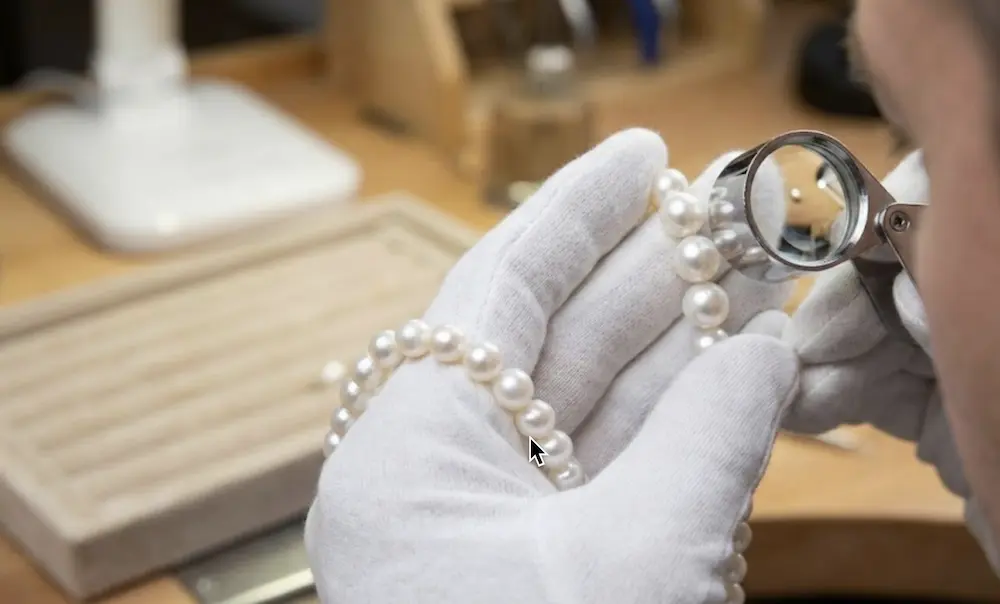
Here’s the reality: The pearl market is flooded with shell pearls, glass imitations, and dyed freshwater pearls passed off as premium saltwater varieties. As a pearl manufacturer serving wholesale clients, Xinye Pearl sees this every day. We’re going to break down the professional-grade identification techniques that separate real buyers from people who get played.
How to Tell Real Freshwater Pearls from Fake: Visual Inspection Methods
Start with what you can see. Real pearls don’t lie when you know what you’re looking at, which is the first step in Identifying real freshwater pearls.
Surface Texture Analysis
Pull out a 10x loupe and examine the pearl surface. Authentic freshwater pearls show microscopic ridges, tiny pits, and natural growth patterns. These aren’t flaws; they show that organic nacre is forming. There will be overlapping platelet structures that give the surface a little scale-like look.
Fake pearls? They’re too perfect. Shell pearls have a glittery, coated surface without those overlapping nacre platelets. Glass beads show a flawless, uniform texture that screams “factory-made.” If every pearl in a strand looks identical under magnification, walk away.
Luster Quality Assessment
Real pearl luster comes from within. It’s a deep, three-dimensional glow—not surface reflection. When you rotate an authentic pearl under focused light, you’ll see sharp highlights that shift and change. The light penetrates the nacre layers and bounces back with complexity.
Imitation pearls have flat, chalky luster. The shine sits on top like cheap spray paint. Under direct light, fake pearls look either too glossy (glass) or too dull (plastic). There’s no depth, no Orient, no shifting iridescence—all key details when Identifying real freshwater pearls.
Identifying Real Freshwater Pearls: The Drill Hole Inspection
This is where most fakes fail hard. The drill hole tells you everything.
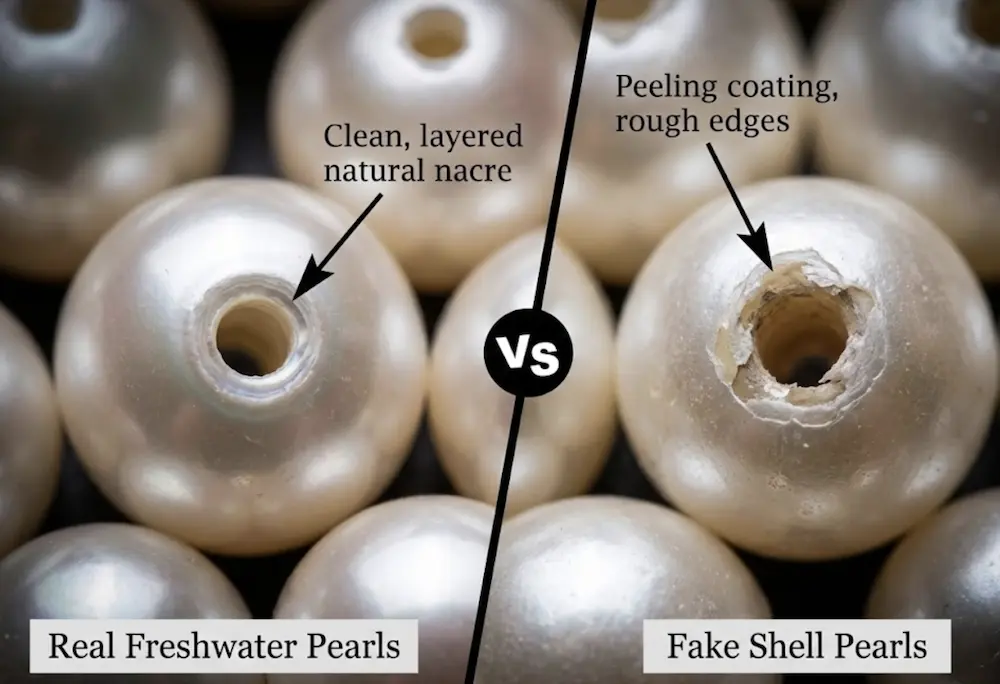
What Real Pearl Holes Look Like
When examining authentic pearls, look for:
- Sharp, clean edges around the hole with no chipping or flaking
- Visible nacre layers extending into the drilled area
- Concentric growth rings visible under magnification
- Consistent color throughout the hole depth
Real pearls show even coloration deep into the drill hole because nacre goes all the way through (or covers a substantial nucleus in bead-nucleated pearls). This uniform color is a crucial clue for Identifying real freshwater pearls.
Red Flags in Fake Pearls
Imitations reveal themselves at the drill hole:
- Chipped coating exposing glass or plastic underneath
- Different material visible at the core
- Melted or rough edges from poor drilling
- Hollow appearance in cheap glass beads
- Paint buildup or uneven coating thickness
This pearl drill hole inspection takes 10 seconds with a loupe. It’s the fastest way to eliminate shell pearls and coated glass, making it a critical step for Identifying real freshwater pearls.
Testing Pearls with UV Light: Advanced Detection Methods
UV testing separates natural color from treatment. This matters for wholesale pearls buyers who need to price inventory correctly, and it’s another method for Identifying real freshwater pearls and determining their authenticity.
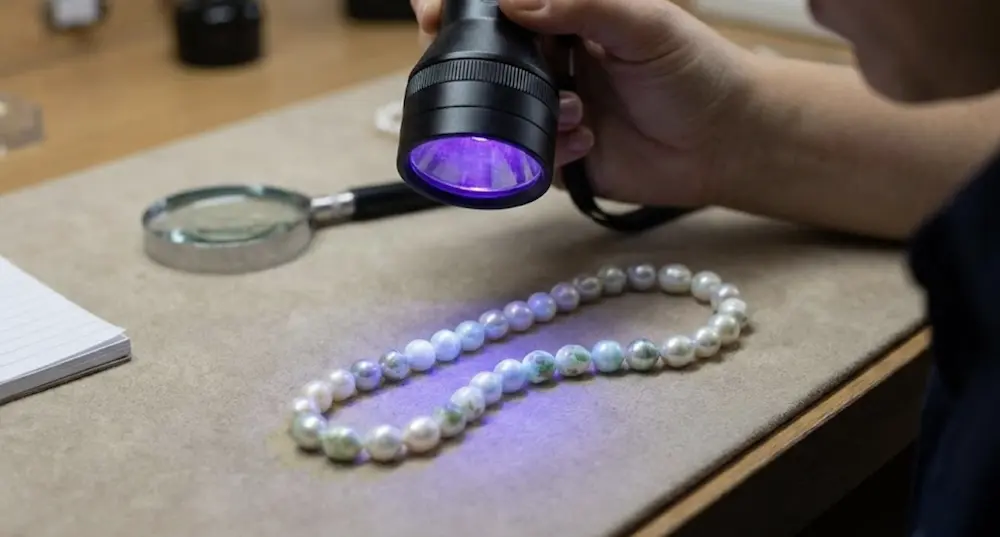
Natural vs. Dyed Pearl Fluorescence
Under long-wave UV (365nm):
- Natural white freshwater pearls glow soft blue with even distribution
- Dyed pearls show greenish fluorescence with splotchy patterns
- Black freshwater pearls (always treated) display uneven green patches
- Tahitian pearls (naturally dark) show uniform, subtle glow
Dyed golden pearls fluoresce green. Natural golden South Sea pearls? Minimal to no fluorescence. If you’re buying “golden” freshwater pearls under 8mm with intense color, they’re dyed. Period.
Spotting Dyed Freshwater Pearls
Identifying dyed freshwater pearls requires checking multiple indicators:
- For drill holes with a lot of color, dye builds up around the holes, making darker rings.
- Cavity staining: Flaws and holes in the stone naturally hold dye, which makes them look darker than the nacre around them.
- Bright reds, bright greens, and deep blacks are not colors that normally appear in fresh water.
- Real colored pearls have small changes, but dyed pearls look like they were painted with spray paint.
According to the Gemological Institute of America, professional labs use Raman spectroscopy to detect organic dyes and trace element analysis to identify treatment additives. But for wholesale buyers, UV light and careful visual inspection catch 90% of dyed pearls.
Freshwater Pearls vs. Shell Pearls Identification
Shell pearls (also called Majorica pearls) are the most convincing fakes. They’re made from compressed shell powder coated with pearlescent lacquer. Here’s how to tell them apart:
| Characteristic | Real Freshwater Pearls | Shell Pearls |
|---|---|---|
| Surface under 10x | Irregular texture, growth marks | Perfectly smooth, painted appearance |
| Weight | Dense, substantial feel | Often lighter than expected |
| Temperature | Cool to touch, warms slowly | Room temperature, warms quickly |
| Drill hole | Clean with visible nacre layers | Coating visible as tight ring |
| Matching | Subtle variations in strand | Perfect uniformity in size, color, shape |
| Price | Varies by quality | Suspiciously cheap for “perfection” |
X-ray examination (professional labs only) shows shell pearls as solid cores with thin outer coating. Real pearls show concentric nacre layers or a bead nucleus with substantial nacre coverage. This internal structure is the definitive way of Identifying real freshwater pearls.
Freshwater Pearl Magnification Test: What to Look For
Professional identification requires at least 10x magnification. Using this tool is essential for Identifying real freshwater pearls. Here’s your checklist:
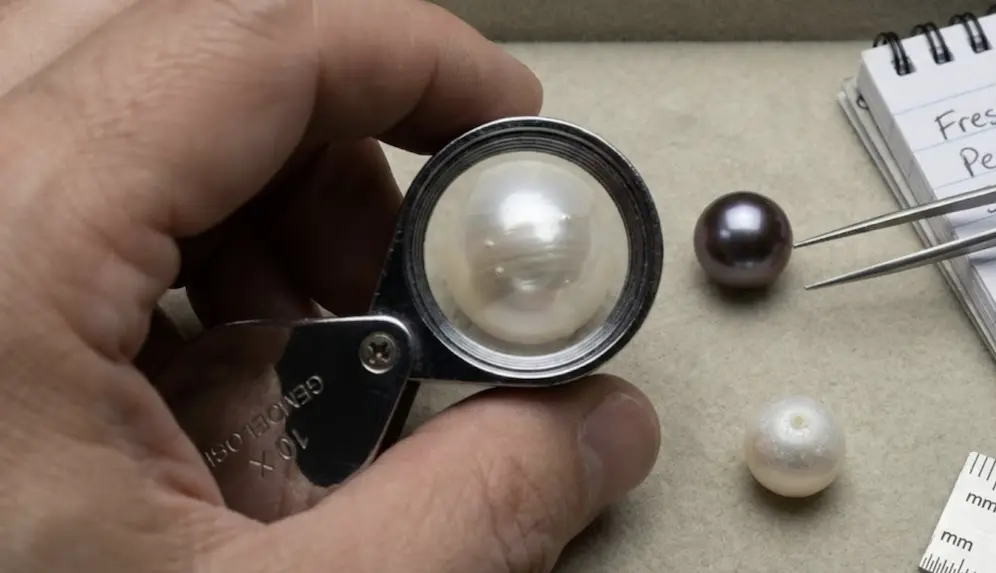
Surface Features (10-30x magnification)
- Natural lines and striations of growth
- Small bumps on the surface (not damage)
- Aragonite platelets that overlap to make texture
- Slightly different colors in some areas
Nacre Quality Indicators
- Thick nacre has a deep, rich shine (AAAA+ grade)
- Thin nacre looks powdery and has a bead nucleus that can be seen (AA or lower)
- The nacre thickness of good wholesale pearls is at least 0.5mm.
Treatment Detection Under Magnification
- Color concentrations in surface pits (dyeing)
- Darker bead nucleus visible through thin nacre (irradiation)
- Uniform, unnatural surface patina (coating)
Plastic vs. Real Freshwater Pearls: Weight Test
This is simple physics. Real pearls have higher density than most imitations.
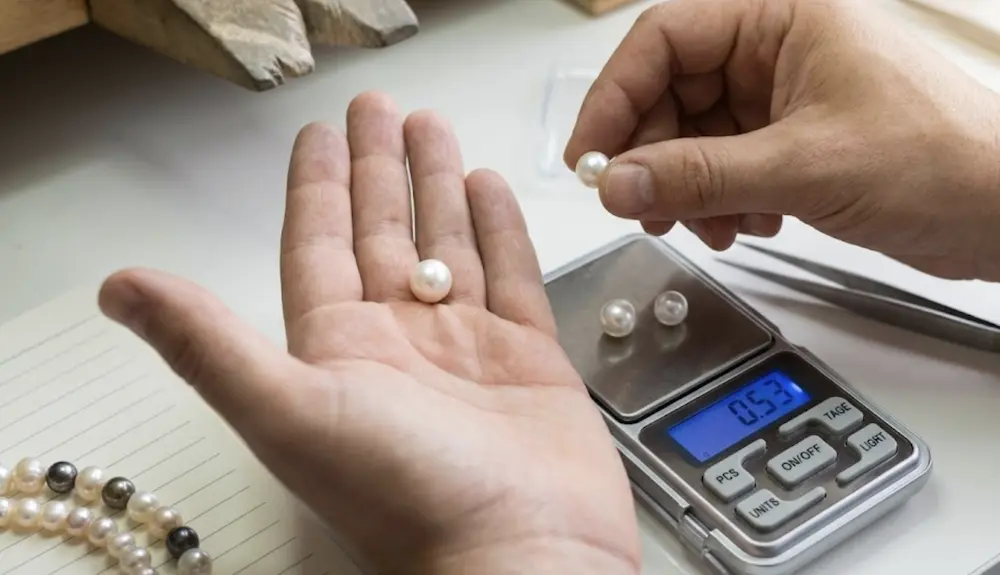
Hold similar-sized pearls in each hand. Authentic pearls feel surprisingly heavy for their size due to compact crystalline structure. Plastic pearls? Obviously lightweight. Glass can be heavy but lacks other authentic characteristics.
Professional buyers use digital scales. A 7-8mm freshwater pearl typically weighs 0.4-0.6 grams. If you’re getting significantly different numbers across a “matched” strand, something’s wrong, which is a useful test for Identifying real freshwater pearls.
Identifying Glass Pearls vs. Freshwater: Sound and Bounce Tests
These physical tests exploit properties that fakes can’t replicate.
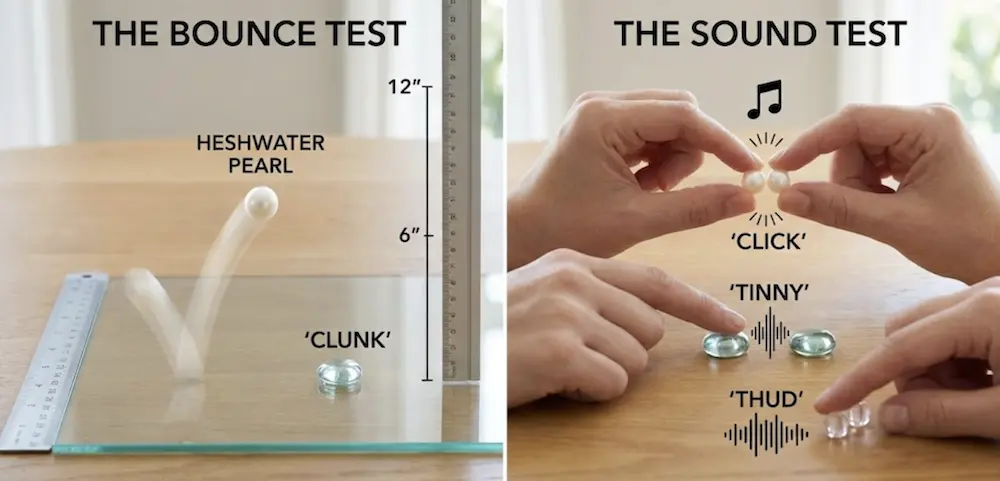
The Bounce Test
Drop a pearl from 12 inches onto glass. Real pearls bounce due to their layered structure. Multiple nacre layers absorb and release energy, creating a noticeable bounce (about 6 inches for quality pearls). Solid glass beads? They clunk. Plastic? Dead drop with no energy return.
The Sound Test
Gently tap two pearls together. Real pearls produce a soft, distinctive click—nacre-on-nacre friction. Glass creates a sharp, tinny sound. Plastic makes a dull thud. The difference is obvious once you’ve heard it.
Spotting Irradiated Freshwater Pearls
Irradiation darkens pearls by affecting manganese content in nacre. Unlike dyeing, irradiation penetrates throughout, which is a factor to consider when Identifying real freshwater pearls and determining if they have been treated.
Visual Indicators:
- Darker color near bead nucleus (in bead-nucleated pearls)
- Uniform dark coloration without surface dye concentration
- Small black specks where treatment was uneven
- Colors ranging from grey to intense blue-green to peacock
Irradiated black freshwater pearls display intense, shifting iridescence—peacock, blue-green, violet hues. Dyed black pearls look flat and uniform with plastic-like shine.
Professional detection requires fluorescence spectroscopy. The practical indicator? Black or grey freshwater pearls under 10mm are treated (natural dark pearls are Tahitian/South Sea, typically 10mm+).
Natural Color vs. Treated Freshwater Pearls
Understanding natural freshwater pearl color range prevents getting scammed, which is an important consideration when Identifying real freshwater pearls.
Natural Freshwater Colors:
- White to cream
- Pink, peach, lavender (soft pastels)
- Light golden tones
- Pale purple/lilac
Always Treated Colors:
- Intense black or grey
- Bright gold (rich, saturated)
- Neon or fantasy colors (red, green, blue)
- Chocolate brown
According to National Pearl Buyers Association standards, all black freshwater pearls and most intense golden varieties are color-treated. This doesn’t make them fake—just less valuable than natural colors or premium saltwater pearls.
When sourcing from a pearl manufacturer, ask directly about treatment. Reputable suppliers disclose dyeing and irradiation. If they claim “all natural” for black 7mm freshwater at $20/strand, you’re dealing with liars or idiots, and this suspicion is a critical step in Identifying real freshwater pearls.
Freshwater Pearl Luster Grading Guide
Luster quality determines value more than size. Understanding this scale is crucial for Identifying real freshwater pearls. The grading scale:
AAAAA Grade (Gem Quality)
- Exceptional mirror-like reflections
- Intense deep glow from within
- Strong, vibrant Orient with dramatic color shifts
- Razor-sharp surface reflections
- Extremely rare in freshwater
AAAA Grade (Excellent)
- Sharp, mirror-like reflections
- Deep glow appearing from within
- Strong Orient with shifting colors
- Clearly defined surface reflections
AAA Grade (Very Good)
- Bright luster with good depth
- Clear reflections, slightly less sharp
- Noticeable Orient
- Minor luster variations acceptable
AA Grade (Good)
- Medium luster, some depth
- Softer reflections
- Minimal Orient
- Visible luster inconsistencies
A Grade (Commercial)
- Lower luster with limited depth
- Dull or chalky surface
- No depth to reflections
- Flat appearance
- Thin nacre showing through
Professional wholesale pearls buyers should look for pearls that are at least AAA+. Lower grades don’t mean anything and show that quality control is bad.
Real Pearls vs. Swarovski Crystal Pearls
Swarovski crystals are high-end imitations—crystal cores with pearlescent coating. They’re beautiful but not pearls.
Key Differences:
- Swarovski pearls are perfectly uniform—every pearl identical
- Too perfect surface with no natural variations
- Drill holes show crystal core, not nacre
- Weight differs from real pearls of same size
- No warmth to the luster—more metallic reflection
Swarovski doesn’t hide what they are. The problem is dishonest wholesalers mixing them into “real pearl” inventory. Always inspect drill holes and use magnification to verify nacre presence.
FAQs: Professional Pearl Identification
Can you always tell real freshwater pearls with the tooth test?
Not at all. The tooth test works on cheap fakes, but it can be rough on more expensive fakes like high-quality shell pearls. Instead, professional buyers use UV tests, drill holes, and magnifying glasses. It works better and faster.
Are all black freshwater pearls fake?
Black freshwater pearls are real cultured pearls but always color-treated through dyeing or irradiation. Natural black pearls only come from Tahitian or Sea of Cortez varieties. If someone’s selling “natural” black freshwater, they’re lying.
How can you tell if freshwater pearls are dyed at home?
Check drill holes for color concentration, examine under UV light for uneven green fluorescence, and look for patchy color distribution. If the price seems too good for the color claimed (like golden pearls under $50/strand), they’re dyed.
What’s the difference between freshwater pearls and shell pearls?
Freshwater pearls are organic gems formed by mussels with layers of nacre. Shell pearls are manufactured from compressed shell powder with pearlescent coating. Real pearls show irregular texture under magnification; shell pearls look perfectly smooth and painted.
Do real freshwater pearls have perfectly round shapes?
Most freshwater pearls are off-round to baroque. Perfectly round freshwater pearls exist but are rare and expensive. If you’re seeing perfectly matched, round strands at bargain prices, they’re likely bead-nucleated lower grades or imitations.
Can laboratories definitively identify real freshwater pearls?
Yes. Professional gem labs use X-ray radiography, Raman spectroscopy, and trace element analysis. These methods detect nacre structure, identify treatments, and distinguish freshwater from saltwater origin with absolute certainty.
The Bottom Line on Identifying Real Freshwater Pearls
It’s not just one test that can tell you if a pearl is real; you need to use a combination of tests. The teeth test finds inexpensive fakes. Drill hole examination gets rid of shell pearls and glass that has been coated. UV light reveals dye treatments. Magnification verifies nacre architecture. Tests of weight and sound give the ultimate validation.
Xinye Pearl is a pearl manufacturer that works with businesses. They understand that mistakes in identification can cost purchasers thousands. What is the answer? Create a methodical way to check things. Look at all the signs. You can trust suppliers who give you paperwork and tell you about their services. Price your inventory based on its real quality, not what the marketing says.
When sourcing wholesale pearls, remember: identifying real freshwater pearls protects your business reputation and profit margins. One bad shipment can destroy client relationships built over years. Take the extra 60 seconds per strand to verify what you’re buying. Your business depends on it.
The pearl market rewards knowledge. Now you have the professional-grade identification methods to compete.


 EN
EN  JA
JA  AR
AR  IT
IT  ES
ES  DE
DE  KO
KO