
Understanding freshwater pearl characteristics isn’t just about picking pretty beads. It’s about knowing what you’re buying, what your customers will pay for, and how to spot value when everyone else sees ordinary. At Xinye Pearl, we’ve worked with enough buyers to know that the difference between profit and loss often comes down to understanding these seven core qualities.
Why Freshwater Pearl Characteristics Matter More Than Ever
Look, the pearl market has changed. What worked five years ago doesn’t work today. Your customers are smarter, more educated, and frankly, they have Google. They know what they’re looking at—or they think they do. That’s why understanding freshwater pearl characteristics gives you an edge.
A single mussel can produce 30-50 pearls / 1-2 pearls at once, making freshwater pearls incredibly diverse in quality and price point. But here’s what nobody tells you: not all those pearls are created equal. Some will sell in seconds. Others will sit in your inventory collecting dust.
The 7 Core Freshwater Pearl Characteristics That Determine Value
Shape: Beyond the Perfect Sphere
Shape is the first thing buyers notice. It’s also the most misunderstood freshwater pearl characteristic.
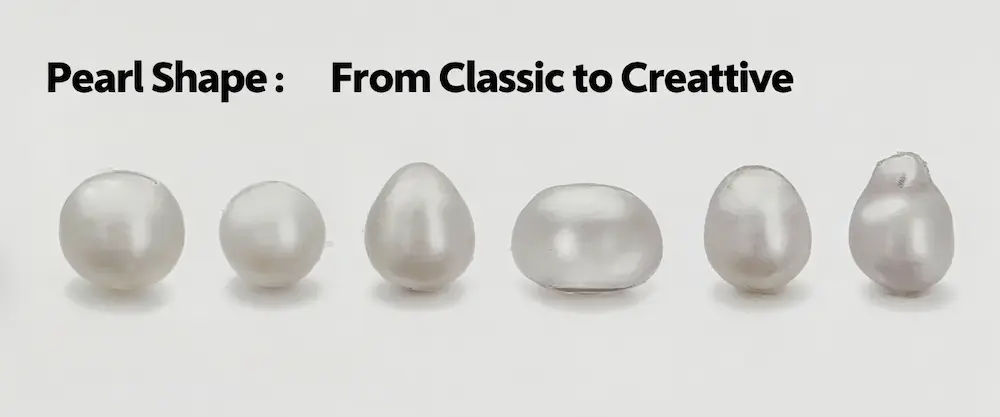
Everyone wants round pearls. Sure. But perfectly round freshwater pearl characteristics are rare—we’re talking about only 5% of production. The rest? Near-round, oval, button, drop, and baroque shapes dominate the market.
Here’s what actually matters:
- Round to near-round: These command premium prices for wholesale pearls because they’re versatile and classic
- Button and coin shapes: Perfect for earrings and pendants where one side sits flat
- Baroque pearls: The design market loves these—unique shapes mean unique pieces
The key freshwater pearl characteristic here? Consistency matters more than perfection. A strand of consistently near-round pearls often sells better than a mixed-shape strand with a few perfect rounds.
Luster: The Make-or-Break Quality
Luster is where freshwater pearl characteristics get real. High luster pearls can reflect nearby objects with clarity, while low-luster ones look chalky and lifeless.
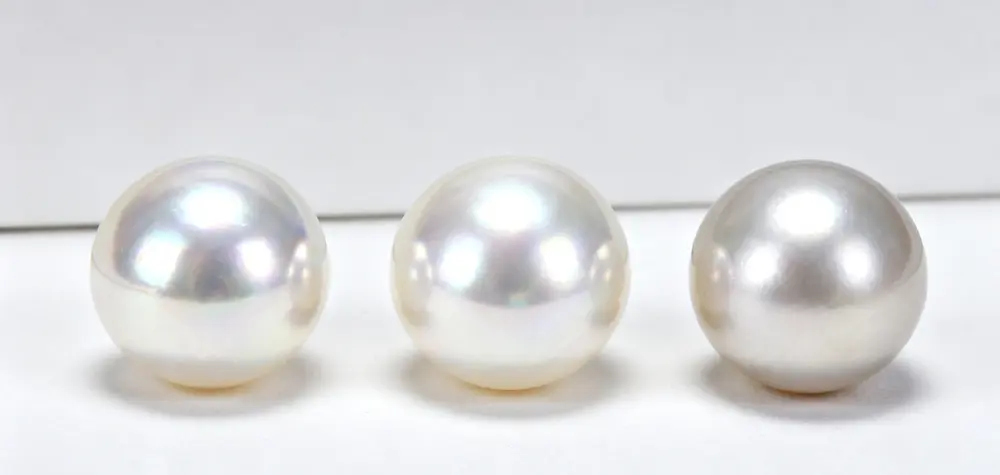
Think of luster as the pearl’s ability to reflect light. Not just bounce it back—actually create that deep, glowing effect that makes people stop and stare. This freshwater pearl characteristic comes from nacre quality and thickness.
Luster grades you need to know:
- Excellent: Mirror-like reflections, sharp edges
- Very High: Clear reflections with slight blur
- High: Bright but softer reflections
- Medium to Poor: Dull, chalky appearance
According to the Gemological Institute of America, luster might be the most important value factor for pearls. We see this play out daily—buyers will accept surface blemishes if the luster is exceptional.
Size: Bigger Isn’t Always Better (But It Usually Is)
Size is a straightforward freshwater pearl characteristic. Pearls typically range from 2mm seed pearls to 15mm+ monsters. But here’s the catch: price doesn’t increase linearly with size—it accelerates.
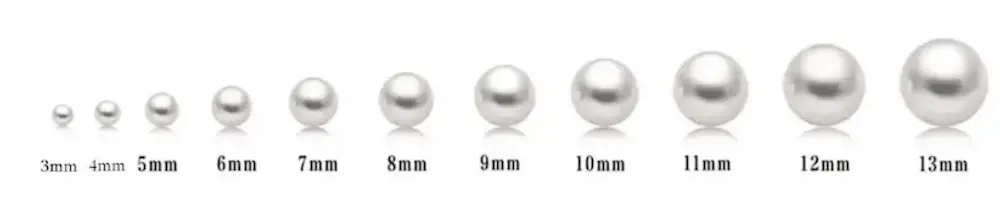
Size sweet spots for different markets:
- 6-7mm: Entry-level jewelry, high volume
- 7-8mm: The bestseller zone for necklaces
- 8-9mm: Premium casual wear
- 10mm+: Statement pieces, limited production
Larger sizes take longer to cultivate. More time in water means more risk—and more cost. That’s why freshwater pearl characteristics like size directly correlate with wholesale price per pearl.
Color: Natural Variety Creates Opportunity
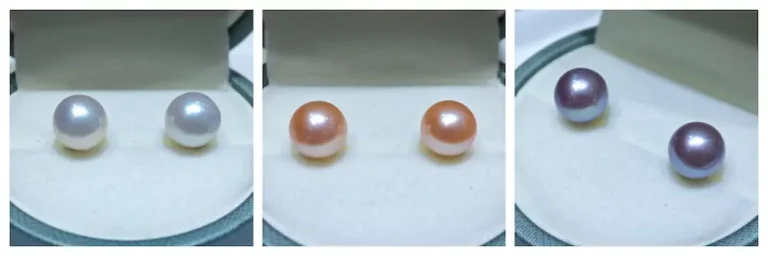
Color might be the most exciting freshwater pearl characteristic because the range is incredible. White, cream, pink, peach, lavender—all natural. No dye needed for these popular shades.
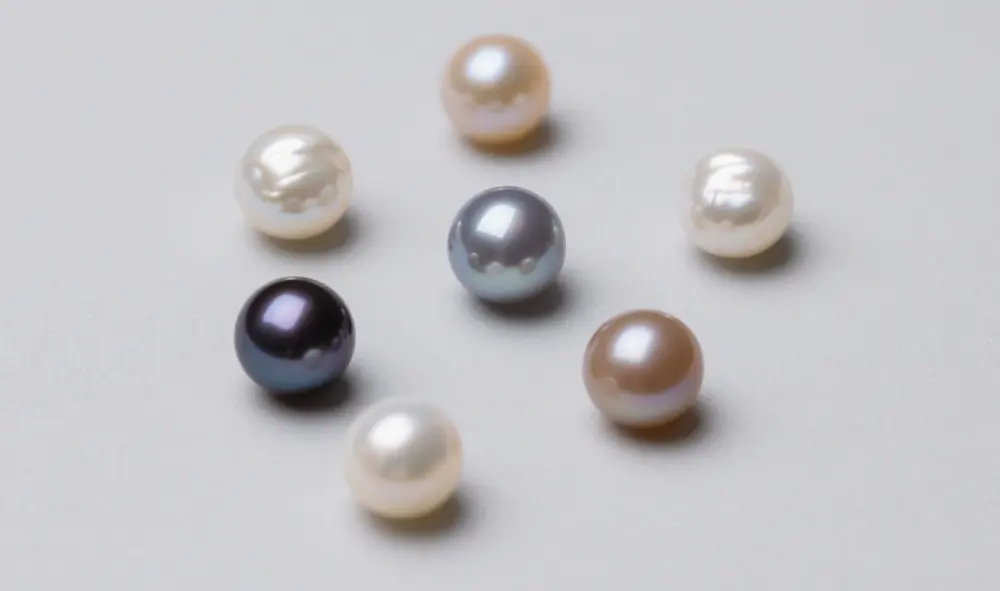
These colors are what buyers encounter most often in today’s market. But don’t overlook the rare stuff. Deep lavender and metallic peacock tones? Those move fast at premium prices.
Color categories:
- Traditional: White, cream, ivory
- Pastels: Pink, peach, lavender
- Metallics: Silver, peacock, bronze
- Dyed: Black (natural black is only from Tahitian pearls)
Pro tip: Natural color consistency across a strand is worth paying for. Mismatched colors kill perceived value faster than almost any other freshwater pearl characteristic.
Surface Quality: Reading the Pearl’s Story
Surface quality as a freshwater pearl characteristic tells you everything about cultivation conditions and harvest timing. Blemishes happen—it’s nature. The question is how many and how deep.
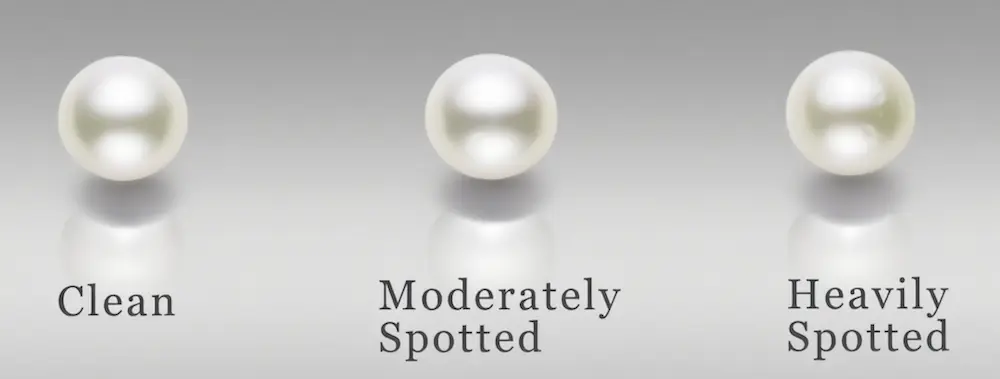
Grading surface quality:
- AAAAA: 95-100% clean surface, virtually flawless (extremely rare)
- AAAA: 90-95% clean surface, minimal blemishes (1-5% inclusion rate)
- AAA: 80-90% clean surface, small shallow marks (5-10% blemishes)
- AA: 70-80% clean surface, visible inclusions
- A: 50%+ blemished, commercial grade
Chalky spots are the most common inclusion type you’ll see. They’re not deal-breakers if luster is strong. That reflective quality actually helps hide minor surface issues.
Nacre Thickness: The Durability Factor
Here’s a freshwater pearl characteristic that separates them from saltwater varieties: they’re solid nacre. No bead nucleus at the center of traditional freshwater pearls.
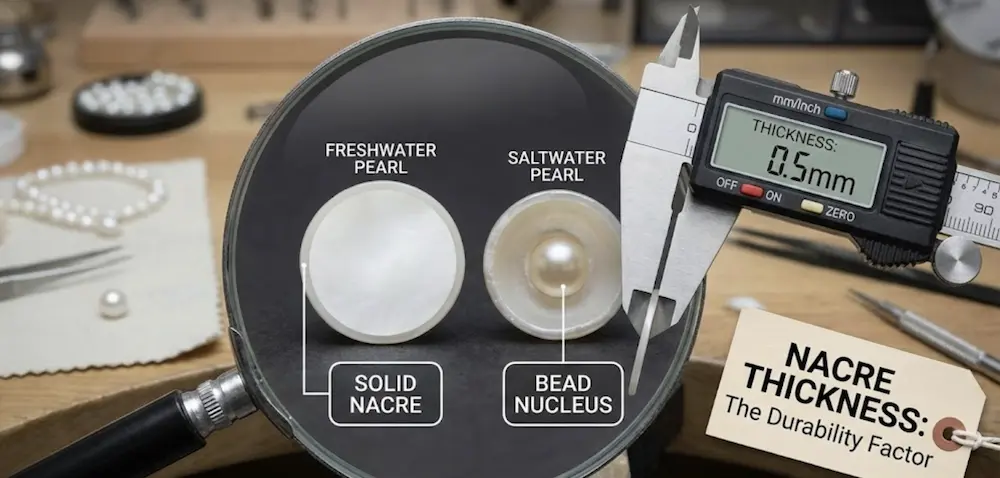
Pearls are treated, drilled, and polished before matching into strands. That processing reveals nacre quality. Thick nacre means:
- Better luster potential
- Greater durability over time
- Resistance to wear on drill holes
- Long-term value retention
At Xinye Pearl, a Pearl Manufacturer with decades of experience, we test nacre density regularly. It’s not visible to the naked eye, but it’s one of the most critical freshwater pearl characteristics for longevity.
Matching: The Hidden Value Multiplier
Matching doesn’t get enough attention when discussing freshwater pearl characteristics, but it’s huge for strand value. A perfectly matched 16-inch strand can sell for 3-5x what the same pearls would fetch unmatched.
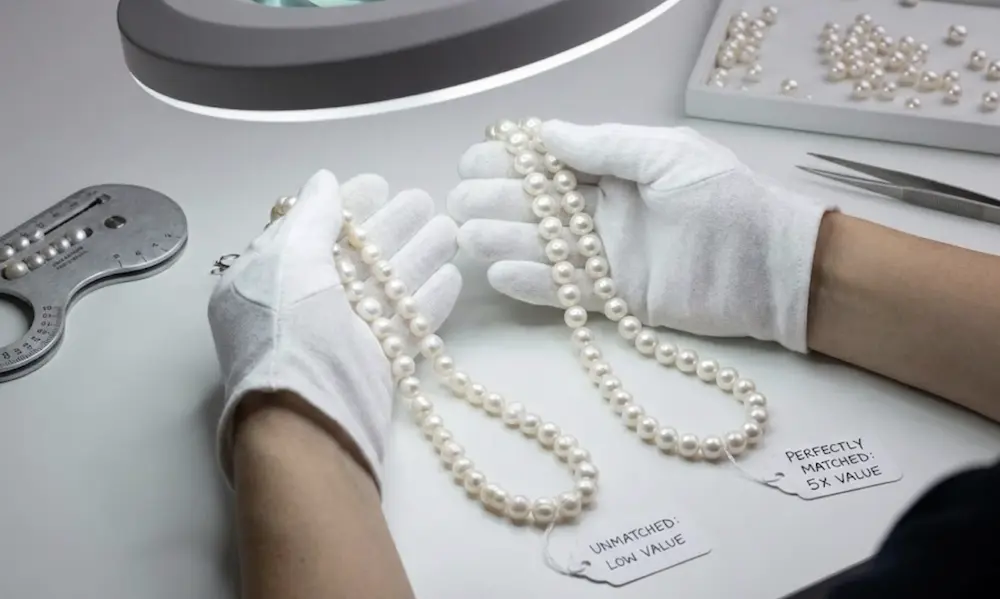
What needs to match:
- Size variation: Under 0.5mm difference
- Shape consistency: Similar profiles
- Color uniformity: Same body color and overtone
- Luster level: Consistent across all pearls
- Surface quality: Similar blemish patterns
Creating matched strands takes time and skill. You might sort through 10,000 pearls to build 20 premium strands. That’s why matching is such a valuable freshwater pearl characteristic in finished goods.
How Freshwater Pearl Characteristics Compare to Saltwater Varieties
The big question buyers always ask: how do freshwater pearl characteristics stack up against Akoya, South Sea, or Tahitian pearls?
Key differences:
| Characteristic | Freshwater | Saltwater (Akoya) |
|---|---|---|
| Production per mollusk | 30-50 pearls/1-2 pearls | 1-2 pearls |
| Nacre composition | Solid nacre | Bead nucleus with nacre coating |
| Shape variety | Highly diverse | Predominantly round |
| Grading system | A-AAAAA scale | A-AAA scale (+ Hanadama) |
| Price point | More affordable | Premium pricing |
| Luster type | Soft, satiny | Sharp, metallic |
| Durability | Excellent | Good to Very Good |
Understanding these distinctions in freshwater pearl characteristics helps you position products correctly. Freshwater isn’t “worse” than saltwater—it’s different. And for many buyers, different is exactly what they need.
Evaluating Freshwater Pearl Characteristics: A Buyer’s Framework
When you’re looking at freshwater pearl characteristics for bulk purchases, use this framework:
Priority 1: Luster and Surface If luster is poor, nothing else matters. Surface quality follows close behind. These freshwater pearl characteristics determine immediate visual appeal.
Priority 2: Shape and Size Match these to your target market. Fashion-forward customers want baroque shapes. Classic buyers want rounds. Neither is wrong—they’re just different markets.
Priority 3: Color and Matching Natural color is a bonus. Perfect matching is essential for high-end strands but less critical for design-grade loose pearls.
Priority 4: Nacre and Origin These freshwater pearl characteristics affect long-term satisfaction and return rates. Don’t skip this evaluation even under time pressure.
Common Mistakes When Assessing Freshwater Pearl Characteristics
Mistake #1: Confusing shine with luster Fake pearls are shiny. Real pearls have luster—a deep, inner glow. Completely different freshwater pearl characteristic.
Mistake #2: Prioritizing size over quality A 12mm pearl with medium luster sells slower than an 8mm pearl with excellent luster. Quality beats size every time.
Mistake #3: Ignoring shape diversity The baroque pearl market is exploding. Don’t write off these freshwater pearl characteristics as “defects”—they’re opportunities.
Mistake #4: Expecting perfection Perfect pearls are unicorns. Learning to evaluate freshwater pearl characteristics means understanding acceptable imperfection levels for each price point.
How Cultivation Affects Freshwater Pearl Characteristics
The reality of pearl farming shapes every freshwater pearl characteristic you see. Mussels are grafted with tissue pieces that form pearl sacs, which then secrete nacre over 2-7 years.
Important criteria for growing are:
- Quality of water: Cleaner water makes things shine better.
- Time to grow: The longer you grow it, the thicker the nacre will be.
- Mussel health: When mussels are stressed, they make pearls that aren’t as good.
- Timing of harvest: Too early degrades quality of the surface; too late threatens blemishing
China makes around 95% of the world’s freshwater pearls, making it the biggest producer. Because of that concentration, knowing how Chinese farmers work directly affects your ability to appropriately judge the qualities of freshwater pearls.
Quality Standards and Freshwater Pearl Characteristics
Grading standards in the industry assist make sure that freshwater pearls have the same qualities, but they aren’t the same for all pearls. Different providers use different scales.
Here are several common ways to grade freshwater pearls:
- A-AAAAA Scale: This is the most complete scale, with AAAAA being the highest.
- The A-AAAA scale is used a lot in North America and in internet stores.
- A-AAA Scale: A traditional Japanese system that has been changed for freshwater
- Class I-IV method: A Chinese farming method that has been changed to letter grades
Here’s what each grade actually means:
AAAAA Grade (Gem Quality – Extremely Rare)
- 95-100% clean surface, virtually flawless
- Exceptional luster with mirror-like reflections
- Perfectly round shape (less than 2% deviation)
- Only 1-3% of harvest meets this standard
AAAA Grade (Premium Quality)
- 90-95% clean surface with 1-5% blemishing
- Very high to excellent luster, sharp reflections
- Round to near-round shape
- Can see detailed facial features in reflection
AAA Grade (High Quality)
- 80-90% clean surface with 5-10% blemishing
- High luster with bright, clear reflections
- Near-round shape (noticeable upon close inspection)
- Most popular grade for fine jewelry
AA Grade (Good Quality)
- 70-80% clean surface
- Medium to high luster
- Slightly off-round shape
- Value-grade for commercial jewelry
A Grade (Commercial Quality)
- 50-70% clean surface
- Fair to medium luster
- Visibly off-round
- Entry-level jewelry and craft use
None of these are perfect at showing all the traits of freshwater pearls. That’s why it’s important to get to know your trusted suppliers. We at Xinye Pearl give you full grading reports that go beyond mere letter grades and tell you exactly what you’re getting.
The Future of Freshwater Pearl Characteristics
New cultivation techniques are evolving freshwater pearl characteristics rapidly. Edison pearls—large, bead-nucleated freshwater varieties—now rival South Sea pearls in size. These pearls regularly achieve 15-16mm sizes, something unthinkable a decade ago.
Emerging trends:
- Larger sizes through advanced nucleation
- Improved luster through selective breeding
- More consistent shapes via cultivation technology
- New natural color varieties entering the market
This change in the qualities of freshwater pearls offers both chances and problems for B2B buyers. The market changes quickly. What was premium yesterday could be normal tomorrow.
Frequently Asked Questions
What are the most important freshwater pearl characteristics for jewelry buyers?
Luster and surface quality dominate purchase decisions. These freshwater pearl characteristics create immediate visual appeal. AAAA-AAAAA grade pearls feature mirror-like luster that reflects detailed images. Size and shape matter for specific applications, but without exceptional luster, nothing else saves a pearl.
How can you tell high-quality freshwater pearls?
Look for sharp, bright luster that creates clear reflections. Surface should be 80%+ clean. Shape should be consistent, and color should be uniform across matched sets. These freshwater pearl characteristics indicate premium quality.
Do freshwater pearls last as long as saltwater pearls?
Yes—often longer. Solid nacre composition means freshwater pearl characteristics include excellent durability. Properly cared for, they last generations. The key is buying adequate quality initially.
What’s the difference between AAAAA and AAA freshwater pearl characteristics?
AAAA pearls are beautifully spherical, flawless (95-100% clean), and mirror-like with crisp reflections. Very rare—only 1-3% of harvest. AAA pearls are near-round, high-luster, and clean with 5-10% little blemishing. Both are high-grade, but AAAAA is excellent.
Are baroque-shaped freshwater pearls lower quality?
Not necessarily. Baroque is a freshwater pearl characteristic describing shape irregularity, not overall quality. Many baroque pearls feature excellent luster and surface quality—they’re just not round. The design market values them highly.
How does cultivation time affect freshwater pearl characteristics?
For every year that goes by, nacre gets thicker, shinier, and bigger. After 3 to 4 years, it changes nothing. Blemishes are more likely to show up when the growth lasts longer. The traits of freshwater pearls are balanced when they are picked at the right time.
Understanding freshwater pearl characteristics transforms how you approach the wholesale pearl market. At Xinye Pearl, we’ve spent decades refining our ability to source, evaluate, and deliver pearls that match exactly what B2B buyers need. Whether you’re sourcing for retail, design, or manufacturing, these seven characteristics provide the framework for making smart buying decisions every single time.





 EN
EN  JA
JA  AR
AR  IT
IT  ES
ES  DE
DE  KO
KO