Running an Etsy jewelry shop sounds romantic until you look at your profit margins. You’re creating beautiful pearl necklaces and earrings, and your customers love them, but somehow you’re barely breaking even. Here’s the brutal truth: if you’re buying materials from local craft stores or high-MOQ suppliers instead of sourcing wholesale pearls for Etsy, you’re leaving 50-70% of your potential profit on the table.
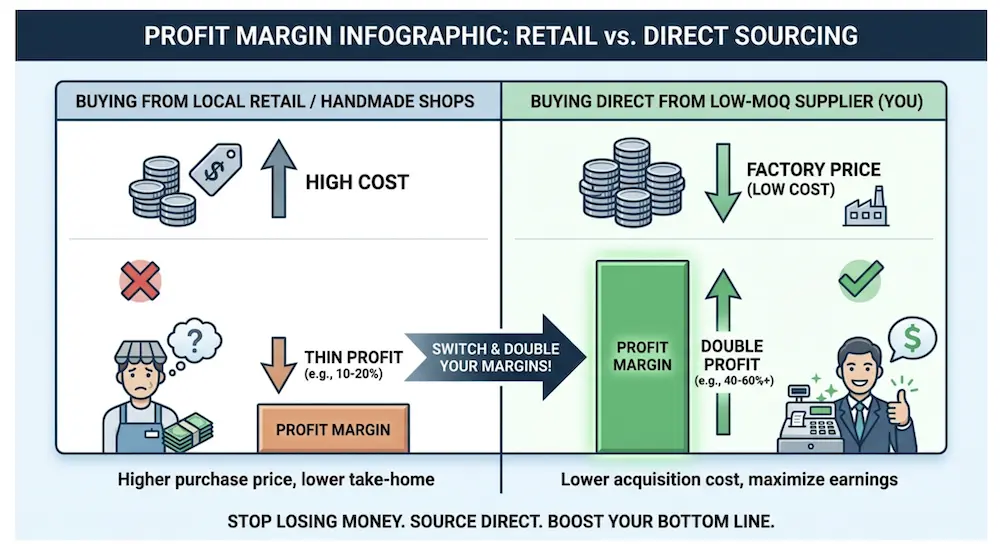
At Xinye Pearl, we’ve worked with hundreds of Etsy sellers who made the switch to direct sourcing from a Low MOQ pearl supplier. The difference? They went from scraping by to building actual businesses. Let me show you exactly how wholesale pearls for Etsy can transform your shop’s economics.
The Etsy Profit Trap Most Sellers Don’t See
Let’s run real numbers using a mid-range baroque pearl necklace.
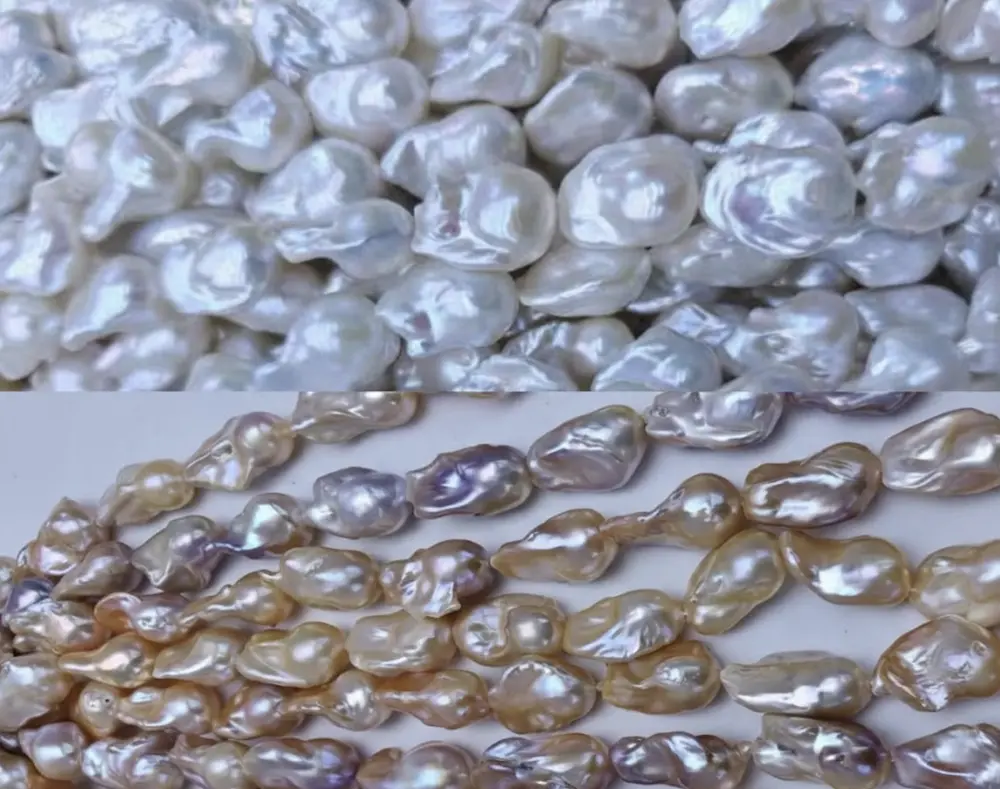
Scenario A: Buying from Local Retailers You’re purchasing a baroque pearl strand from a local bead shop or US-based online retailer at $45-65 per strand. Add $8-12 for findings (clasp, jump rings, wire). You create a 16-inch necklace using one full strand and list it at $89 on Etsy.
- Material cost: $53-77
- Etsy fees (9.5% total): $8.46
- Your profit: $3.54-27.54
- Time invested: 1.5-2 hours
- Hourly rate: $1.77-18.36
Even at the best case, you’re making less than minimum wage.
Scenario B: Direct from Low MOQ Pearl Supplier Same quality baroque pearl strand from a factory like Xinye Pearl: $25-50 for entry-to-mid grade. Same $8-12 in findings. Same $89 listing price.
- Material cost: $33-62
- Etsy fees: $8.46
- Your profit: $18.54-47.54
- Time invested: 1.5-2 hours
- Hourly rate: $9.27-31.69
That’s a $15-32 profit difference per necklace compared to buying local. Make 10 necklaces a month and that’s $150-320 in extra money for literally the same work.
Quick Comparison:
| Cost Source | Pearl Strand Cost | Other Materials | Total Cost | Profit @ $89 Sale | Profit Margin |
|---|---|---|---|---|---|
| Local Bead Shop | $55 | $10 | $65 | $15.54 | 17% |
| US Online Retailer | $48 | $10 | $58 | $22.54 | 25% |
| High-MOQ Wholesaler | $38 | $10 | $48 | $32.54 | 37% |
| Low MOQ Factory (Xinye) | $25 | $10 | $35 | $45.54 | 51% |
The gap isn’t just dollars—it’s the difference between a hobby that bleeds money and a business that actually pays you.
Why Low MOQ Matters for Etsy Sellers
Traditional pearl suppliers want you to order 50-100 strands minimum per style. That’s $200-500 locked up in inventory before you sell a single piece. For small Etsy shops testing new designs, that’s a killer.

A Low MOQ pearl supplier changes the game completely. At Xinye Pearl, our minimum is just 5-10 strands per order. This means:
- Test new designs without major cash commitment
- Stock diverse styles instead of being stuck with one type
- Respond quickly to customer requests for custom colors
- Keep inventory lean and cash flow healthy
When you’re starting or growing an Etsy shop, flexibility beats bulk pricing every time. You need to learn what sells before committing thousands to inventory. Low MOQ lets you experiment, pivot, and scale at your own pace.
One of our Etsy customers started with just 3 different pearl types (10 strands each). She tested designs for 2 months, identified her bestsellers, then scaled up on those specific items. Within 6 months she was doing $4k/month in sales. Try that with a 100-strand MOQ supplier and you’d need $2,000+ upfront just to test.
Quality Consistency: The Silent Killer of Etsy Shops
Here’s what nobody tells you about Etsy: one bad review can tank your conversion rate by 30%. And in the pearl business, inconsistent quality is the fastest way to get those bad reviews.
Your customer orders a “baroque pearl necklace” expecting the beautiful, lustrous pearls from your photos. They receive pearls that are dull, heavily blemished, or completely different sizes. Review bomb incoming. Your shop’s credibility evaporates overnight.
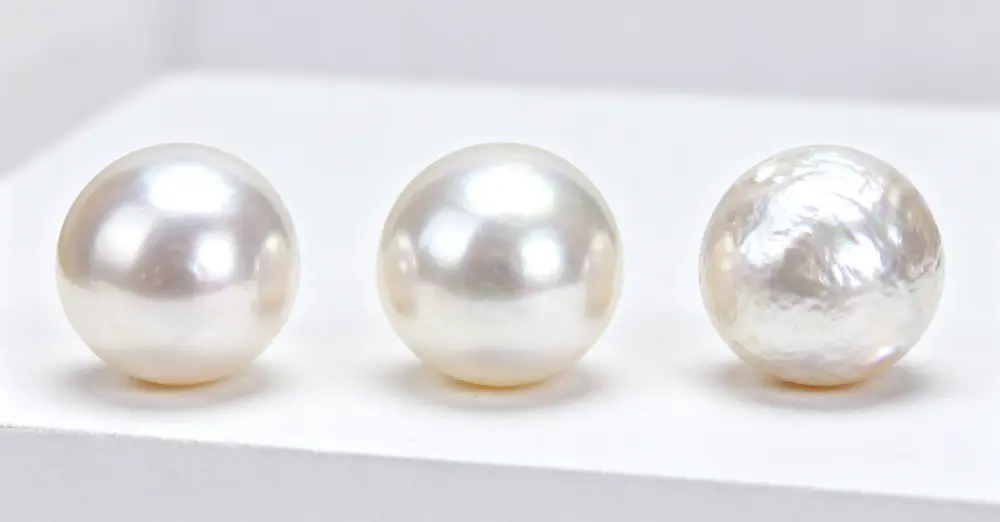
This is why it’s not an option to engage with a wholesale pearls provider that doesn’t put quality control first—it’s a matter of life and death. Every batch at Xinye Pearl goes through our 6-step quality check:
- Visual inspection – checking for major blemishes, cracks
- Luster grading – ensuring consistent shine across the batch
- Size verification – measuring diameter variance (we keep it under 0.5mm)
- Shape consistency – particularly critical for baroque and potato pearls
- Drill hole quality – clean, centered holes that won’t crack
- Final matching – pairing similar pearls for symmetrical designs
We photograph or video each batch before shipping. You see exactly what you’re getting. No surprises, no disappointments, no angry customers leaving 1-star reviews because the pearls “don’t match the listing.”
According to Etsy’s own research, shops with 4.8+ star ratings convert 2-3x better than those below 4.5 stars. Quality consistency isn’t just about customer satisfaction—it’s about conversion rates and revenue.
Understanding Pearl Types for Your Etsy Listings
Not all pearls work for Etsy. The platform rewards unique, artisan designs. Generic round white pearls? Oversaturated market. Distinctive baroque shapes, Edison pearls with vibrant colors, keshi pearls with organic textures? Now you’re talking.
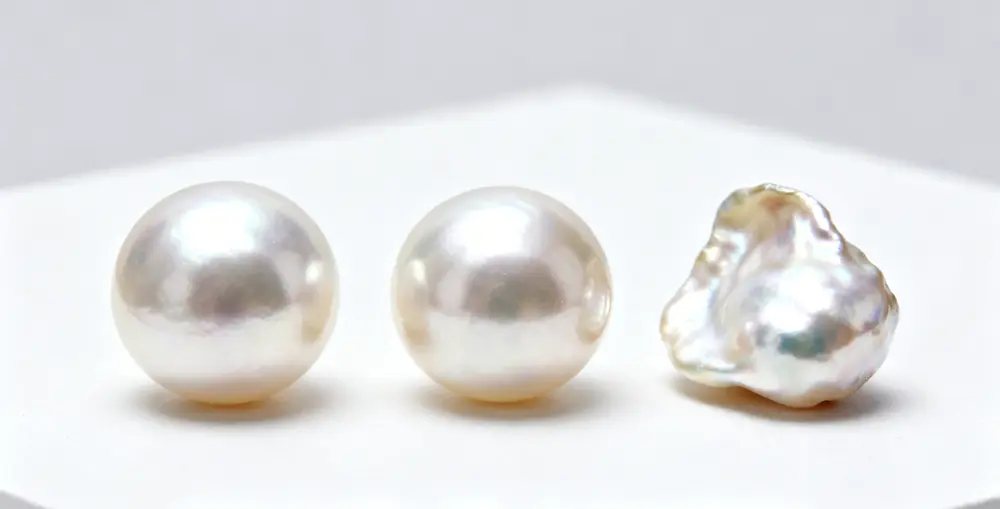
Baroque Pearls are your bread and butter for Etsy. Each one’s unique, which means each piece you create is one-of-a-kind. Customers love that. These freshwater pearls range from subtle potato shapes to dramatic stick formations.
Wholesale strand pricing from Xinye Pearl:
- Entry-level quality: $25 per strand (great for $75-95 retail pieces)
- Mid-grade quality: $50 per strand (suitable for $140-180 retail)
- Premium quality: $65 per strand (can command $200-280 retail)
Edison Pearls are the premium play. Larger (9-16mm), round to near-round, with that deep metallic luster that photographs beautifully. Perfect for statement necklaces. Wholesale strands run $75-140 depending on size and luster grade.
Rice and Potato Pearls are your volume products. Smaller (4-7mm), affordable, great for bracelet stacks and delicate necklaces that sell quickly at $35-55 price points. Wholesale strands: $12-22.
Keshi Pearls are for the artisan crowd—irregular, organic, no nucleus. They appeal to customers looking for “raw” or “natural” aesthetics. Limited availability but strong demand. Wholesale strands: $28-45 depending on size.
Most successful Etsy pearl sellers we work with maintain 3-5 core pearl types, then rotate in seasonal or trending styles quarterly. This keeps shops fresh without overwhelming inventory management.
Custom Sourcing: The Services Etsy Sellers Actually Need
Standard wholesale is simple: you order, they ship. But Etsy sellers need more than that. You’re not Amazon—you’re creating custom pieces for real humans with specific requests.
At Xinye Pearl, we built our services around what Etsy sellers actually told us they needed:
- Pre-drilled pearls – Most Etsy sellers don’t have drilling equipment. We drill holes to your specification: full drill, half drill, side drill. Clean, centered, consistent.
- Matched pairs – For earrings, you need pearls that look identical. We hand-match pairs by size, color, and luster. No more “close enough” mismatches that customers notice immediately.
- Mixed color batches – Want to create gradient necklaces? We can provide strands with intentional color variation—whites transitioning to pinks, or natural rainbow mixed strands.
- Size sorting – Need all 7mm pearls for a specific design? We sort and grade by exact size so your finished pieces have professional consistency.
- Sample strands – Before committing to a full order, grab a sample strand (we offer these at 5-strand minimums) to test colors under your lighting and see how they photograph.
These services matter because your customers expect handmade quality with commercial consistency. They want artisan pieces that don’t fall apart or look amateurish. The right supplier makes that possible without you needing a full jewelry workshop.
How to Start Sourcing Wholesale Pearls for Etsy
Let’s make this practical. You’re convinced that sourcing from a Low MOQ pearl supplier makes sense, but you don’t know where to start. Here’s the exact process we walk Etsy sellers through:
Step 1: Identify Your Best Sellers Look at your last 50 sales. Which pearl types/styles appear most? Don’t guess—use data. If baroque pearls in natural white outsell everything else 3:1, that’s your volume item.
Step 2: Start Small Order 3-5 strands of your top 2-3 pearl types. At $25-65 per strand depending on grade, this gives you $75-325 in initial inventory investment—enough to create 3-5 test pieces while evaluating factory quality and shipping reliability.
Step 3: Test Everything When your order arrives, photograph them under natural light and your studio lighting. String a few sample pieces. Wear them for a day. Make sure they match your quality standards before ordering more.
Step 4: Calculate True Costs Factor in shipping, customs (if applicable), and your time. A pearl strand that costs $30 but requires 20 minutes of extra sorting and matching isn’t necessarily better than a $50 pre-sorted, consistent-quality strand that’s ready to string immediately.
Step 5: Build Supplier Relationships Once you find a reliable Low MOQ pearl supplier, communicate regularly. Share what’s selling, ask about new styles, give feedback. Good suppliers become partners who help you grow.
Always, the first order is a test. You’re looking at how well they communicate, how quickly they ship, how accurately they ship, and how they deal with problems. Don’t agree to exclusivity or large orders until you’ve finished 2–3 successful ones.
Most of the Etsy businesses we work with place their initial order for $300 to $500. This usually includes 6 to 12 strands of different varieties of pearls, which is enough for 6 to 12 finished pieces (2 to 3 months at early-stage sales volumes), with enough diversity to try out alternative styles and price points.
The Real Cost of Buying Local vs. Direct Import
Let’s destroy the myth that buying local is “safer” or “easier” for Etsy sellers.
Your local bead shop buys from an importer who bought from a Chinese distributor who bought from a factory. You’re paying markup on markup on markup. The shop needs to cover rent, staff, and inventory risk, so they’re adding 120-220% above factory cost.
Meanwhile, direct sourcing from a Pearl Manufacturer means one transaction. Factory to you. The pearl strand that costs you $55 locally? It’s $25-35 direct. That $20-30 difference is pure profit added to every single necklace you make.
“But shipping costs from China are expensive!” Actually, when you factor in volume, no. For a 5-pound package (roughly 12-18 strands depending on size), you’re looking at $30-50 for standard shipping that arrives in 10-15 days. Expedited runs $70-95 for 5-7 days. Split that cost across 15 strands and you’re adding $2.00-6.30 per strand for shipping.
Real World Example:
- Local craft store: $55/strand, pickup immediately
- Direct factory: $30/strand + $3.30 shipping = $33.30/strand total, arrives in 2 weeks
That’s still a $21.70 savings per strand. If you’re making 12 necklaces per month using 1 strand each, that’s $260/month in pure profit increase. Over a year? $3,120 more money in your pocket for literally the same quality pearls.
The “convenience” of buying local costs you over three thousand dollars annually. That’s not convenience—that’s paying a premium to avoid planning two weeks ahead.
FAQs About Sourcing Wholesale Pearls for Etsy
How do I know the pearls are real and not plastic?
Real factories will send you samples of photos and movies before they ship them. Real cultured freshwater pearls have weight, cool touch temperature, and visible surface variations.
Can I request specific colors or sizes not listed on the website?
Yes, of course. Most Low MOQ pearl supplier operations can get custom requirements in 2 to 4 weeks.
How long does international shipping typically take?
Standard shipping from China to the US/Europe runs 10-15 business days. Expedited options deliver in 5-7 days. Factor this into your inventory planning—don’t wait until you’re out of stock to reorder.
Do I need a business license to buy wholesale?
Not all the time. A lot of vendors work with Etsy merchants that are sole entrepreneurs. But having an EIN or business registration can help you get better prices and make it easier to clear customs for overseas orders.
What if customers ask about pearl origin?
Be transparent. Customers like to know that the wholesale pearls they buy are from freshwater pearl farms in China. Frame it as direct sourcing that enables you keep quality high while offering better pricing. Being real sells.
Your Next Move: From Side Hustle to Real Business
The difference between an Etsy hobby and an Etsy business comes down to margins. You can make beautiful jewelry either way, but only one pays you what your time is worth.
Working with a Low MOQ pearl supplier isn’t about buying cheaper materials—it’s about building sustainable unit economics. It’s the difference between making $8 per hour and making $40 per hour doing the exact same work.
Every successful Etsy jewelry seller we’ve partnered with faced the same decision you’re facing now. Keep buying retail and hoping to grow, or make the shift to wholesale sourcing and actually scale. The ones who switched didn’t just increase profits—they freed up cash to invest in better tools, paid ads, and inventory that let them serve more customers.
Start small. Test one order. Prove to yourself that wholesale pearls for Etsy can transform your shop’s economics. Then scale from there. Your future self—the one running a profitable business instead of an expensive hobby—will thank you for taking action today.
Ready to source wholesale pearls for Etsy that actually make sense for small batch production? Visit Xinye Pearl to explore our low-MOQ options and see why hundreds of Etsy sellers trust us as their Low MOQ pearl supplier.