
Here’s a question worth sitting with: that $800 freshwater pearl necklace sitting in the glass case at your local jewelry store — what did it actually cost to make?
The pearl itself came from a farm in China. A worker plucked it, sorted it, and drilled it. The strand was matched, knotted, and clasped. By the time it left the factory floor, the total material and labor cost was probably under $60. Maybe $80 if the quality is genuinely good.
So where does the other $720 go? That’s what this article is about.
At Xinye Pearl, we sit at the source of the supply chain — the processing factory level, one step removed from the farm. We work with jewelry designers, boutique retailers, and online sellers who are tired of paying retail-adjacent prices while calling it “wholesale.” What follows is an honest breakdown of how wholesale pearl prices vs retail actually stack up, why the gap is enormous, and how to position yourself on the right side of it.
Fact 1: The Real Markup Is 300% to 500% — Not 100%
Most product categories use keystone pricing: buy at $40, sell at $80. Double it and done. Pearl jewelry does not work that way.
The standard retail markup for pearl jewelry runs between 3x and 5x the true wholesale price — and for branded or department store product, it goes higher. A pearl strand that leaves a Chinese processing factory at $120 can land on a retail shelf at $600 to $900 without anyone in the chain doing anything dishonest. That’s just how many layers of margin get stacked on top.
| Pearl Type | Factory Wholesale Price (per strand) | Typical Retail Price | Markup Multiple |
|---|---|---|---|
| 8–9mm Freshwater, AA A grade | $45–$70 | $180–$280 | 3–4x |
| 10–11mm Freshwater, AAA grade | $90–$140 | $380–$560 | 4–5x |
| Edison Pearl necklace, 12–14mm | $130–$200 | $600–$1,100 | 4.5–6x |
| Akoya 7–7.5mm, high luster | $180–$260 | $700–$1,200 | 3.5–5x |
Why is retail pearl jewelry so expensive? It’s not fraud. It’s overhead. A jewelry counter in a mid-tier mall pays $80–$150 per square foot per year in rent. Marketing eats another 15–20% of revenue. Staff, insurance, display cases, packaging — all of it gets priced into the product. Dead inventory does too: everything that doesn’t sell gets amortized across everything that does.
None of that has anything to do with the pearl. But the pearl absorbs all of it.
The implication for B2B buyers: that 300–500% margin is the playing field you’re operating in. The question is whether you’re capturing any of it, or giving it away.
Fact 2: You’re Paying a “Middleman Tax” on Every Purchase
Here is the supply chain, mapped out plainly:

Every node in that chain needs a margin to survive. The typical markup per step is 30–50%. By the time a pearl has moved from a Chinese export trader to a US importer to a regional distributor, the price has tripled before a single retailer has touched it.
The “wholesaler” you found on Alibaba or at a trade show is almost certainly sitting somewhere in the middle of that chain, not at the beginning. They call themselves a wholesaler. They are not. They’re an importer with a wholesale-sounding website.
Direct from factory pearl prices — what you pay when you buy from an actual pearl manufacturer — are a completely different number. DHL and FedEx ship from China to the US, UK, or EU in 3–10 business days. The logistics barrier that once protected middlemen doesn’t exist anymore. You just have to know who to call.
Fact 3: Matching and Sorting Is a Hidden Cost — Unless You Skip It
Here’s something most buyers never think about: assembling a finished pearl necklace is genuinely hard.
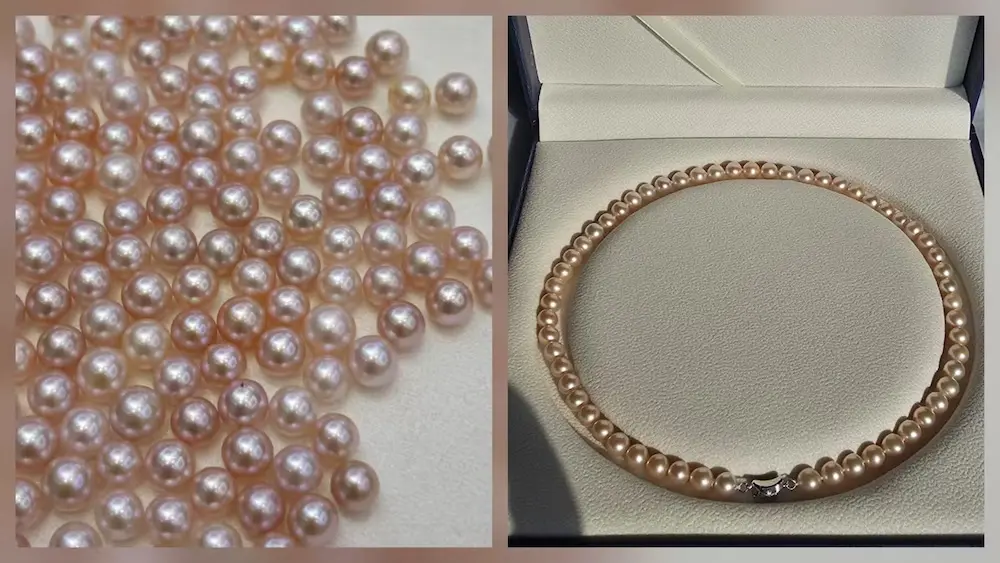
To build a 50-pearl strand where every pearl matches in diameter (within 0.5mm), roundness, luster grade, and surface blemish score, a factory might sort through 8,000 to 12,000 raw pearls. The rejects get sold as loose pearls at a steep discount, or used for lower-grade finished jewelry. The cost of that sorting work is embedded in the price of the finished strand.
If you buy loose wholesale pearls or temporary strands — drilled but not knotted, not clasped — you get a price that strips out a significant chunk of that labor cost. You can do your own matching in-house, or have a local jeweler string them to your spec.
Practical tip: For freshwater pearls, buying temporary strands and finishing them yourself typically saves 20–35% compared to finished, knotted necklaces at the same quality grade. For designers doing custom work, this is the move.
Fact 4: Edison Pearls Are the Best Retail Arbitrage in the Business Right Now
If you want a single example of the wholesale to retail price multiple at its most extreme, look at Edison pearls.
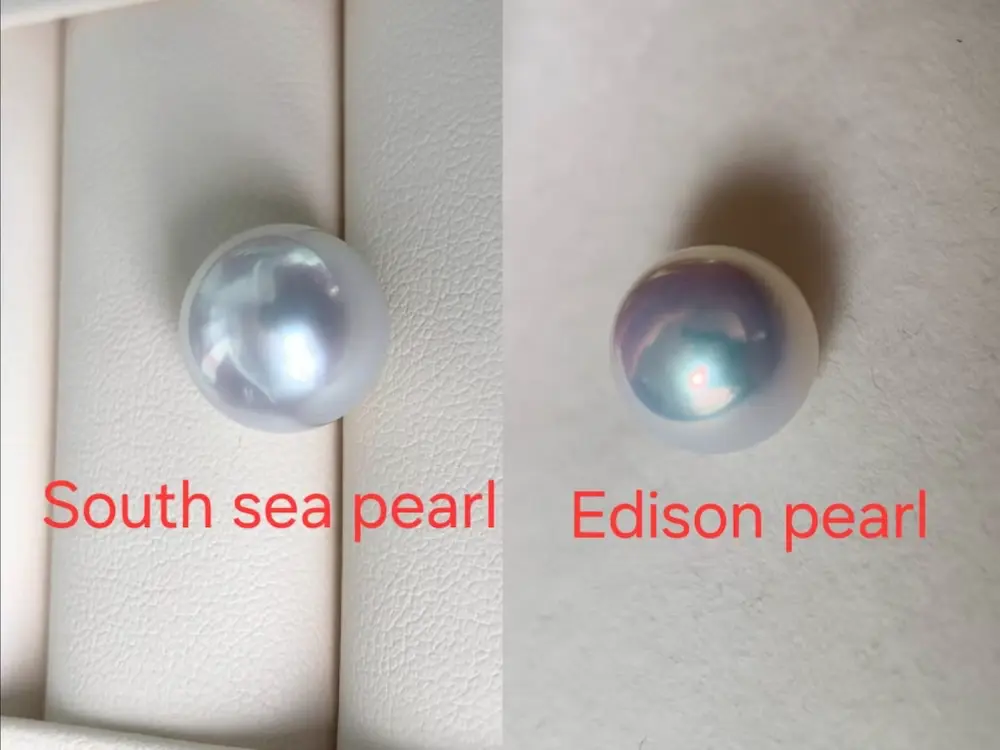
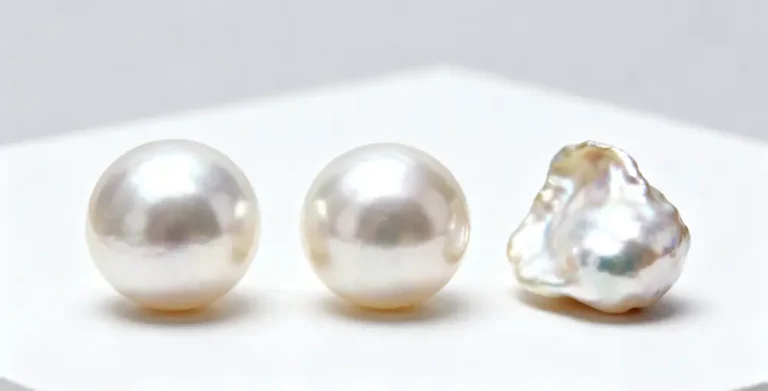
Edison pearls are large-nucleated freshwater pearls, typically 10–16mm, with metallic luster and round/near-round shapes. They look, to the untrained eye, almost identical to South Sea pearls. A South Sea pearl of comparable size retails for $2,000–$8,000 per pearl. An Edison pearl retails for $80–$400.
At the factory level, a high-quality Edison pearl can be purchased for $15–$70 per piece depending on size and grade. The wholesale pearl price vs retail gap here is legitimately 6x to 12x on the high end.
| Pearl | Factory Price (per piece) | Retail Price (per piece) | Multiple |
|---|---|---|---|
| Edison, 12mm, metallic luster | $25–$65 | $150–$300 | 5–8x |
| Edison, 14mm, AAA | $45–$70 | $250–$450 | 5–7x |
| South Sea, 13mm (comparable look) | $400–$900 | $1,500–$4,000 | 3–5x |
The positioning is simple: “South Sea look, freshwater price.” Customers who want big, shiny, impressive pearls — and don’t need the brand provenance of an Autore or a Mikimoto — will buy it. A lot of them already do.
Fact 5: The Blue Box and the Red Box Are a Packaging Fee
There is nothing wrong with buying from a prestige jewelry brand. But it helps to know what you’re paying for.
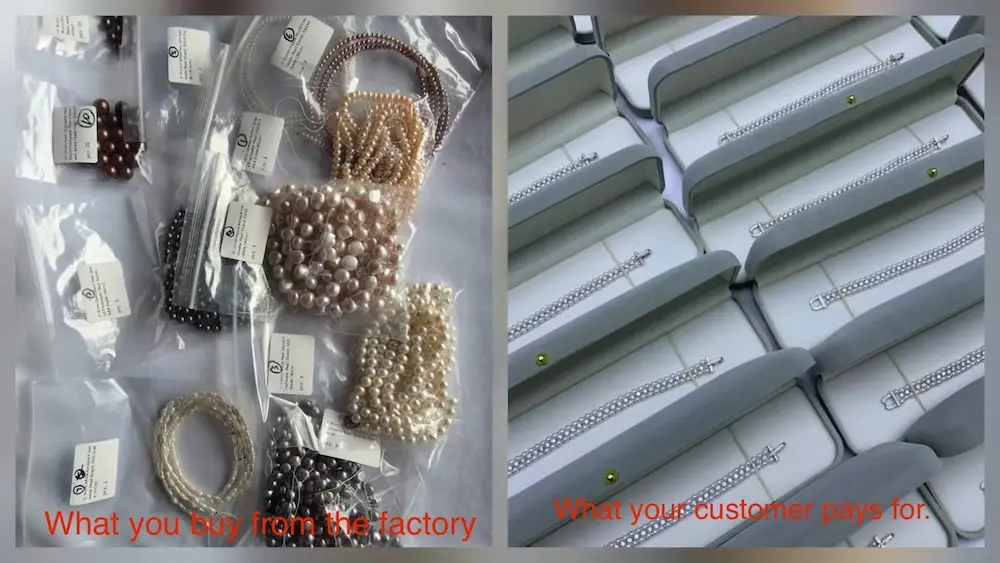
The pearls in a famous European brand’s blue box and the pearls in a factory poly bag often come from the same farms in Zhuji, Guangxi, or Akoya-growing bays in Japan. The grading and QC will differ at the high end — serious luxury brands do cherry-pick from the top of the sort. But at the mid-range, the difference between a $400 “department store” pearl necklace and a $90 factory-direct strand of equivalent quality is largely the box, the branding, and the rent on the counter where it sits.
The smart play for independent retailers: buy the best quality pearl you can afford directly from a pearl manufacturer, and spend the savings on your own packaging. A custom ribbon box with your logo, tissue paper, a branded pouch — that costs $3–$8 per unit at volume. It does the same psychological job as the famous box. Your margin looks completely different.
Fact 6: Most “Wholesale” Websites Are Retail in Disguise
Search “wholesale pearls” and you’ll find dozens of sites. Most of them are not wholesale in any meaningful sense. They’re consumer-facing retailers who’ve dropped the price 20–30% and added the word “wholesale” to their meta title.
Real wholesale has two markers: tiered pricing that drops meaningfully at volume, and a relationship model where your second order is cheaper than your first.
What we offer at Xinye: starting orders for designers don’t need to be massive — we work with buyers testing new SKUs at small quantities. But the prices are actual factory prices, not marked-up-then-marked-down numbers. And repeat buyers get access to lower tiers as their volume grows. The business model depends on you selling successfully and coming back, not on squeezing maximum margin from a one-time transaction.
How to spot fake wholesale: Ask for a price list that shows different rates at different quantities. If the “wholesale” site has one price for everyone regardless of order size, it’s retail. No exceptions.
Fact 7: Dead Inventory Is More Expensive Than the Pearl
Here’s the thing retailers underestimate: the riskiest thing you can do is order too much of the wrong thing.
A $150 necklace that sits in a drawer for 14 months has an effective cost of $150 plus the opportunity cost of the capital you tied up in it. Do that across 30% of your inventory and it can quietly destroy your margins even if your sell-through looks fine on paper.
One of the actual advantages of buying from a factory directly is the replenishment speed. When something sells, you reorder it. You don’t need to build a 6-month buffer because you’re not waiting for a distributor to clear customs and process your PO. A factory that runs production continuously can ship a replacement order in 7–14 days. That means you can hold less inventory and restock as needed, instead of guessing what will move three seasons from now.
| Buying Model | Lead Time | Min Order Pressure | Restock Flexibility |
|---|---|---|---|
| Local distributor | 1–3 weeks | High (they want to move stock) | Low |
| Import broker | 4–8 weeks | High (container minimums) | Very low |
| Direct factory (e.g., Xinye) | 7–14 days (DHL) | Low to moderate | High |
Bottom Line
There’s a phrase in physical retail that’s been true for decades: you make your money when you buy, not when you sell. Every dollar you overpay on the buy side is a dollar you have to earn back through volume and margin compression on the sell side.
The wholesale pearl prices vs retail gap is real and it’s large. But the only way to actually capture it is to get your sourcing as close to the source as possible. Every layer of the supply chain between you and the farm is a tax you’re paying for someone else’s convenience.
Want to know exactly how to price your jewelry line using actual cost models? Read our comprehensive Pearl Pricing Guide 2026 — it walks through the math for freshwater, Akoya, and Edison strands at different quality grades.
Ready to cut out the middlemen?
Contact Xinye Pearl Sale Team and get access to direct-from-factory pricing on wholesale pearls — including freshwater pearls, Edison, and Akoya strands. No middlemen. No markup mystery.
FAQs
How much should a real pearl cost?
The cost of real pearls ranges from under $100 for freshwater strands to tens of thousands for rare, high-quality South Sea pearls. Price is dictated entirely by type and quality.
How is the price of a pearl determined?
A pearl’s price depends on its type, luster (shine), size, shape, and surface quality. The most valuable pearls are large, round, high-luster, and blemish-free.
Why is the Pearl Source so cheap?
Online retailers are cheaper because they buy directly from farms, cutting out traditional middlemen. This direct-to-consumer model lowers overhead and retail prices.
Are pearls increasing in value?
Yes, the value of high-quality, rare pearls (like South Sea) is increasing due to high demand and supply challenges. Common-grade freshwater pearls remain stable and affordable.




 EN
EN  JA
JA  AR
AR  IT
IT  ES
ES  DE
DE  KO
KO