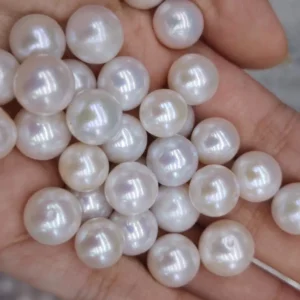
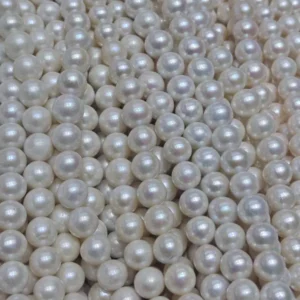
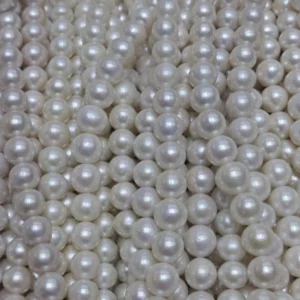
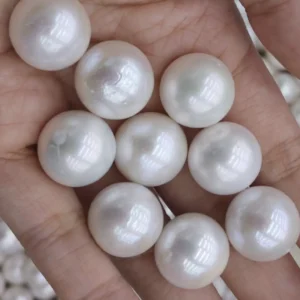
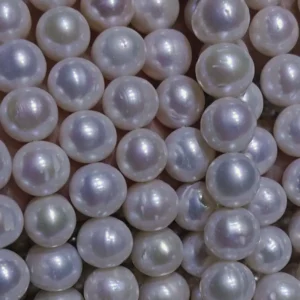
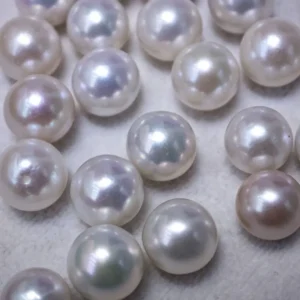
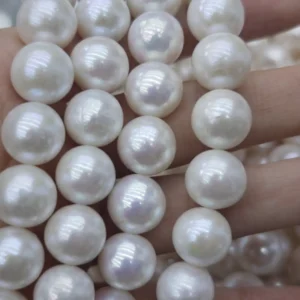
10-11mm White Round Edison Pearl Loose Pearl, AAAA Grade
- Pearl Quality: AAAA grade
- Pearl Size: 10-11mm
- Pearl Shape: Round shape
- Pearl Color: White

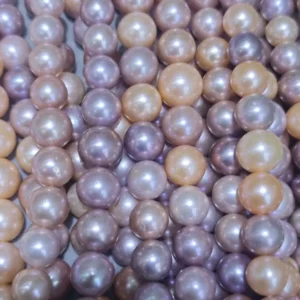
Looking for high-quality Edison Pearls at bulk prices? Shop our huge inventory of vivid purple, pink, and white Edison pearls. Sizes 9mm-15mm available. AAA/AAAA/AAAAA Grade. Fast shipping worldwide.
Showing all 11 results
Look, if you’re sourcing pearls for your jewelry line, you’ve probably hit the same wall everyone does: South Sea pearls drain your budget, and regular freshwater pearls don’t have the wow factor your customers want.
Edison pearls solve both problems.
Here’s the thing most suppliers won’t tell you upfront—Edison pearls give you that premium look without the premium headache. We’re talking large, round, lustrous pearls that your customers will actually pay for, at price points that let you maintain healthy margins.
Let me break down exactly what makes Edison pearls different and why they’re becoming the go-to choice for smart retailers.
An Edison pearl is a bead-nucleated freshwater cultured pearl. That’s the technical answer.
The real answer? It’s the pearl that bridges the gap between “cheap freshwater” and “can’t-afford-South-Sea.”
Here’s what makes them special:
I remember when a jewelry store owner from Texas first asked me about Edison pearls back in 2019. She was skeptical. “Freshwater pearls that compete with South Sea? Come on.”
Six months later, she tripled her pearl strand orders. Why? Her customers couldn’t tell the difference, but her profit margins sure could.
Traditional freshwater pearls are tissue-nucleated. Farmers insert a tiny piece of mantle tissue, and the mussel forms a pearl around it. The result? Mostly baroque shapes, smaller sizes, uneven luster.
Edison pearls changed the game by using bead nucleation in freshwater mussels. This technique was basically impossible until Chinese pearl farmers cracked the code around 2010-2012. The mussel rejects the bead less often when you use specific farming techniques, controlled water conditions, and the right mussel species.
What does this mean for you as a buyer?
Consistent inventory. You’re not sorting through bags of baroque pearls hoping to find enough rounds for a necklace. Edison pearls come out round, large, and ready to string.
This question comes up on every single call with new wholesale clients.
The core difference is simple: nucleation method.
Think of it this way: traditional freshwater pearls are like casting a wide net and hoping you catch some keepers. Edison pearls are like farming with intention—you know what you’re getting before harvest.
When you’re buying wholesale pearl strands or loose pearls for custom jewelry, consistency is everything. You can’t build a reliable product line when your inventory quality swings wildly batch to batch.
Edison pearls give you:
One of our clients in California runs a bridal jewelry business. She used to avoid freshwater pearls entirely because brides wanted “the real thing.” Now? 40% of her bridal line features Edison pearls, and her customers are none the wiser. They just know they look stunning and don’t cost $3,000 for a single strand.
Let’s talk money and quality. No point dancing around it.
At Xinye Pearl, we use a five-tier grading system for Edison pearls. This isn’t arbitrary—it’s based on luster, surface quality, shape, and nacre thickness.
| Grade | Luster | Surface Quality | Shape | Typical Price Range (per strand, 16″) |
|---|---|---|---|---|
| AAAAA | Mirror-like, intense metallic sheen | 95%+ clean surface, minimal blemishes | Perfectly round | $800-$1,500+ |
| AAAA | Excellent high luster | 90%+ clean, very few visible marks | Round to near-round | $500-$800 |
| AAA | Very good luster | 85%+ clean, minor surface characteristics | Mostly round | $300-$500 |
| AA | Good luster | 75-85% clean, visible blemishes acceptable | Slightly off-round acceptable | $180-$300 |
| A | Moderate luster | 70%+ clean, more noticeable imperfections | Off-round, some baroque | $100-$180 |
Note: Prices vary based on size, color, and market conditions. These are approximate wholesale rates for reference.
AAAAA Grade – This is your showcase pearl. If you’re targeting high-end boutiques or luxury markets, this is your tier. The luster is insane—customers literally stop and stare. Surface is near-flawless. You’ll pay more, but your markup potential is equally impressive.
AAAA Grade – This is the sweet spot for most retailers. Excellent quality that photographs beautifully for online sales. Minor imperfections are only visible under close inspection. Great balance of quality and cost.
AAA Grade – Solid workhorse grade. Perfect for jewelry designers who plan to set pearls where slight surface marks won’t be visible. Still beautiful, still profitable, just not museum-quality.
AA and A Grades – These are your volume movers. Craft fairs, fashion jewelry, younger demographics who want the Edison pearl look at entry-level prices. Don’t sleep on these grades—they move fast.
We get this question constantly: “How do I know I’m getting what I ordered?”
Fair question. The pearl industry has a trust problem.
Here’s how we handle it at Xinye Pearl:
We’re not here to oversell you on AAAAA grade if your market will happily buy AAA. That’s just bad business for both of us. You come back when we help you make money, not when we drain your inventory budget on pearls you can’t move.
Q: Are Edison pearls real pearls?
Yes. 100%. They’re cultured pearls, meaning they’re grown in living mussels with human intervention (the bead nucleus). Just like Akoya, Tahitian, and South Sea pearls. “Real” vs. “fake” refers to natural vs. imitation. Edison pearls are real cultured pearls, not imitations.
Q: Why are Edison pearls cheaper than South Sea pearls?
Two reasons: production cost and farming time. Freshwater mussels are easier and cheaper to farm than saltwater oysters. Edison pearls also mature faster (2-3 years vs. 3-5 years for South Sea). Lower overhead = lower wholesale prices.
Q: Can customers tell the difference between Edison and South Sea pearls?
Honestly? Most can’t. The size, luster, and roundness are comparable. An experienced pearl dealer can usually tell by weight and nacre characteristics, but your average jewelry customer? They just see a beautiful, large pearl.
Q: What colors do Edison pearls come in?
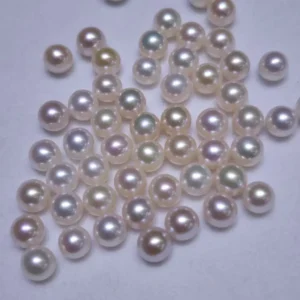
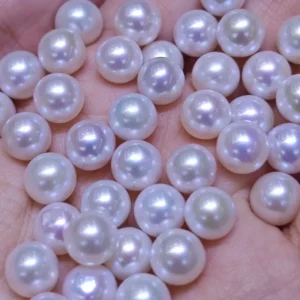
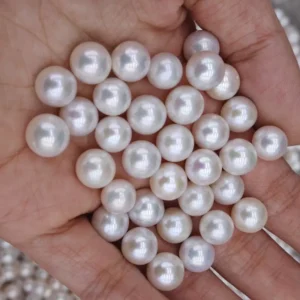
Naturally, you’ll see white, cream, lavender, peach, pink, and even metallic purple tones. The most popular for wholesale are white and near-white with pink or silver overtones. Darker colors (deep purple, bronze) are rarer and command premium pricing.
Q: How do I care for Edison pearls?
Same as any pearl: avoid chemicals, perfumes, and hairsprays. Wipe with a soft cloth after wearing. Store separately from harder gemstones. Restring periodically if they’re on silk thread. Standard pearl care—nothing special required.
Q: What’s your minimum order quantity?
For wholesale clients, we typically work with minimums of 10 strands or equivalent in loose pearls. But we’re flexible for first-time orders or if you’re testing a new product line. Reach out and we’ll figure it out.
Q: Do you offer matched pairs for earrings?
Absolutely. Matching pairs, trios for pendants and earring sets, whatever you need. Because Edison pearls are bead-nucleated and more consistent in size/shape, matching is way easier than with traditional freshwater pearls.
If you’re still sourcing the same old freshwater pearls or pricing yourself out of the market with South Sea pearls, you’re leaving money on the table.
Edison pearls deliver premium aesthetics at wholesale prices that actually make sense. Your customers get the look they want, you get margins that keep your business healthy, and everyone wins.
At Xinye Pearl, we’ve been in the wholesale pearl business long enough to know what works. Edison pearls work. The market has proven it, our clients’ repeat orders prove it, and the numbers prove it.
Want to see quality samples or talk specific pricing for your business? We’re here. No pressure, no sales pitch—just straight talk about whether Edison pearls fit your jewelry line.
Because at the end of the day, what is an Edison pearl if not the smartest sourcing decision you’ll make this year?

 EN
EN  JA
JA  AR
AR  IT
IT  ES
ES  DE
DE  KO
KO