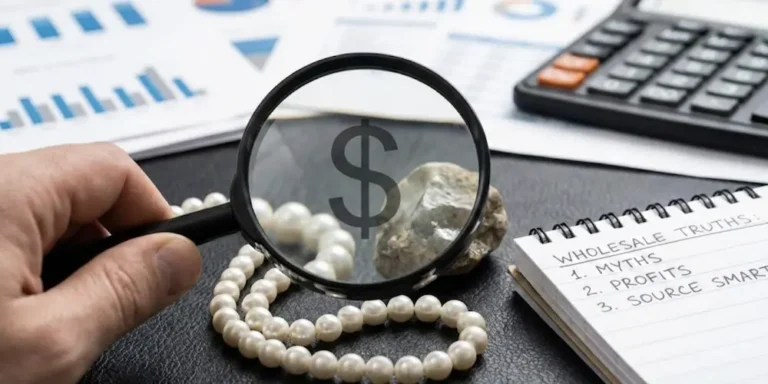
The old advice doesn’t work anymore. You know the one—rub a pearl against your teeth, and if it feels gritty, it’s real. Problem is, today’s fake pearls can fool that test. Shell pearls, in particular, are getting so good that even experienced buyers get burned. Understanding the differences between Real vs Fake Pearls is essential for any retailer.
If you’re sourcing pearls for your business, you need to know more than one trick. The fakes have gotten sophisticated. Some use real shell powder. Some have actual nuclei inside. And some cost enough that your customers assume they’re getting the real thing.
This isn’t about being paranoid. It’s about knowing what you’re selling.
The 3 Tiers of “Fake” Pearls
When discussing pearls, it’s crucial to highlight the differences between Real vs Fake Pearls, as this knowledge can significantly impact your sales.
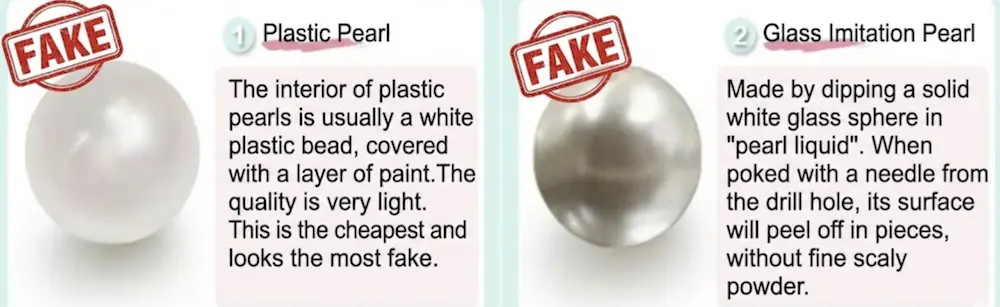
Not all fakes are created equal. Here’s how they break down:
Tier 1: Plastic/Acrylic Pearl
These are junk. Light as air, coating peels off after a month, look fake from across the room. If your supplier is offering “pearl” necklaces for $2 a strand, this is what you’re getting. They’re fine for costume jewelry where nobody pretends otherwise. But if someone tries to pass these off as real? Run.
Tier 2: Glass/Swarovski Pearl
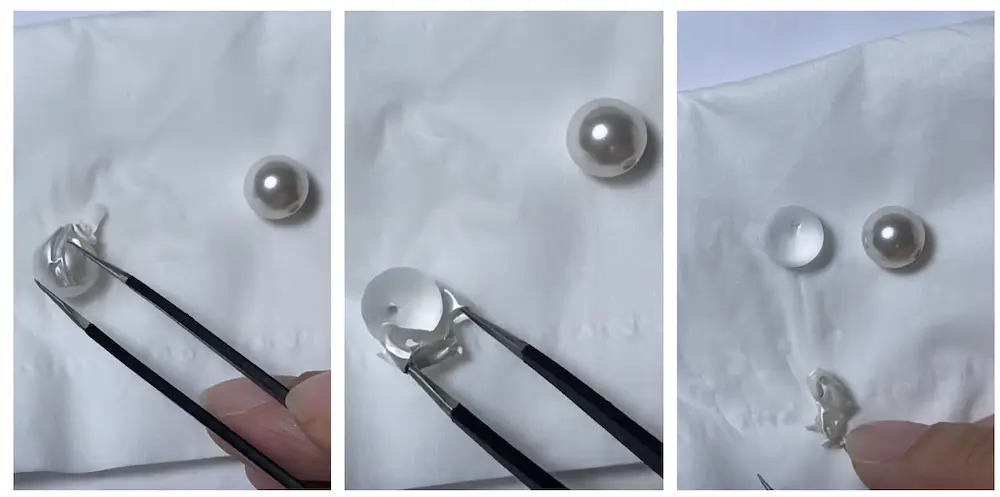
This is where it gets interesting. Glass pearls—especially from Swarovski—are actually impressive. They’re perfectly round, consistently weighted, and the shine is undeniable. The luster is bright, almost too bright. Like a car with a fresh wax job.
Here’s the thing: Swarovski doesn’t hide what they are. They call them “crystal pearls” or “simulated pearls.” The company started making these in the 1960s, and they’ve gotten really good at it. A Swarovski pearl has a crystal core (not glass, but actual Swarovski crystal) coated with a pearl-like finish.
They’re durable. They resist perfume and sweat better than real pearls. And they cost a fraction of what a Pearl Manufacturer would charge for cultured strands. For retailers, knowing the nuances of Real vs Fake Pearls is vital.
The tell? That glassy perfection. Real pearls have depth to their luster. Glass pearls reflect light like a mirror.
Tier 3: Shell Pearls (The High-End Trap)
Shell pearls are where most retailers get confused. These aren’t cheap plastic. They’re made from ground-up mother of pearl—the same nacre that coats real pearls. The powder gets mixed with binding agents, shaped into beads, and coated multiple times.
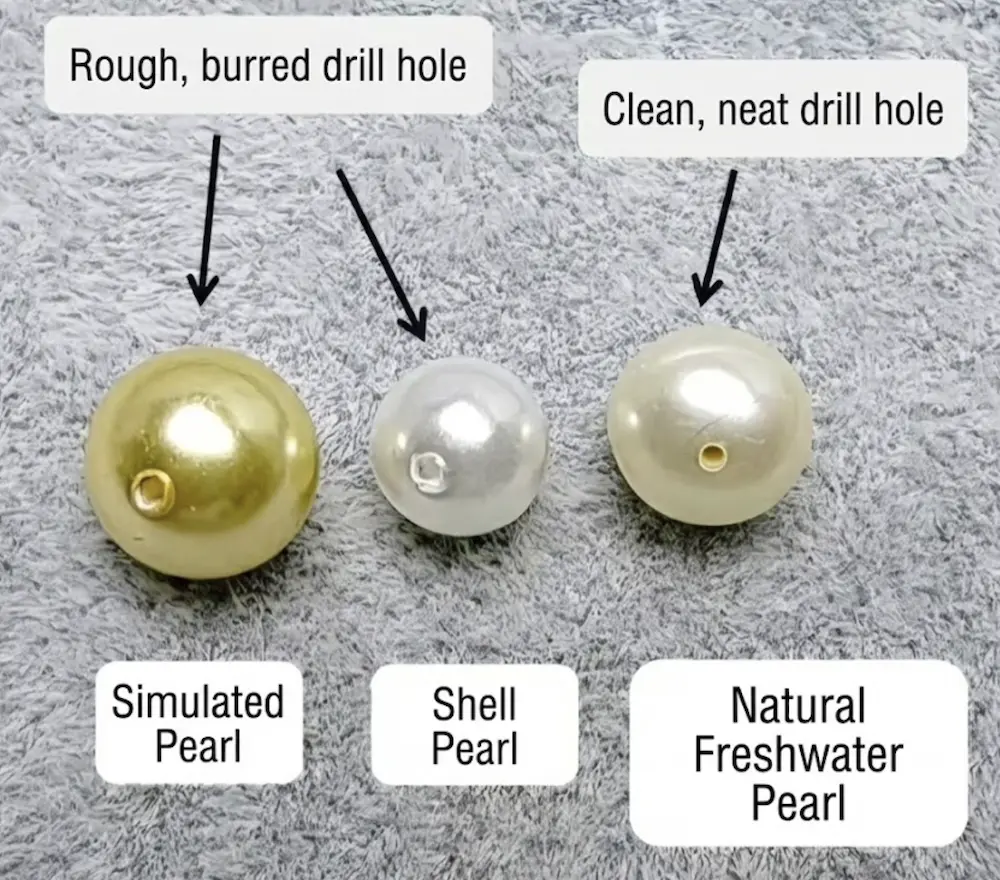
Some shell pearls even have a nucleus inside, just like cultured pearls. The weight feels right. The finish can be smooth enough to pass the tooth test (yes, really). And sellers know this, so they price them high enough to seem legitimate.
The difference? A cultured pearl is nacre laid down by an oyster over 2-4 years. A shell pearl is nacre painted on in a factory over 2-4 hours.
Why does this matter for retailers? Because if you’re selling shell pearls as cultured pearls, you’re committing fraud. And if your supplier is lying to you, your reputation takes the hit.
Real vs Fake Pearls: The Visual Comparison
Let’s get specific about what separates real vs fake pearls when you actually look at them.
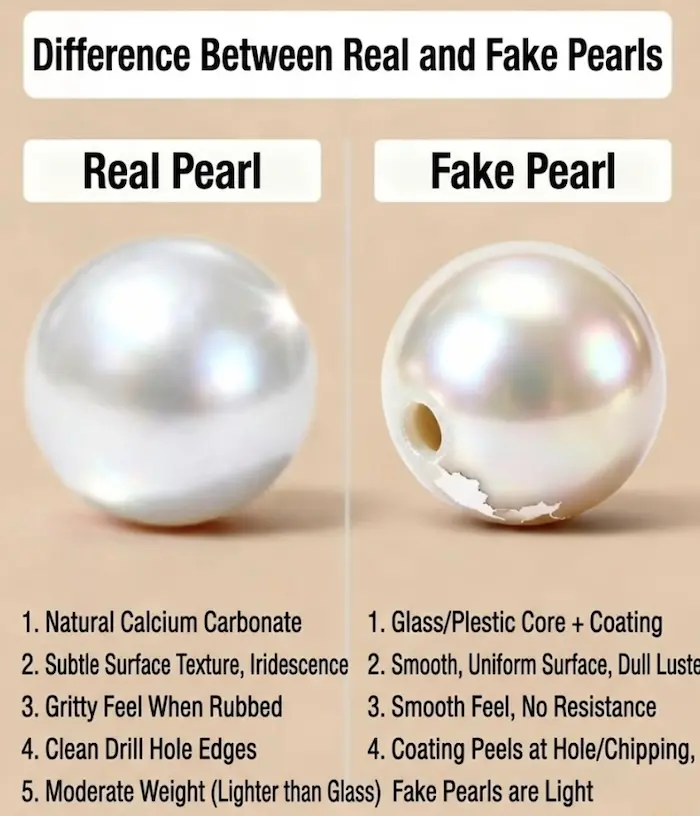
Surface (What Nature Leaves Behind)
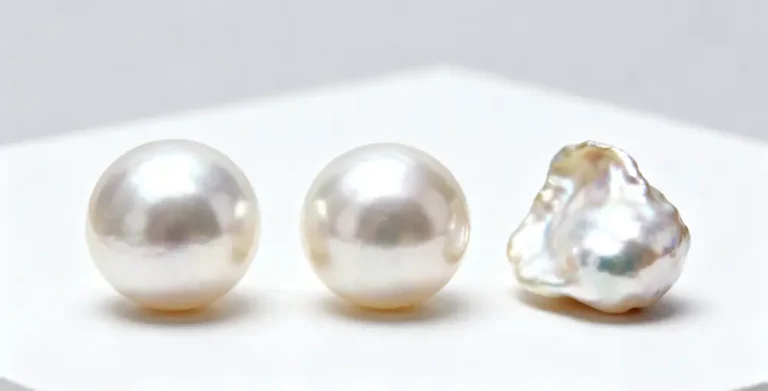
Real pearls have flaws. Not major ones if they’re high-quality, but they’re there. Tiny pits, barely-visible ridges, slight variations in texture. Think of it like skin—even smooth skin has pores.
Fake pearls don’t. They’re too perfect. Machine-made roundness. Surface so smooth it looks sprayed on. Because it was.
If you line up ten real pearls, they’re all slightly different. Ten fake pearls? Identical twins.
Luster (The Light Test)
This is where real vs fake pearls really show their difference. Real pearls have something called “orient”—that rainbow sheen you see when you tilt them. It comes from light refracting through multiple layers of nacre. The glow seems to come from inside the pearl.
Fake pearls shine from the surface only. It’s like the difference between a frosted window and a mirror. One has depth, the other is just reflection.
With real pearls, you’ll often see overtones—a hint of pink, green, or cream over the base color. Fake pearls are one flat color all the way through.
Drill Hole (Where Fakes Fall Apart)
This is your smoking gun for identifying high-quality fake pearls.
On a real pearl, the drill hole is clean. You might see the layers of nacre if you look close enough, but the edge is crisp.
On a fake pearl? The coating pools around the hole. You’ll see buildup of whatever substance they used to coat it. Sometimes it chips away, revealing the bead underneath. Sometimes the hole looks melted because they used heat to smooth it.
String a necklace made of fake pearls and wear it for six months—the coating around the drill holes starts flaking off where the pearls rub together.
Shell Pearls vs Cultured Pearls: The Retailer’s Trap
Here’s why so many retailers love selling shell pearls (even if they don’t realize that’s what they have):
They’re cheap. A 16-inch strand of shell pearls might cost you $5-30 wholesale. A comparable strand of wholesale pearls—real cultured ones—runs $50-200 or more, depending on quality.
Shell Pearls are perfect. Every pearl is round, every color is matched, every surface is flawless. Customers see that consistency and think “premium quality.”
They’re durable. Shell pearls won’t degrade from perfume or skin oils the way real pearls can. For daily-wear jewelry, they actually perform better in some ways.
So what’s the problem?
The problem is value. Real cultured freshwater pearls can be passed down. They hold value. They appreciate if you take care of them. A grandmother can give her granddaughter a pearl necklace, and it means something.
Shell pearls? They’re worth exactly what you paid for them. In ten years, they’re worth less. They’re consumable goods dressed up as heirlooms.
If you’re running a jewelry business, here’s the calculation: You can sell shell pearls with a high markup and customers feel like they got a deal. But when they eventually find out (and they will), you’ve lost a customer for life.
Or you can sell real cultured pearls at a fair price, educate your customers on care, and build a reputation that brings people back.
The math only works one way if you’re thinking past next quarter.
Real vs Fake Pearls: What Your Customers Actually Want to Know
Most people don’t care about nacre formation or mollusk biology. They want to know three things:
- Is this real?
- Will it last?
- Am I getting ripped off?
Here’s how to answer honestly:
If you’re selling real cultured pearls, tell them these are farmed pearls. A technician inserted a nucleus into an oyster, the oyster coated it with nacre over 2-4 years, and now it’s a pearl. That’s real. That’s cultured. Same thing.
If you’re selling shell pearls, tell them these are simulated pearls made from real shell material. They look great, they’re durable, and they cost less. But they’re not cultured in an oyster.
If you’re selling Swarovski or glass pearls, same thing. Beautiful, well-made, not from an oyster. The moment you try to blur those lines is the moment you become the problem.
How to Label Correctly (Legal CYA)
The FTC has rules about this. You need to follow them.
If it’s cultured: You can call it “cultured freshwater pearl” or “cultured saltwater pearl” or just “cultured pearl.” You cannot call it “natural” unless it formed without human intervention (which means it’s probably in a museum, not your store).
If it’s simulated: You must use words like “simulated,” “man-made,” “imitation,” or “faux.” You cannot call it “cultured.” You cannot just say “pearl” without a qualifier.
If it’s shell pearl specifically: “Shell pearl,” “shell-based pearl,” or “simulated pearl” all work. What doesn’t work: “genuine pearl,” “real pearl,” or anything that implies an oyster was involved.
The penalty for getting this wrong isn’t just bad reviews. It’s FTC fines and possible legal action from customers who feel defrauded.
Want to perform a physical test? We’ve got a step-by-step guide: How Can I Tell If Pearls Are Real?
The Price Reality Check
Here’s a quick reference for what real vs fake pearls actually cost:
| Pearl Type | Wholesale Cost (16″ strand) | Retail Price Range | Lifespan |
|---|---|---|---|
| Plastic/Acrylic | $1-5 | $10-20 | 6-12 months |
| Glass (Swarovski) | $15-40 | $50-150 | 5-10 years |
| Shell Pearl | $15-30 | $40-100 | 3-7 years |
| Cultured Freshwater | $50-300 | $150-800 | Lifetime (with care) |
| Cultured Akoya | $200-800 | $500-2000+ | Lifetime (with care) |
If someone offers you “Tahitian pearls” for $50 a strand wholesale, they’re lying. Real Tahitian pearls start around $300-500 wholesale for decent quality, and go up from there.
If the price seems too good, it is.
Shell Pearls vs Cultured Pearls: The Long-Term Business Case
You’ll make more money in the short term selling shell pearls as if they’re cultured. The margins are huge. Buy at $20, sell at $150, customer walks away happy.
Until they go to a jeweler to get them restrung six months later, and the jeweler tells them what they actually bought.
Now you’ve got a furious customer, potential legal exposure, and a reputation hit that spreads through reviews.
Compare that to: Buy cultured freshwater pearls at $80, sell at $200-250, customer understands real vs fake pearls and what they’re getting. They come back when they want something nicer. They send their friends. They leave five-star reviews saying you’re honest.
The second path makes less per transaction. It makes more per lifetime customer value.
What Actually Matters When Sourcing Real vs Fake Pearls
You’re not running a gemology lab. You need practical ways to verify what your supplier is sending.
- Ask for documentation. Real cultured pearls should come with certificates or at minimum, a statement from the farm. Shell pearls won’t have this. If your “cultured pearl” supplier can’t provide any paperwork, they’re selling shell pearls.
- Check the price. If it’s too cheap for cultured, it’s not cultured. A 16-inch strand of 7-8mm cultured freshwater pearls costs $50-150 wholesale minimum. Anything under that is shell or glass.
- Examine drill holes. Real pearls have clean holes. Fakes have coating buildup. This is your fastest visual check.
- Look for variation. Real pearls in a strand have slight differences. Fakes are clones.
- Request samples. Any legitimate pearl wholesaler can provide you sample order before you place a bulk order. If they won’t, they’re hiding something.
The Bottom Line on Real vs Fake Pearls
The market has room for both. Real cultured pearls serve customers who want heirlooms and investment pieces. High-quality fakes serve customers who want the look without the price. The problem in the real vs fake pearls market isn’t selling shell pearls or Swarovski pearls. The problem is lying about what they are.
Be the retailer who explains the difference. Be the one who helps customers make informed choices. Be the one who says “here’s a shell pearl for $60, here’s a cultured pearl for $180, here are the pros and cons of each.”
That honesty builds trust. Trust builds repeat business. And repeat business beats a one-time markup every time.
When you’re ready to source real cultured pearls, work with a Pearl Manufacturer who can provide documentation, consistent quality, and transparent pricing.
The pearl market is full of middlemen making claims about real vs fake pearls they can’t back up. Cut through that, and you’ll build something that lasts longer than any individual sale.
FAQs: Real vs Fake Pearls
Are shell pearls worth buying?
Depends what you want them for. Shell pearls work great for costume jewelry or pieces you’ll wear casually without worrying about damage. They’re durable and affordable. But they’re not heirlooms. They won’t hold value or appreciate over time. If you want jewelry that lasts generations, spend more on cultured pearls. If you want something that looks good for a few years at a fraction of the price, shell pearls do the job.
What’s the difference between Swarovski pearls and real pearls?
Swarovski pearls have a crystal core coated with a pearl-like finish. They’re man-made in a factory. Real cultured pearls have nacre deposited by an oyster over 2-4 years.
How much should real cultured pearls cost?
For a 16-inch strand of round 7-8mm cultured freshwater pearls, expect to pay $150-800 retail, depending on quality. Wholesale prices run $50-300. If someone offers you “cultured pearls” for $10-30 a strand, they’re either shell pearls or lying. Akoya and Tahitian pearls cost significantly more. The rule: if the price seems too good, it’s not what they claim it is.
Are freshwater pearls real or fake?
Freshwater pearls are real cultured pearls, grown in mussels (not oysters) in lakes and rivers. Freshwater pearls cost less than saltwater types like Akoya or Tahitian, but they’re absolutely real. The confusion comes from sellers who call shell pearls “freshwater” to mislead buyers.
Is it illegal to sell shell pearls as real pearls?
Yes. The FTC requires accurate labeling. If you sell shell pearls or any simulated pearls, you must use terms like “simulated,” “man-made,” “imitation,” or “shell pearl.” You cannot call them “cultured,” “genuine,” or just “pearls” without a qualifier. Violating these rules can result in fines and legal action from customers. This isn’t about being pedantic—it’s fraud prevention. Customers deserve to know what they’re buying, and the law backs that up.