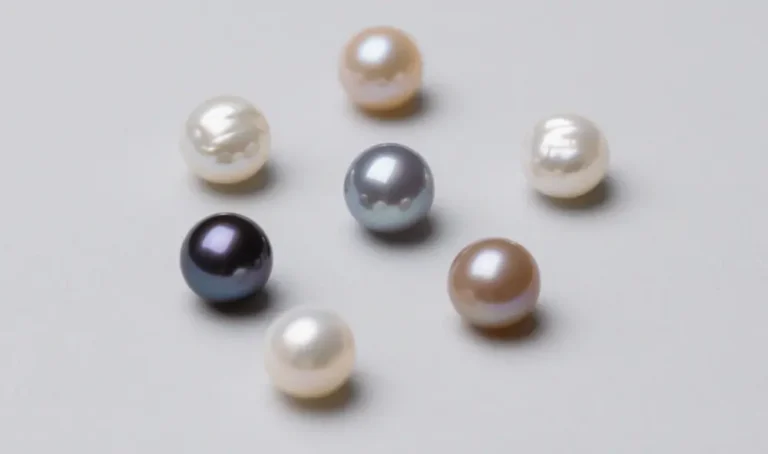
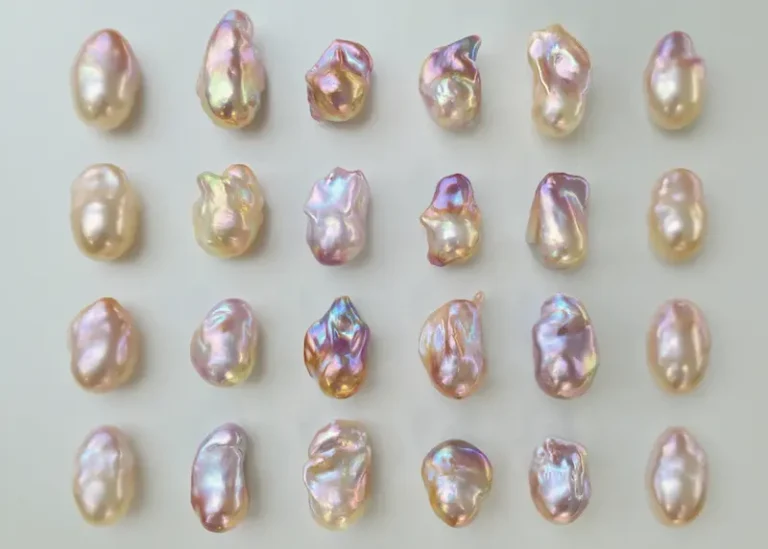
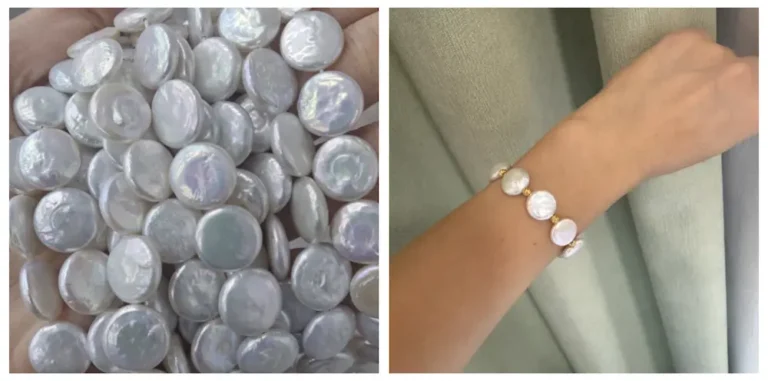
Keshi pearls aren’t your typical round pearls. They’re the beautiful “accidents” that happen during pearl farming—and honestly? They’re often more stunning than their perfectly round cousins.
Here’s the thing most buyers don’t realize: the brightest, most lustrous pearls I see in our sorting rooms at Xinye Pearl aren’t always the round ones. They’re the Keshi pearls—those irregular, flat, cornflake-shaped beauties that catch light like nothing else.
What Exactly Are Keshi Pearls?
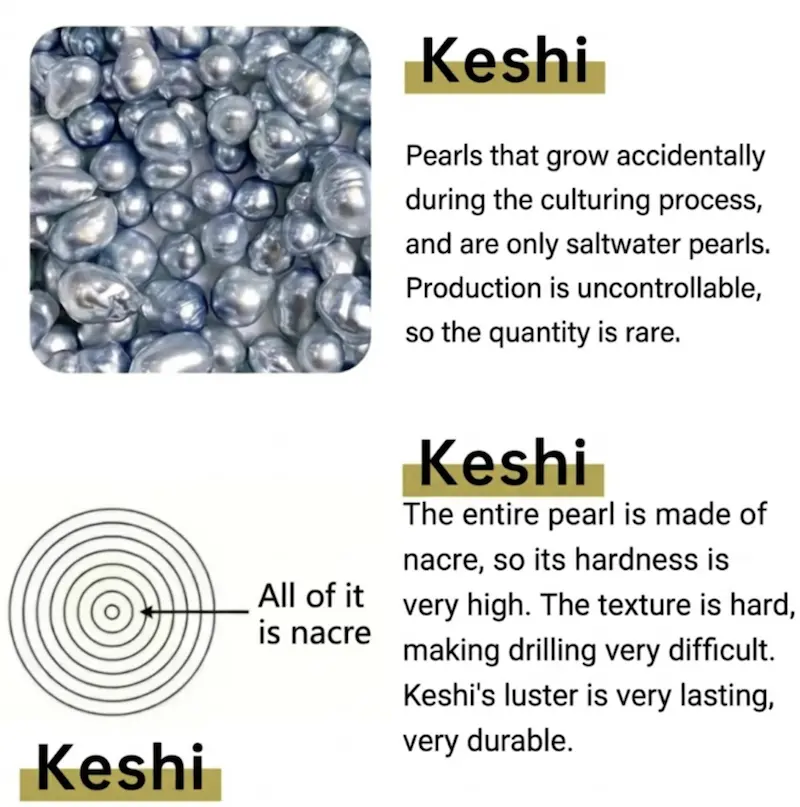
Keshi pearls are made when an oyster or mussel rejects the implanted nucleus during cultivation, or when the nucleus breaks and makes independent pearl sacs without a core. The Japanese word “keshi” means “poppy seed,” which is a reference to how these pearls were initially tiny byproducts of Akoya production.
But here’s what makes them special: they’re 100% solid nacre. No bead core. No foreign nucleus. Just pure, crystalline layers of pearl material.
Think about it this way—regular cultured pearls are like a cake with a ball bearing in the center. Keshi pearls are entirely composed of nacre, the lustrous substance that gives pearls their iridescent quality, making them more like a solid truffle. That structural difference changes everything about how they interact with light.
The Formation Process
When pearls are grown in the usual way, technicians put a bead nucleus and mantle tissue into the mollusk. Sometimes the mollusk rejects the bead, or the tissue piece separates from the bead, and the loose tissue produces a keshi pearl alongside—or instead of—the main cultured pearl.
For freshwater pearls, there’s another method. After harvesting first-generation pearls, farmers may return mussels to the water without inserting new nuclei, and keshi pearls grow in the existing pearl sacs. Chinese freshwater farms have mastered this technique, which is why you’ll see abundant keshi pearls from that region.
Why Keshi Pearls Are Different (And Why That Matters)
1. That Insane Luster
Walk into any jewelry store and you’ll see round pearls with decent shine. Then look at a high-quality keshi pearl. The difference is immediately obvious.
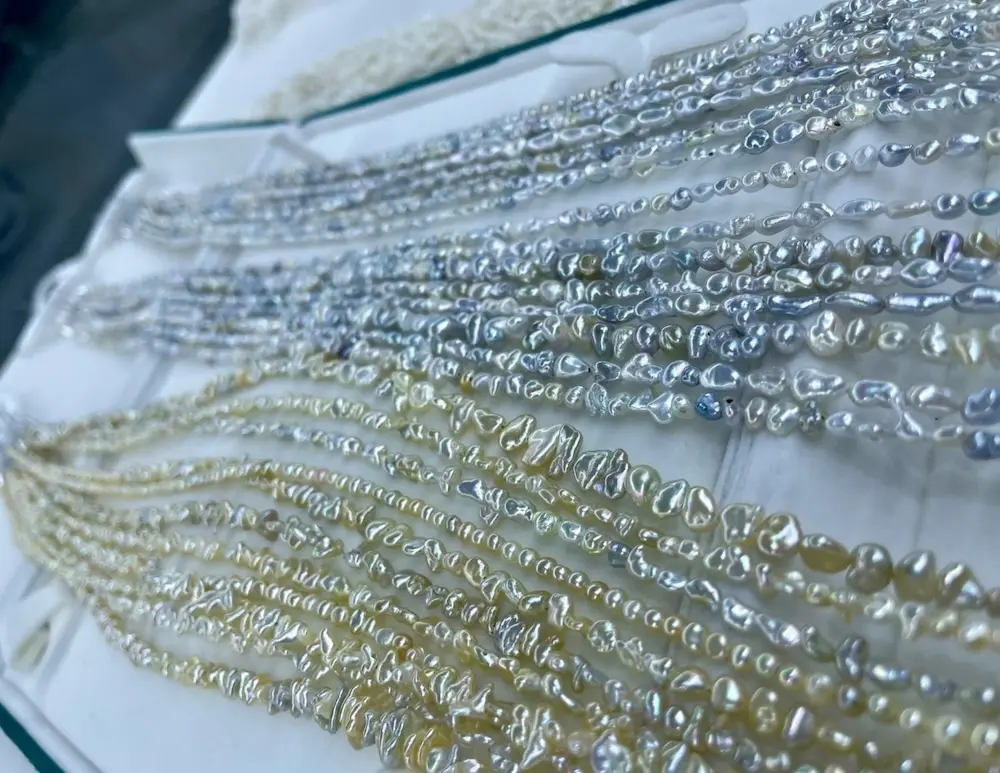
Because there’s no bead nucleus to block light penetration, keshi pearls consist of solid nacre and tend to have high luster as a result. Light travels through multiple nacre layers, bouncing and refracting before hitting your eye. The result? That mirror-like, almost metallic brilliance that makes people stop scrolling.
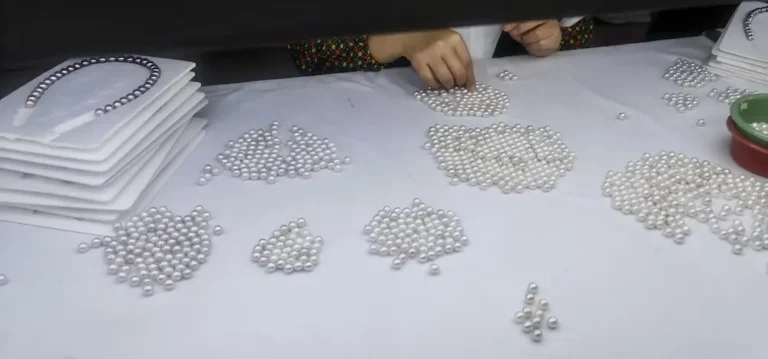
At Xinye Pearl, we grade thousands of pearls monthly. Keshi pearls consistently outperform equal-sized round pearls in luster scores.
2. Shapes That Tell Stories
No two keshi pearls are identical. You’ll find:
- Flat or cornflake shapes – perfect for modern minimalist designs
- Petal or soufflé shapes – ideal for floral jewelry themes
- Stick or rice shapes – great for layered necklaces
- Coin shapes – increasingly popular for statement pieces
This variability isn’t a defect. It’s the entire value proposition. When you’re designing custom jewelry for clients who are tired of seeing the same round pearl studs everywhere, keshi pearls become your secret weapon.
3. Durability You Can Actually Trust
Keshi pearls are hardy, composed entirely of layers of nacre, giving them high luster and rich texture. Unlike nucleated pearls where the nacre coating can potentially chip or peel to reveal the bead underneath, keshi pearls are solid all the way through.
For retailers, this translates to fewer warranty claims and happier customers over the long term.
Types of Keshi Pearls in Today’s Market
Freshwater Keshi
These dominate the wholesale pearls market. China’s freshwater farms produce the most abundant supply, with colors ranging from classic white and cream to lavender, peach, and even pistachio green.
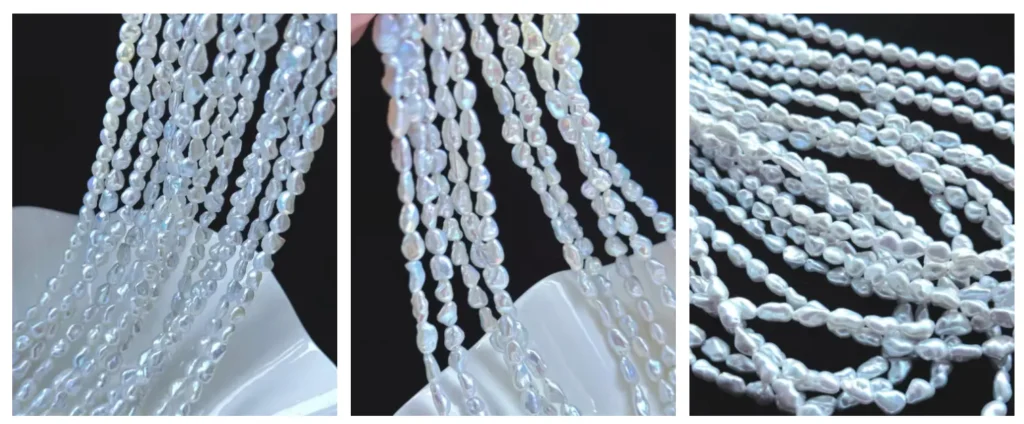
- Price point: Most accessible for volume buyers
- Size range: 5-15mm typically
- Best for: Fashion jewelry, bohemian designs, layered necklaces
Tahitian Keshi
Tahitian keshi pearls come in the same color variations as Tahitian pearls but don’t have a nucleus, making their shape often baroque with round being very rare. That peacock overtone with hints of silver and green? Absolutely stunning.
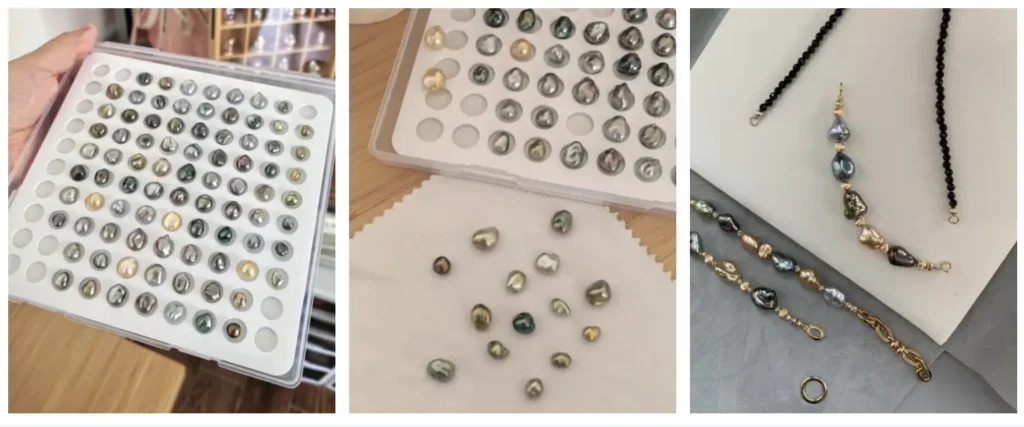
These used to be more common, but Tahitian and South Sea pearl farmers now X-ray their oysters to check if the nucleus is intact, and re-nucleate expelled ones before keshi pearls can form. This makes authentic Tahitian keshi pearls increasingly scarce.
- Price point: Premium to luxury
- Size range: 2-8mm
- Best for: High-end statement pieces, designer collections
South Sea Keshi
The heavyweight champions. South Sea keshi pearls from Australian and Philippine farms can reach impressive sizes and feature creamy white or golden hues.
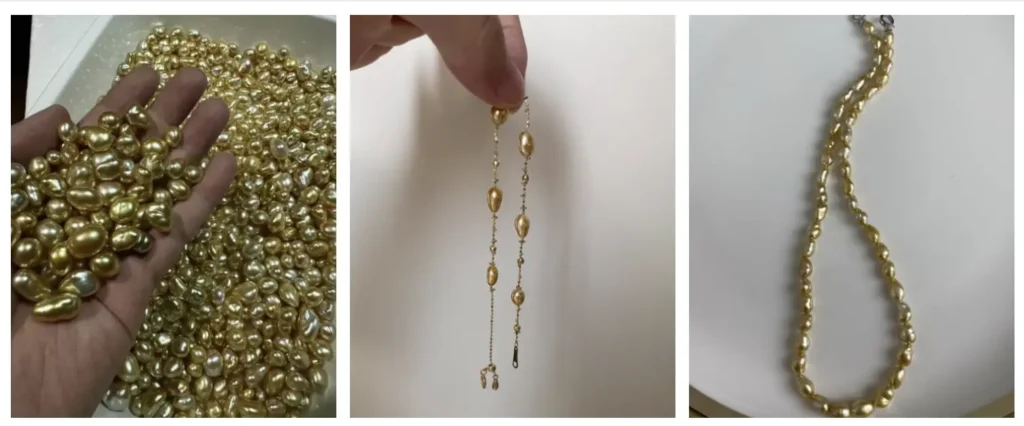
- Price point: Luxury tier
- Size range: Can exceed 15mm
- Best for: Bridal jewelry, luxury retail
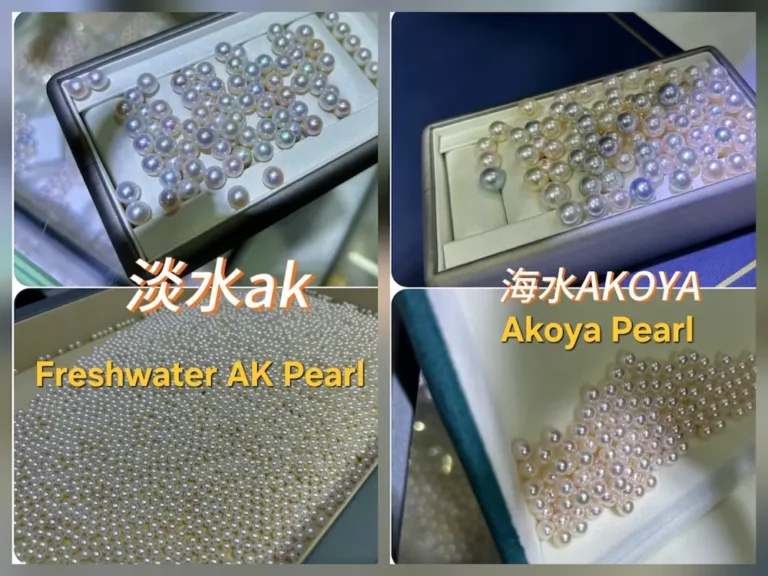
Akoya Keshi
The originals. The name keshi originated in Japan to specifically describe small pearls formed by loose tissue in Akoya oysters, which were minuscule, just like a poppy seed.
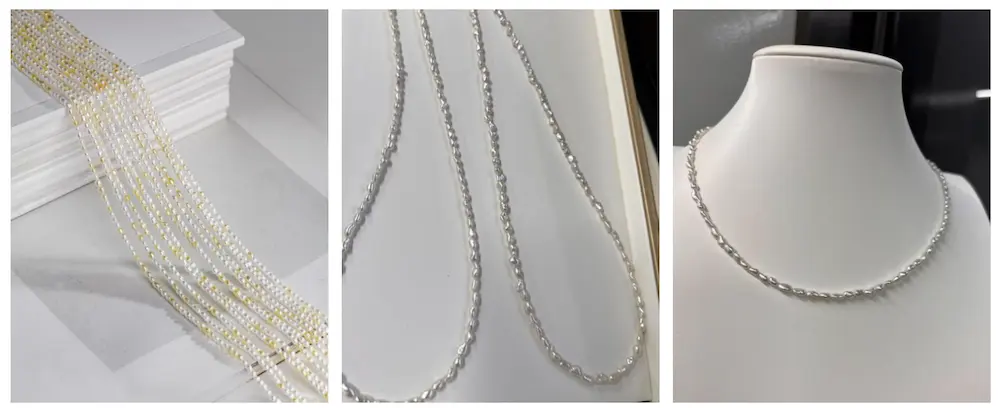
- Price point: Mid-range to premium
- Size range: Very small, often 2-4mm
- Best for: Delicate jewelry, vintage-inspired designs
How to Buy Wholesale Keshi Pearls: A Buyer’s Checklist
After 15 years working as a Pearl Manufacturer, I’ve seen buyers make the same mistakes repeatedly. Here’s what actually matters:
1. Luster First, Always
Forget about trying to find “perfectly matched” keshi pearls. Focus on luster. A slightly irregular keshi pearl with exceptional shine will always outperform a “better shaped” pearl with mediocre luster.
Quick test: Hold the pearl 6 inches from a window. Can you see a clear reflection of the window frame on its surface?
2. Surface Quality Matters (But Be Realistic)
Keshi pearls will have some surface texture—that’s part of their character. What you’re looking for:
- Avoid heavy calcification or white spots that disrupt the nacre
- Minor bumps and ridges are acceptable (and expected)
- Check for cracks or deep pits that could affect durability
Pro tip: The luster and overtones of keshi pearls are further accentuated by the many dents and bumps on their surface, so don’t automatically reject pearls with surface texture.
3. Understanding Drilling Orientation
This is where most new wholesale buyers lose money.
Top-drilled keshi pearls: Perfect for:
- Drop earrings
- Pendant necklaces
- Charm designs
Side-drilled keshi pearls: Best for:
- Strand necklaces
- Bracelets
- Multi-row designs
When placing wholesale orders, specify your drilling requirements upfront. Re-drilling adds cost and can waste 15-20% of your inventory if pearls crack.
4. Size and Hand-Matching
Here’s the brutal truth: matching keshi pearls is labor-intensive and expensive.
If you need matched pairs for earrings, expect to pay 30-40% more than unmatched singles. Why? Our team might sort through 200 pearls to find two that match in:
- Size (within 0.5mm)
- Shape profile
- Color tone
- Luster level
For necklace strands, you have two options:
- Graduated strands: Easier to source, lower cost
- Uniform strands: Require extensive hand-matching, premium pricing
5. Color Considerations
Natural colors: Command premium prices, especially for rare shades like pistachio or lavender Dyed colors: More affordable, consistent, but disclose this to your customers Enhanced colors: Heat-treated to intensify natural hues—middle ground on pricing
Always ask your supplier about color treatments. Transparency builds trust.
6. Minimum Order Quantities (MOQ)
Most Chinese pearl farms and wholesalers have MOQ requirements:
- Small orders: 5-10 strands (good for testing)
- Volume orders: 50+ strands (better pricing, 15-25% discounts)
- Custom drilling/matching: Usually requires 100+ strand minimums
At Xinye Pearl, we work with jewelry startups and established retailers. Our advice? Start with sample orders to test quality before committing to volume purchases.
Quality Standards to Demand from Suppliers
Don’t accept vague quality descriptions. Here’s the language to use:
Ask About:
- Nacre thickness measurement – Irrelevant for keshi pearls (they’re solid), but confirms your supplier knows their product
- Origin verification – Freshwater vs. saltwater, specific farm regions
- Treatment disclosure – Bleaching, dyeing, heat treatment
- Sorting standards – How many grades they separate pearls into
- Return/exchange policy – Critical for wholesale relationships
Red Flags:
- Prices significantly below market averages (often indicates quality issues)
- Unwillingness to provide sample orders
- No clear grading terminology
- Poor communication about drilling and matching
According to the Gemological Institute of America, pearl quality assessment should always include luster, surface quality, size, shape, and color evaluation—standards that apply to keshi pearls just as much as round pearls.
FAQs
Are keshi pearls more expensive than regular cultured pearls?
Not typically. Keshi pearls used to be procured at quite the bargain, but today they’re considered more exceptional and infrequent, especially Tahitian and South Sea varieties. Freshwater keshi pearls remain affordable and accessible for most wholesale buyers.
Can keshi pearls be perfectly round?
Round keshi pearls are extremely rare, with less than 1% achieving this shape. If someone offers you “perfectly round” keshi pearls in bulk, they’re probably selling regular cultured pearls.
How do I verify I’m buying authentic keshi pearls?
Request X-ray documentation from your supplier. X-rays reveal whether a nucleus is present inside the pearl. Legitimate keshi pearls will show no bead nucleus, just solid nacre layers.
What’s the best way to clean keshi pearls?
Treat them like any quality pearl: soft cloth, room temperature water. Stay away from ultrasonic cleaners and strong chemicals. The International Gem Society has thorough instructions for taking care of all types of pearls, including keshi pearls.
Do keshi pearls work for men’s jewelry?
Absolutely. The organic shapes and understated elegance make keshi pearls perfect for masculine designs—cufflinks, tie pins, and modern beaded bracelets.
The Bottom Line for Wholesale Buyers
Keshi pearls are a sign of opportunity. Everyone else is competing on pricing for round pearls, but you can set your stock apart with keshi pearls that offer:
- Superior luster at lower cost points
- Unique shapes that make each piece one-of-a-kind
- Better margins because customers perceive higher value
- Growing market demand for organic, natural aesthetics
At Xinye Pearl, we’ve seen small jewelry businesses build their entire brand identity around keshi pearls. The key is finding a reliable wholesale supplier who understands quality grading, can provide consistent supply, and offers the drilling and matching services you need.
Whether you’re designing for Instagram-worthy moments or building a sustainable jewelry business, keshi pearls deliver the visual impact and profit margins that make them worth your attention.
Are you ready to look into wholesale keshi pearl options? Start with small orders, let your consumers try out different forms and colors, and then grow what works. That’s how the smartest pearl buyers in this business work, and that’s how they make money.