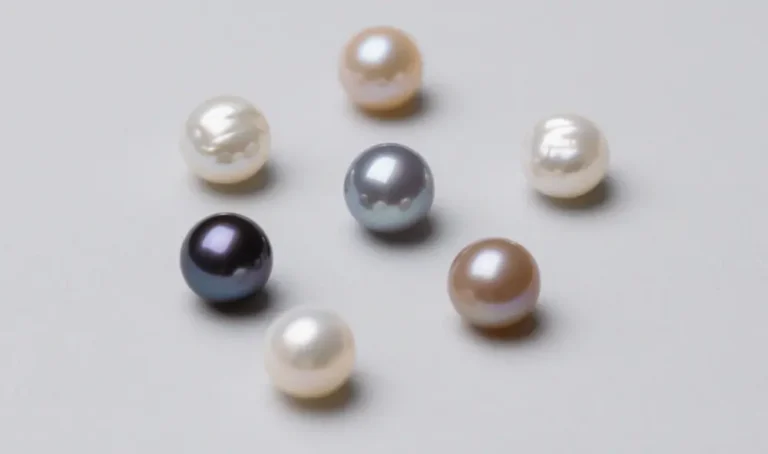
Look, the freshwater pearl grading system isn’t rocket science. But here’s the thing—if you’re buying wholesale and don’t understand it, you’re gonna get burned. Hard. I’ve seen too many buyers pay premium prices for mediocre pearls because they didn’t know what they were looking at.
Here’s what nobody tells you: there’s no universal standard. Every supplier uses their own system. That AAA grade from one vendor might be another’s AA. Wild, right? But once you understand the core principles behind the freshwater pearl grading system, you’ll spot quality instantly—no matter whose labels you’re reading.
Why the Freshwater Pearl Grading System Actually Matters
Let’s cut through the noise. When you’re sourcing wholesale pearls for your jewelry line, consistency is everything. You can’t have one batch looking like diamonds and the next looking like chalk. The freshwater pearl grading system exists to solve exactly that problem.
Think about it this way: would you buy a car without knowing the specs? Course not. Same logic applies here. The grading system gives you a language to communicate quality standards with your pearl manufacturer and ensure every order hits your mark.
The 5 Key Factors That Define Pearl Quality
Before we dive into specific grades, you need to understand what actually makes one pearl better than another. The freshwater pearl grading system evaluates pearls based on five critical factors. Master these, and you’ll never get fooled again.
| Quality Factor | What It Means | Why Wholesale Buyers Care |
|---|---|---|
| Luster | How sharply light reflects off the surface—this is the “wow” factor | First thing your customers notice. Poor luster = instant returns |
| Surface Quality | Percentage of blemish-free surface area | Determines what percentage of your inventory is actually sellable |
| Shape | Roundness and symmetry level | Round pearls command 3-5x the price of baroque shapes |
| Color | Body color plus overtones and orient | Market trends shift, but certain colors always sell faster |
| Size | Diameter measured in millimeters | Larger than 10mm? You’re looking at exponential price jumps |
Here’s the kicker: luster matters more than anything else. A pearl with incredible shine but minor surface imperfections will outperform a flawless pearl with dull luster every single time. According to the Gemological Institute of America, luster is the primary value factor in pearl assessment.
Understanding Pearl Luster
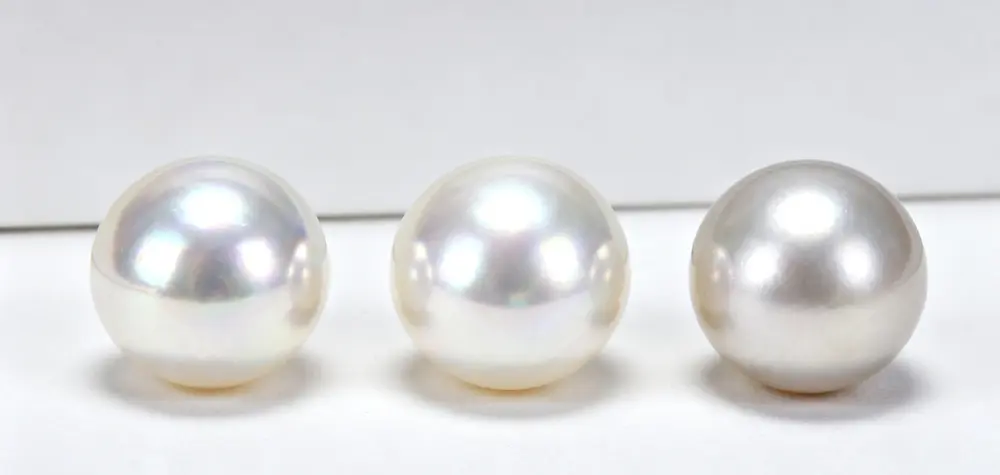
When light hits a high-quality pearl, you should see your reflection. Seriously. Not some blurry blob—your actual features should be recognizable. That’s what “excellent luster” means in the freshwater pearl grading system.
Medium luster? Reflections get soft and fuzzy around the edges. Low luster? Forget about it—looks like a piece of chalk. When evaluating freshwater pearls, hold them under a direct light source and watch how crisply the light bounces back. Sharp = good. Diffused = walk away.
Surface Quality: The Hidden Cost Factor
Here’s what most beginners miss: surface quality directly impacts your usable inventory rate. If you order 1,000 pearls at AA grade (70-80% clean surface), roughly 20-30% will have visible blemishes. For high-end pieces, those pearls are dead weight.
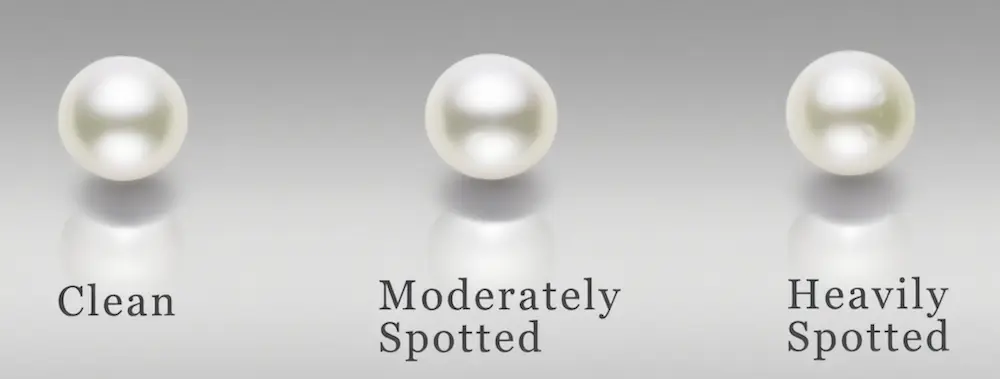
That’s why the freshwater pearl grading system puts so much emphasis on this metric. You need to know exactly what percentage of your order will be immediately usable versus what needs creative setting or markdown pricing.
Decoding the A-AAAAA Freshwater Pearl Grading System
Alright, let’s break down the actual grades. Most reputable wholesale pearls suppliers use some version of the A-AAA or A-AAAAA scale. I’ll show you what each grade really means—no marketing fluff.
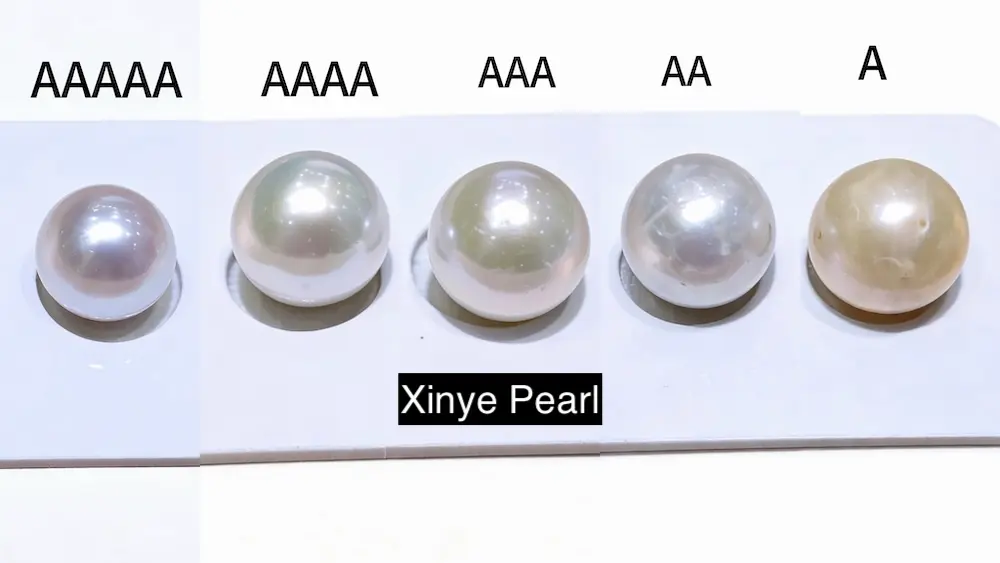
AAAAA Grade (Gem Quality): The 1% Club
- Luster: Mirror-like. You can literally see individual eyelashes in the reflection.
- Surface: 99%+ flawless. Maybe one microscopic inclusion if you look really hard.
- Shape: Perfect spheres or near-perfect with less than 3% variation.
Wholesale Reality: These pearls are unicorns. Less than 1% of annual freshwater pearl harvests qualify. At Xinye Pearl, we reserve these exclusively for museum-quality pieces and ultra-premium jewelry collections. If someone’s offering you “all AAAAA grade” at bargain prices, they’re lying. Period.
Price-wise, expect 4-5x the cost of AAA grade. Worth it? Only if you’re targeting the absolute top of the market.
AAAA Grade (Premium): Where Smart Money Goes
- Luster: Very high—sharp, bright reflections with distinct edges.
- Surface: 95%+ clean. Some tiny inclusions allowed under magnification.
- Shape: Excellent roundness, less than 5% deviance from perfect spherical.
Wholesale Reality: This is the sweet spot for most serious jewelry businesses. The freshwater pearl grading system places AAAA pearls in that magic zone where quality is undeniably high, but prices remain somewhat reasonable. Perfect for fine pearl strands, stud earrings, and pendant necklaces that need to impress without bankrupting your customers.
When we source pearls for our premium lines, AAAA is our go-to grade. The quality difference between AAAA and AAAAA is visible under scrutiny but negligible to end consumers.
AAA Grade (High Commercial): The Volume Player
- Luster: High quality and particularly good at reflecting light.
- Surface: 85–95% of the surface area is clean. When you look closely, you might see little groups of minor defects.
- Shape: Roundness is nice to very good. It could have small differences, but it still looks “round” to the eye.
Wholesale Reality: AAA represents the backbone of the mid-range jewelry market. According to industry data, AAA-grade pearls account for the majority of freshwater pearl sales globally. They offer excellent value—high enough quality to avoid returns, affordable enough for comfortable margins.
For retailers targeting everyday luxury consumers (think $100-300 price points), AAA from a reliable pearl manufacturer delivers consistent results. The freshwater pearl grading system recognizes these as “commercial fine quality” for good reason.
AA Grade (Mid-Commercial): Budget-Conscious Territory
- Luster: Medium to low. Reflections are soft and somewhat blurry.
- Surface: 70-85% clean. Noticeable imperfections present.
- Shape: Semi-round to off-round. Baroque tendencies become common.
Wholesale Reality: AA is good for fashion jewellery, crafts, and anything else when the pearl is only a little element. Think of boho-style patterns, necklaces with several strands where the quality of the pearls doesn’t matter, or trendy things that look like they were manufactured on purpose.
This is where you can find commercial-grade freshwater pearls. Below that is material that is good for crafts.
A Grade (Entry-Level): The Craft Bin
- Luster: Dull and chalky. Minimal light reflection.
- Surface: Less than 70% of the surface is clear.
- Shape: Highly irregular, often baroque or potato-shaped.
Wholesale Reality: These pearls serve specific niches—costume jewelry, beading projects, craft supplies, or pearl powder production. The freshwater pearl grading system doesn’t pretend these are fine jewelry material. They’re not. But they have their place.
At Xinye Pearl, we occasionally stock A-grade specifically for customers needing texture and volume at rock-bottom prices. Just don’t expect anyone to confuse them with luxury goods.
The Trust Factor: Why Your Supplier’s Consistency Beats Their Grading System
Here’s the uncomfortable truth about the freshwater pearl grading system: it’s mostly unregulated. That AAA label literally means whatever your supplier decides it means. There is no standardized system across the pearl industry, which creates massive confusion for wholesale buyers.
This is why establishing a relationship with a trustworthy supplier matters infinitely more than memorizing grade labels. At Xinye Pearl, we built our reputation on one principle: every batch should match the samples, every single time. Not most of the time. Every time.
Making Smart Wholesale Decisions Based on Your Market
The “best” grade in the freshwater pearl grading system isn’t AAAAA—it’s whatever serves your target customer profitably. Let me show you what I mean.
- For high-end boutiques and bridal jewelry: AAAA is your minimum. Customers expect nothing less than ideal, and anything less leads to refunds and damage to your reputation. People are not very price-sensitive, but they are quite quality-sensitive.
- For mid-market retailers and online shops: AAA hits the mark. People who spend between $100 and $400 want quality they can see, but they don’t want to pay extra for luxury. AAA from a trusted source for wholesale pearls gives you just that.
- For fashion lines and trend-driven pieces: AAA hits the sweet spot. Consumers in the $100-400 price range want quality they can see but won’t pay luxury premiums. AAA from a reliable wholesale pearls source delivers exactly that.
- For fashion lines and trend-driven pieces: AA to AAA, depending on the design. If pearls are accent pieces instead of the main focus, you can confidently choose AA grade and use the money you save into other design elements.
- For craft supply and DIY markets: A to AA grade. Your customers understand they’re not buying fine jewelry components and price accordingly.
The freshwater pearl grading system gives you a framework, but your market intelligence determines the grade you actually need.
FAQs About the Freshwater Pearl Grading System
Is there a global standard for the freshwater pearl grading system?
No. Unlike diamonds, pearls lack universal grading standards. Different suppliers use variations of the A-AAA or A-AAAAA scale, but definitions vary. This is why it’s more important to choose a supplier that is honest and has uniform standards than the grade labels themselves.
How can I verify the grade of freshwater pearls before purchasing?
Always request samples that match your order specifications. Examine them under direct lighting for luster quality, use magnification to assess surface cleanliness, and measure actual dimensions.Documentation of grading criteria from your pearl manufacturer helps establish clear expectations.
What’s the price difference between AAA and AAAA grade freshwater pearls?
For the same size, AAAA grade costs 40–60% more than AAA grade. But the price changes too based on the color, shape, and size. As the sizes get bigger, the prices for each grade go up by a lot.
Can the freshwater pearl grading system help me avoid fake or treated pearls?
This method verifies pearl quality but not authenticity. To ensure your jewelry is authentic, look for merchants who provide documentation, source from open and honest sources, and follow CIBJO guidelines. Learn how to verify a pearl is real at https://www.gia.edu/pearl.
Should I pay more for perfectly round freshwater pearls?
Depends on your market. Less than 3% of freshwater pearls that are harvested are round, which makes them much more expensive. For standard pearl necklaces and earrings that go with them, roundness is worth the extra cost. Prices are often better for near-round or off-round shapes that look great in modern or baroque designs.
The Bottom Line: Master the System, Then Trust Your Supplier
Understanding the freshwater pearl grading system isn’t about memorizing grade definitions. It’s about developing the eye to spot quality and the judgment to work with suppliers who consistently deliver what they promise.
Here’s your action plan:
- Start by ordering samples across multiple grades from your potential suppliers. Compare them side by side under various lighting conditions. Take photos. Make notes. Build your personal reference library.
- Ask specific questions about how your supplier defines each grade in their freshwater pearl grading system. The best suppliers provide detailed breakdowns of their quality standards—not because they have to, but because they’re proud of their consistency.
- Build relationships with pearl supplier who are open and honest and deliver the same high quality on all of your orders. We’ve worked with several wholesale partners at Xinye Pearl for more than ten years because trust builds over time.
Remember: the freshwater pearl grading system is how you tell them what the quality criteria are. But in the end, your success depends on working with suppliers who are also dedicated to being open and consistent.
Ready to source freshwater pearls that actually match their grade labels? Contact our team at Xinye Pearl for sample requests and detailed quality documentation. We’ve built our reputation on one thing—delivering exactly what we promise, every single order. No surprises, no excuses.
The freshwater pearl grading system gives you the language. We provide the consistency. Together, that’s how you build a jewelry business that lasts.