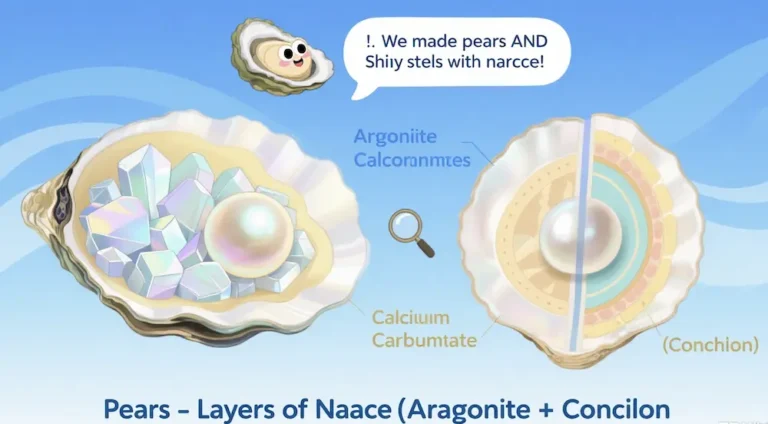
Look, if you’re a jewelry designer, you already know the problem. South Sea pearls eat your margins alive. A single 14mm white South Sea strand? You’re looking at thousands—sometimes tens of thousands—of dollars. Your profit disappears before you even price the piece.
But here’s what’s shifting the game: Edison pearls vs South Sea pearls isn’t the debate it used to be. Smart designers are discovering they can deliver that luxe, oversized pearl look their clients want without mortgaging their entire inventory budget.
What Are Edison Pearls? (Understanding the Technology)
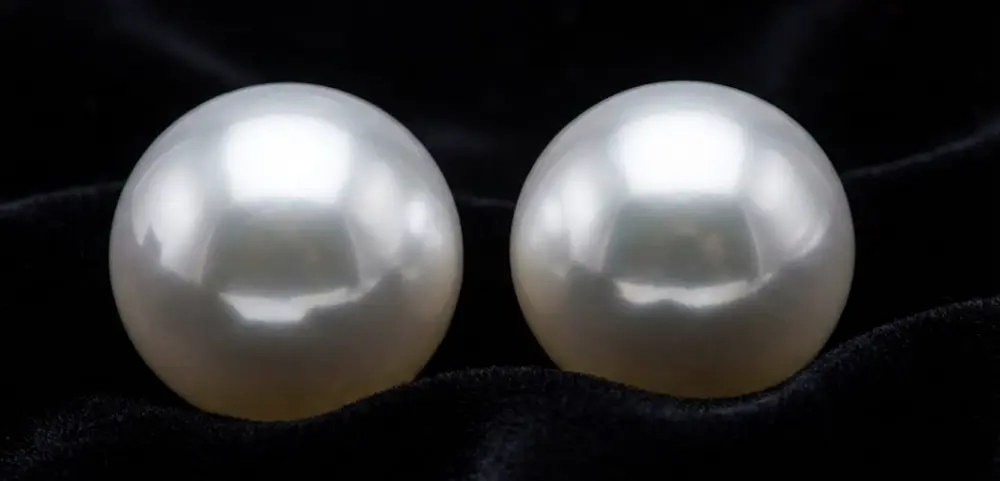
Edison pearls are bead-nucleated freshwater pearls—and that detail matters more than you think, especially when considering Edison Pearls vs South Sea Pearls.
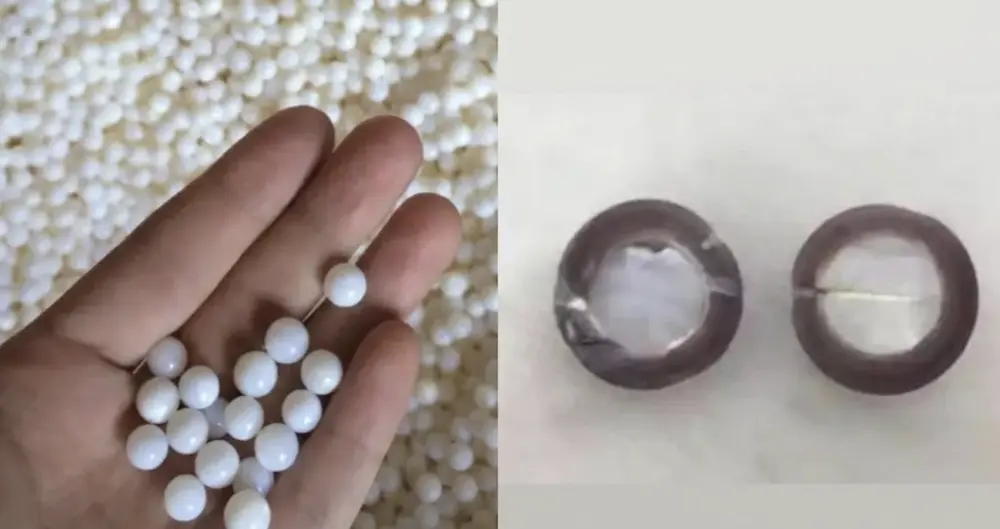
Unlike traditional freshwater pearls (which form around tiny tissue grafts), Edison pearls use the same cultivation method as saltwater varieties. Chinese pearl farmers implant a solid bead nucleus—usually around 6-8mm—into freshwater mussels (Hyriopsis cumingii). Then they wait. Three to five years later, you get pearls that rival South Sea sizes.
We’re talking 11-16mm on average, with some exceptional pieces pushing 20mm. That’s South Sea territory at a fraction of the cost.
The nacre thickness? Around 2mm. Same as quality South Sea pearls. The cultivation time mirrors Tahitian production cycles. The only real difference is the host: freshwater mussels instead of saltwater oysters.
According to research from the Gemological Institute of America, fine-quality Edison pearls now achieve luster measurements of 90-100 GU (Gloss Units)—putting them in the same optical performance range as premium saltwater varieties.
The “Look” for Less: Comparing Luster and Color
Here’s where Edison pearls stop being just an “affordable alternative” and become something different entirely in the conversation of Edison Pearls vs South Sea Pearls.
Metallic Luster That Saltwater Can’t Match
Edison pearls have this sharp, metallic luster that’s almost impossible to find in South Sea varieties. Dealers call it the “light bulb effect.” When light hits an Edison pearl, you get this mirror-like reflection that’s distinctly modern, which is a key distinguishing point in Edison Pearls vs South Sea Pearls.
South Sea pearls? They’re gorgeous, don’t get me wrong. Deep, silky, luxurious luster. But it’s softer. More traditional. If your client wants that classic Audrey Hepburn elegance, South Sea wins. If they want something bold and contemporary, Edison delivers.
Visual Comparison:
| Feature | Edison Pearls | South Sea Pearls |
|---|---|---|
| Luster Type | Sharp, metallic, mirror-like | Deep, silky, soft glow |
| Surface Quality | Smooth (AAAAA-AAA grades available) | Natural growth lines visible |
| Modern Appeal | High – contemporary aesthetic | Medium – classic luxury |
Color Diversity = Design Freedom
South Sea pearls come in white, gold, and champagne shades. Beautiful, but limited.
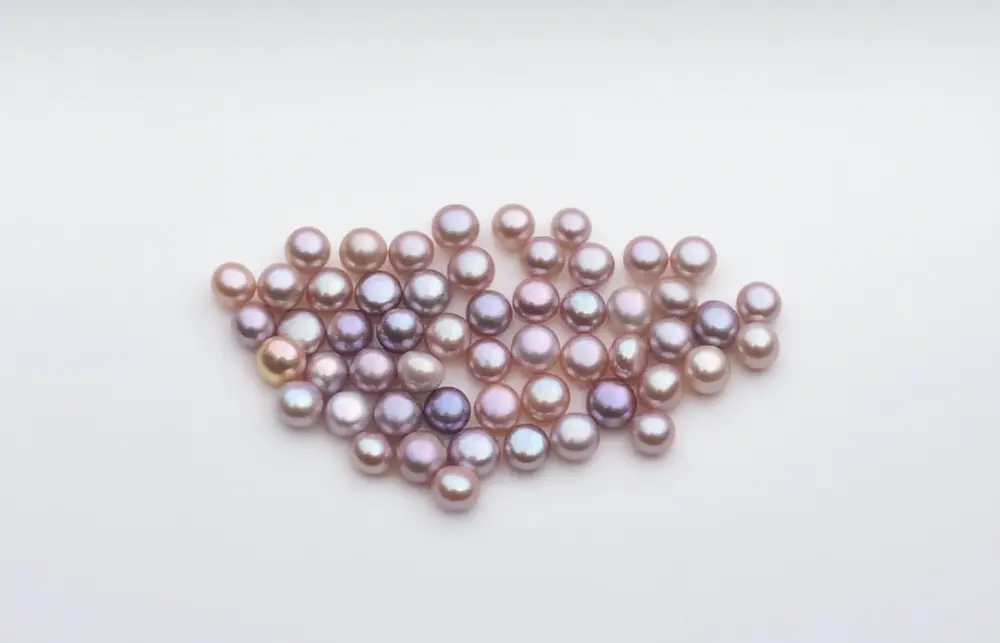
Edison pearls? You get an entire spectrum: natural purple, bronze, lavender, peach, gold, metallic cream, and deep violet. No dye needed for these colors—they’re natural, stabilized through controlled freshwater cultivation.
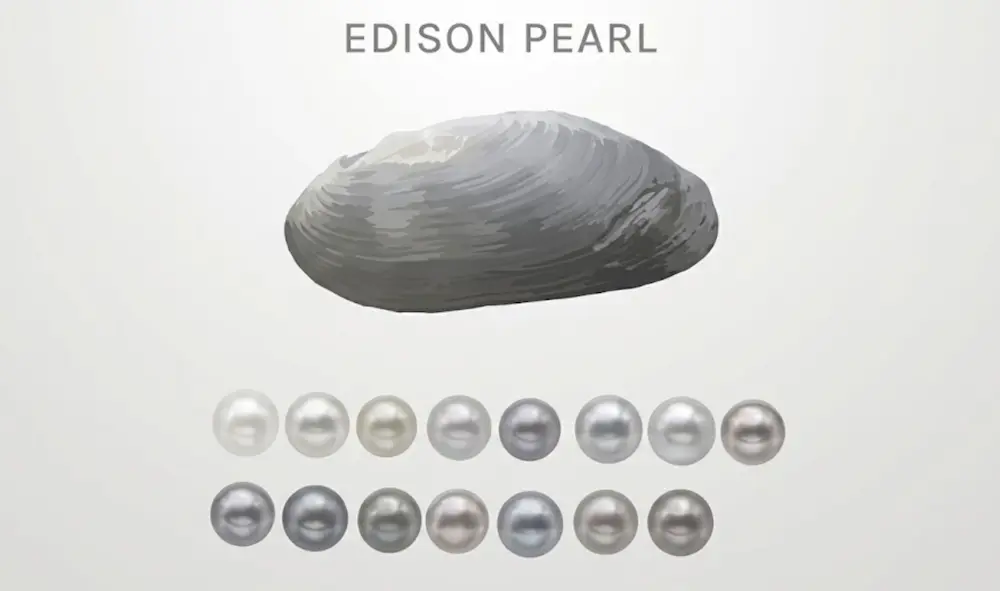
Want to create a “rainbow” strand mixing complementary tones? Easy with Edison pearls. Need deep purple accents for a custom piece? Available. Looking for that ultra-rare rose-bronze hue? Edison farmers are producing it consistently.
As a pearl manufacturer focused on delivering options to designers, Xinye Pearl has seen the demand for these unique colors explode. This variety is a strong selling point when comparing Edison Pearls vs South Sea Pearls. Clients don’t want another white pearl necklace—they want pieces that stand out.
The Business Case: Profit Margins for Designers
Let’s talk numbers because this is where Edison pearls become a business decision, not just an aesthetic one.
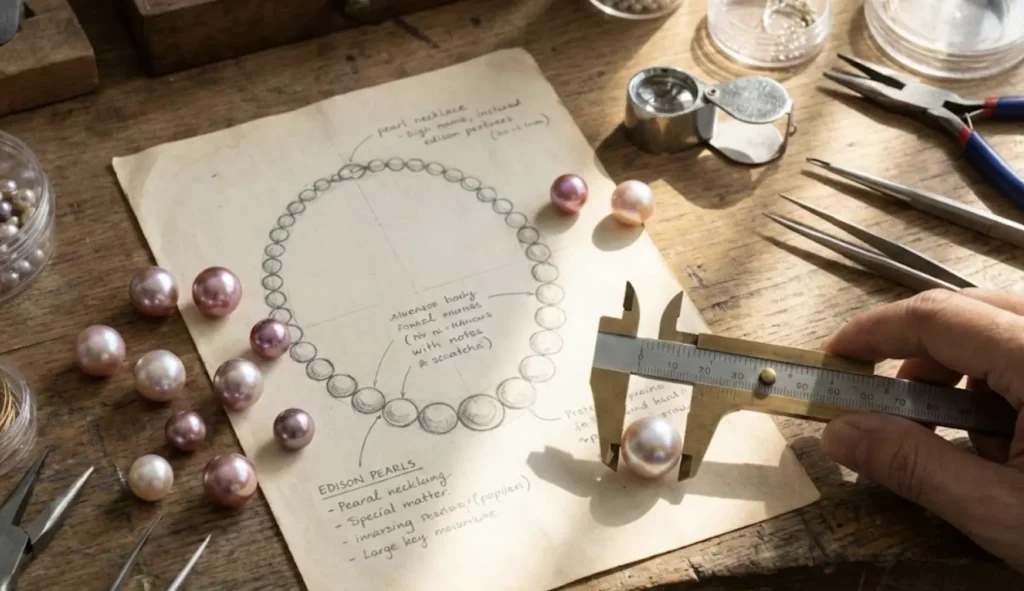
Price Reality Check:
- 14mm South Sea pearl strand: $8,000-$25,000 wholesale
- 14mm Edison pearl strand: $500-$2,500 wholesale
Same look to your client. Ten times price difference to you.
Think about what that means for your margins. You can:
- Pass savings to clients (win more price-sensitive business)
- Maintain luxury pricing (pocket the difference)
- Split the difference (competitive pricing + healthy margins)
A designer can get high-quality Edison strands for a lot less than South Sea pearls by purchasing wholesale pearls from a reliable pearl supplier.. They can then sell the final items for 60–70% more than they cost to make. This massive difference in cost-efficiency highlights a key advantage of Edison Pearls vs South Sea Pearls. Try doing that with real South Sea stock.
Cost-Effectiveness Breakdown:
Example: 16mm Perfect Round Pearls
South Sea Investment:
- Wholesale cost per strand: $15,000
- Retail price needed (3x markup): $45,000
- Limited buyer pool at this price
Edison Alternative:
- Wholesale cost per strand: $1,800
- Retail price (3x markup): $5,400
- OR price at $12,000 (lower than SSP, higher margin)
- Much larger buyer pool
Here’s the strategic advantage: you’re not competing on price alone. You’re offering legitimate quality—thick nacre, impressive size, unique colors—at accessible pricing. That’s how you scale a jewelry business, and it is a key factor to remember when looking at Edison Pearls vs South Sea Pearls.
Why the Market Is Shifting to Edison Pearls
The jewelry design world is waking up to what freshwater pearls can deliver when cultivated with advanced techniques.
What’s Changed:
- Technology improvements: Rejection rates for bead implantation dropped to ~5% (compared to 15-20% in early cultivation)
- Quality consistency: Modern Edison farms maintain strict environmental controls
- Color genetics: Ten years of selective breeding produced mussels that generate stable, vibrant hues
- Industry acceptance: GIA now recognizes Edison pearls as legitimate freshwater bead-cultured varieties with measurable quality standards
The Pearl Guide—one of the industry’s most respected forums—features discussions where collectors directly compare their Edison strands to South Sea pieces. The consensus? In side-by-side photos, only experts can consistently tell the difference.
For B2B buyers, this matters. When your clients can’t distinguish between a $15,000 necklace and a $2,000 one without expert appraisal, you need to ask yourself which one makes business sense when weighing Edison Pearls vs South Sea Pearls.
How to Source High-Quality Edison Pearls
There are differences between Edison pearls. Since the market blew up in 2011, everyone from real pearl farms to drop-shippers has been saying they have “premium” Edison inventory for sale, further complicating the comparison of Edison Pearls vs South Sea Pearls.
What to Look For:
- Nacre thickness verification: Minimum 2mm (ask for cross-section proof)
- Round shape percentage: 85%+ for quality strands
- Surface quality grading: AAAAA grade = flawless surface, AAA grade = minor blemishes under 5%
- Natural color certification: Undyed colors should be clearly stated
- Direct farm sourcing: Eliminates middleman markup
Red Flags:
- Prices that seem too good (sub-$300 for 12mm+ strands)
- No information about cultivation time or origin
- Suspiciously perfect uniformity (nature doesn’t work that way)
- Sellers who can’t explain nucleation process
Sourcing Direct from China
China produces virtually all Edison pearls. Working directly with Chinese pearl suppliers cuts costs dramatically, but you need the right partner to ensure quality when evaluating Edison Pearls vs South Sea Pearls.
Look for wholesalers who:
- Maintain their own cultivation facilities or direct farm relationships
- Provide GIA-standard quality grading
- Offer sample orders before bulk purchase
- Understand B2B logistics (shipping, customs documentation, quality consistency)
At Xinye Pearl, we’ve built our reputation on connecting designers with verified Edison pearl inventory directly from cultivation sources. This direct sourcing gives our customers a strong advantage in the Edison Pearls vs South Sea Pearls market. No games, no bait-and-switch, no mystery pearls that don’t match the photos.
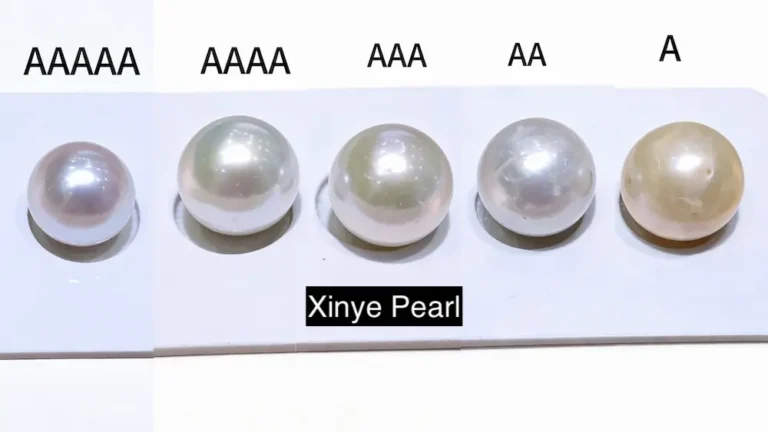
Understanding Edison Pearl Grading:
Edison pearls use the freshwater pearl grading system:
- AAAAA (5A): Flawless or near-flawless surface, under 1% blemishes, mirror-like metallic luster
- AAAA (4A): Excellent quality, 1-3% minor surface marks, strong luster
- AAA (3A): Very good quality, 3-5% surface imperfections, good luster
- AA (2A): Good quality, 5-10% visible blemishes, moderate luster
- A (1A): Commercial grade, 10%+ surface marks, lower luster
AAAAA-AAA grades are the greatest for wholesale design work because they look well and don’t cost too much. For high-end completed jewelry, anything below AA usually doesn’t work.
Pro tip: Request a sample strand before committing to large orders. Examine the nacre, test the weight (solid nacre feels substantial), and compare the luster under different lighting. These steps are crucial for making informed choices when evaluating Edison Pearls vs South Sea Pearls quality. If a supplier hesitates on samples, walk away.
Real Designer Applications
Edison pearls aren’t just for budget-conscious shoppers. High-end designers are incorporating them strategically:
- Statement pieces: Large (15-18mm) metallic Edison pearls as focal points in modern designs
- Color storytelling: Multi-hue Edison strands that tell a narrative
- Mixing metals: Bronze and copper Edison tones paired with rose gold settings
- Everyday luxury: 11-12mm Edison pieces priced for frequent wear, not special occasions only
When you’re designing, it’s clear how much more versatile Edison pearls are than South Sea pearls. This is a crucial point when considering Edison Pearls vs South Sea Pearls. Because South Sea pearls are so valuable, they need to be set in conventional ways and styled in classic ways. Edison pearls? You can take chances. Try settings that aren’t usual. Go beyond what you think is possible.
The Bottom Line for Designers
South Sea pearls will always have their place. For clients seeking absolute prestige, investment-grade pieces, or family heirlooms, nothing replaces genuine South Sea provenance.
But for 90% of your design work? Edison pearls deliver comparable visual impact at 10-20% of the cost. That’s not a compromise—that’s smart business.
The wholesale pearl business has changed in a big way. Designers that see this early—by understanding the competitive edge of Edison Pearls vs South Sea Pearls—are taking business away from traditional jewelers who are still using old pricing structures.
Quick Decision Framework:
- Choose South Sea when: Client specifically requests them, heirloom/investment piece, budget >$10k
- Choose Edison when: Price sensitivity matters, unique colors needed, modern aesthetic, volume production
Smart designers aren’t asking “Edison pearls vs South Sea pearls—which is better?” They’re asking “Which pearl serves this specific design and client best?” Once you start thinking that way, your margins improve, your design options expand, and your clients get more value.
That’s the game we’re all here to win.
Frequently Asked Questions
Are Edison pearls real pearls?
Yes. Edison pearls are genuine cultured freshwater pearls grown in mussels over 3-5 years. They use bead nucleation (like saltwater pearls) rather than tissue nucleation, which is why they achieve larger sizes and rounder shapes than traditional freshwater varieties.
How long do Edison pearls last compared to South Sea pearls?
With proper care, both pearl types last decades. Edison pearls have 2mm nacre thickness—comparable to South Sea pearls—which provides durability. The main care difference: Edison pearls may develop subtle patina faster than South Sea, but this doesn’t indicate quality degradation.
Can clients tell the difference between Edison and South Sea pearls?
Most cannot without expert examination. Side-by-side, experienced gemologists can identify subtle differences in luster type (metallic vs. silky) and undertone (Edison tends warmer, South Sea cooler). But in finished jewelry worn normally, the distinction is minimal.
Do Edison pearls hold resale value like South Sea pearls?
No. South Sea pearls are valuable as collectibles and investments because they are rare and hard to grow. Edison pearls are somewhat new (they came out in 2011) and don’t have many resale markets like other types of pearls. But for designers that want to make jewelry that people can wear instead of pieces that are good for investment, they have a better cost-to-beauty ratio.
What sizes are available in Edison pearls?
Edison pearls typically range 11-16mm, with exceptional pieces reaching 20mm. The most common commercial sizes are 11-12mm. Anything below 9mm generally isn’t classified as Edison—those are standard freshwater pearls. For design work, 12-14mm Edison pearls offer the best balance of impact and availability.
Where should designers buy wholesale Edison pearls?
Source directly from Chinese suppliers with verified cultivation relationships, preferably in Zhejiang Province. Ask for samples, check the thickness of the nacre, and make sure the grading requirements are correct (AAAAA-AAA for high-quality work). Stay away from marketplaces where the quality is not always the same. Established wholesalers like Xinye Pearl keep an eye on quality and offer different price levels for designers.