Are you basing your 2026 inventory budget on 2024 prices? Stop. The market has shifted. If you’re a jewelry retailer still pricing your pearl inventory based on what you paid two years ago, you’re ignoring current real pearl prices and either leaving money on the table or overpaying for stock. The freshwater pearl market went through a supply crunch before 2025. Environmental regulations tightened across Zhuji Province in China—the source for roughly 95% of global freshwater production. Farms got limited. Output dropped.
This isn’t a consumer pricing guide telling grandma what her pearl necklace is worth. This is a factory-level cost report for retailers who buy pearls to sell them. If you source inventory, this affects your margins. If you’re still working with the same suppliers you used in 2022, you need to read this.
The Data: Wholesale Cost vs. Retail Value
Stop guessing. Here is the current trading range for raw materials at the factory level versus what they sell for in retail.
Table 1: 2026 Real Pearl Prices – Factory Cost vs. Retail (40cm strand)
| Pearl Type | Size | Commercial Grade | Top Grade | Retail Range | Margin |
|---|---|---|---|---|---|
| Freshwater Round | 7-8mm | $45-65 | $120-180 | $350-600 | 400-500% |
| Freshwater AAAA | 8-9mm | $95-135 | $220-300 | $650-1,300 | 400-600% |
| Freshwater AAAAA | 8-9mm | $140-200 | $280-380 | $900-1,600 | 450-650% |
| Edison Pearls | 10-11mm | $180-250 | $400-550 | $1,200-2,500 | 400-550% |
| Edison Pearls | 12-13mm | $350-500 | $700-950 | $2,200-4,000 | 400-550% |
| Akoya (Japan) | 7-8mm | $280-400 | $650-900 | $1,800-3,500 | 350-450% |
| South Sea (White) | 10-12mm | $1,200-1,800 | $3,500-5,500 | $8,000-18,000 | 300-450% |
Pricing data collected from factory-direct sources in Zhuji production zones, January 2026. Retail pricing based on observed U.S. market rates from established jewelry retailers.
Look at those margins. Even after the cost increases, you’re still looking at 400-600% markup on high-quality freshwater and Edison pearls. The profit is there. You just need to understand where the real pearl prices actually sit.
The mistake most retailers make is focusing on the wholesale cost increase instead of looking at what retail pricing did. Yes, AAAA freshwater rounds went from $150 to $220 per strand at the factory level over the past 18 months. But retail prices went from $600 to $1,100 in the same period. Your margin expanded, not contracted.
2026 Trend Analysis: Why Prices Are Moving
Trend #1: The “Edison” Explosion
The Edison pearl market changed completely in 2024, and most retailers haven’t caught on yet.
Here’s what happened: Edison pearls hit a quality threshold where they became visually comparable to South Sea pearls for 90% of customers. Same size range (10-15mm). Same metallic luster. Same round shape. The only difference? A 12mm South Sea strand costs you $4,000 wholesale. When you look at real pearl prices, a comparable Edison strand costs just $500.
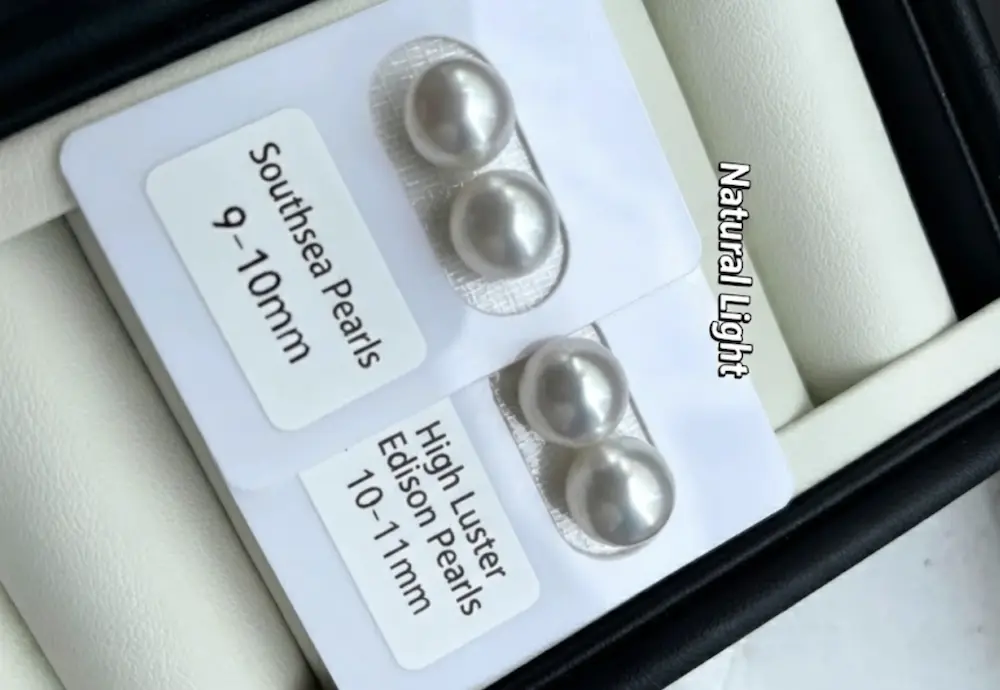
Think about what this means for your retail business. You can offer customers the South Sea look at a $1,800 retail price instead of $12,000. Your margin stays healthy at 400%+, the customer walks out thinking they got value, and you moved inventory without tying up capital in slow-moving high-ticket pieces.
The supply chain for Edisons is stable. Unlike South Sea production, which depends on slow-growing oysters in remote locations, Edison farms can scale. Zhuji farms invested heavily in bead nucleation technology between 2022-2024. The quality improved. Output increased. Prices stayed reasonable.
Chart 1: Edison vs. South Sea – Cost Comparison (12mm strand)
Edison Pearl
- Wholesale cost: $300
- Retail price: $1,800-2,500
- Your margin: 500-700%
- Customer willingness: High (price accessible)

South Sea Pearl
- Wholesale cost: $4,000
- Retail price: $10,000-15,000
- Your margin: 250-375%
- Customer willingness: Low (price barrier)
The profit per unit is higher on South Sea, but the conversion rate kills you. How many customers walk into your store ready to spend $12,000 on a necklace? Maybe five per year. How many would spend $2,000 on something that looks nearly identical? Probably fifty.
That’s the Edison opportunity. As a pearl manufacturer, we’ve watched this shift happen in real time. Retailers who loaded up on Edison inventory in 2024 had their best year on record. Retailers who stuck with traditional South Sea-only offerings struggled with slow turns and dead inventory.
Trend #2: Environmental Impact
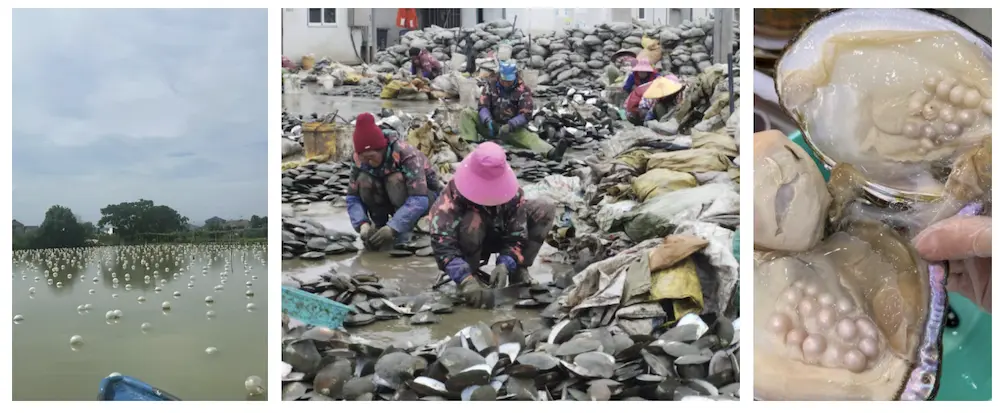
In late 2024, China’s Ministry of Ecology made Zhuji Province’s water quality rules harsher. The government limited active farming zones, reduced stocking density per farm, and required water treatment compliance before harvest.
Result: Total freshwater pearl production dropped 18% year-over-year. Low-grade commercial pearls (the material that used to wholesale for $15-20 per strand) basically disappeared. What’s left is A-grade and higher.
This created price pressure at the bottom end of the market. The “$50 pearl necklace” that big-box retailers used to sell now costs them $35 wholesale instead of $15. Their margins collapsed. Many stopped carrying pearls entirely.
But for retailers working with wholesale pearls in the AAA-AAAAA range, this was good news. The market moved upward. Customers who used to buy low-grade material at department stores are now shopping for mid-grade pearls at specialty retailers. Your customer base expanded.
Here’s the advice: Lock in inventory now. Don’t wait for Q2 or Q3 pricing. Real pearl prices for raw material are stable right now because farms are selling off existing stock. When that inventory runs out (likely by March 2026), prices will jump 10-15%.
Contact your supplier and negotiate a six-month contract at current rates. Most factories will honor it if you commit to volume. We do it for our regular accounts. Minimum order quantities apply, but the cost savings over six months make it worth the upfront commitment.
Pricing by Category: What Should You Pay?
Let me break down specific numbers by pearl type so you know what real pearl prices should look like when you’re sourcing inventory in 2026.
Freshwater: The Volume Driver
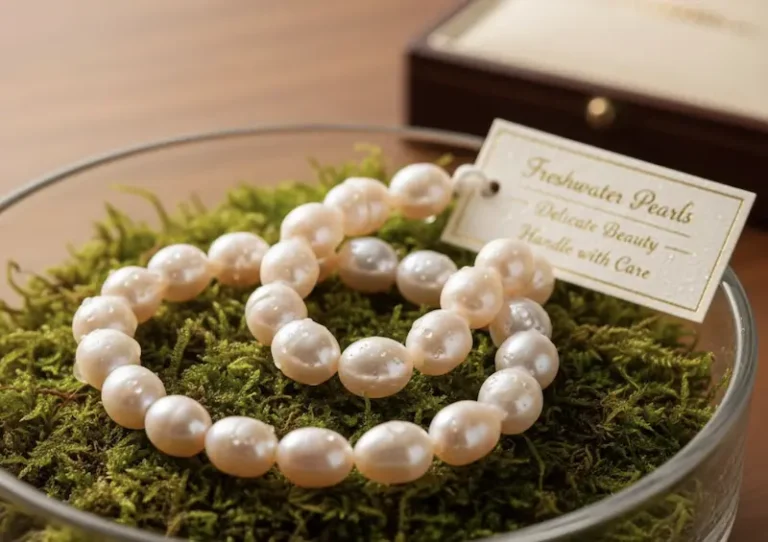
Freshwater pearls are still the bread and butter of retail pearl business. With current real pearl prices, they’re affordable, customers know them, and margins are excellent.
Here’s where the market sits right now:
AAA-Grade (7-8mm rounds): $45-65 per strand wholesale. Use these for entry-level pieces. Retail at $250-350. Target customer is someone buying their first pearl necklace or looking for everyday jewelry.
AA-AAA Grade (8-9mm rounds): $50-100 per strand wholesale. This is your volume sweet spot. Luster is good, surface is clean, retail pricing sits at $300-600. Most of your sales will come from this category.
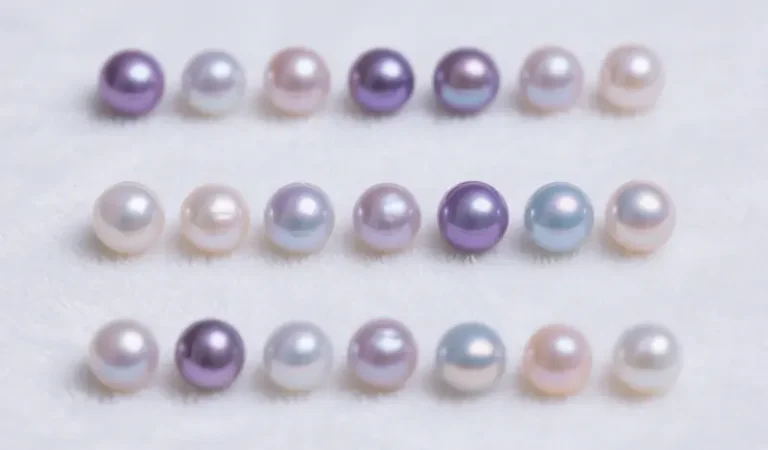
AAAA-AAAAA Grade (8-9mm rounds): $220-380 per strand wholesale. These are the white rounds that look like Akoya. Most customers can’t tell the difference. Retail them at $1,100-1,600. Position them as “premium freshwater” and watch them move.
The trend we’re seeing: AAAAA white freshwater rounds are selling faster than expected. Why? Akoya prices went crazy. A 7.5mm Japanese Akoya strand now costs $650 wholesale, so customers are trading down to top-grade freshwater. They get 95% of the look for 30% of the cost.
If you’re not stocking AAAAA white rounds, you’re missing sales. The wholesale pearl cost is higher than it was in 2023, but the margin opportunity is bigger because retail pricing moved even faster.
Baroque & Keshi: The Designer’s Choice
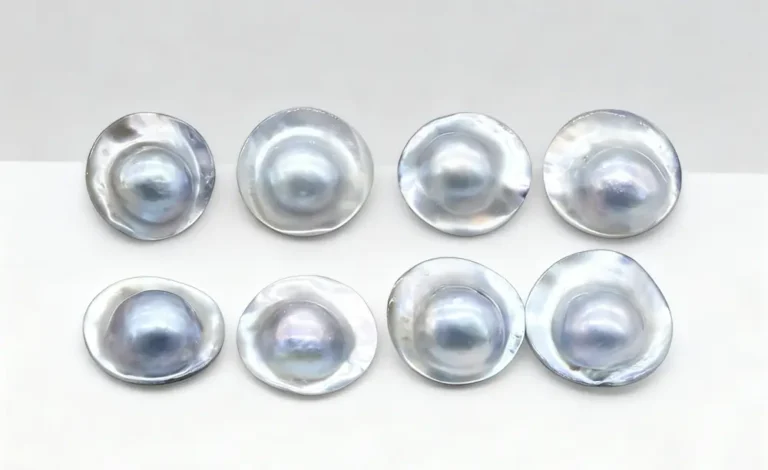
Here’s something most retailers don’t understand: baroque and keshi pearls have the lowest “cost per look” for real pearl prices in the entire pearl market.
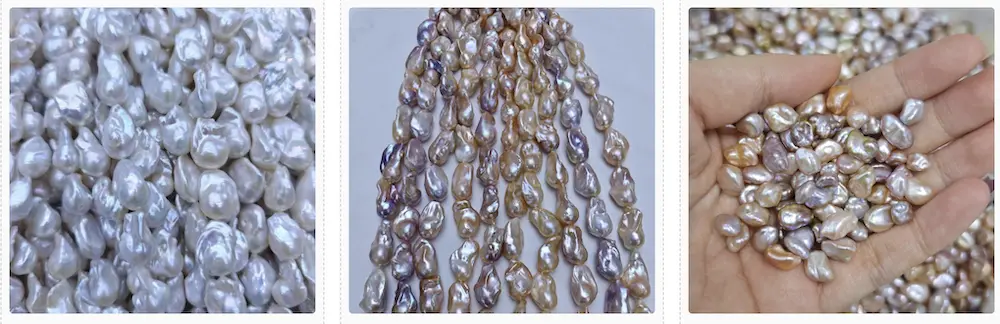
These pearls sell by weight (per gram), not by strand. A 50-gram bag of high-quality baroque pearls costs you $30-100 wholesale. That same bag contains enough material to make 15-20 pieces of jewelry.
Per-strand cost? About $100-200. Retail pricing on a baroque pearl necklace? $400-800. That’s 300% margin.
Baroque pearls work well right now because irregular shapes got fashionable. Customers see them as “unique” and “artistic.” They’re not wrong. But from a business perspective, you’re selling pearls that cost less to produce (because they’re not round) at prices that rival round pearls.
Table 2: Baroque Pearl Cost Structure (per gram)
| Quality Grade | Wholesale Cost | Retail Value | Margin |
|---|---|---|---|
| A-AA | $0.3-0.4/gram | $1.5-2.2/gram | 450-530% |
| AAA-AAAA | $0.5-0.8/gram | $2-5/gram | 400-550% |
| AAAAA | $1-2/gram | $3.8-9/gram | 380-450% |
Keshi pearls work the same way. They’re a byproduct of the pearl farming process—small, irregularly shaped pearls that form without a bead nucleus. Farms used to discard them. Now they sell them by the kilo.
A kilo of AA-AAA keshi costs $1000-1500 wholesale. That’s $0.60-0.90 per gram. Retail? You can sell keshi jewelry at $60-100 per gram. The margin is absurd.
If you’re not working with baroque and keshi pearls yet, 2026 is the year to start. Customer demand is there, cost structure is favorable, and profit opportunity for real pearl prices is bigger than anything else in the pearl market except maybe Edison Pearls.
Factory Insight: “Per Gram” vs. “Per Strand”
This is the industry secret that separates profitable retailers from everyone else. Most pearl manufacturers trade raw materials by kilo or gram at the factory level. When you buy by the strand, you’re already one step removed from the source. That extra layer costs you 15-30% on average.
Here’s how it works: A factory in Zhuji produces freshwater pearls. They sort them by grade, then sell in bulk at real pearl prices—usually 10-kilo minimums for commercial buyers. Those buyers then string the pearls into strands, add findings, package them, and sell to retailers like you. Each step adds margin.
If you can buy directly from the factory, or from a distributor who works on per-gram pricing, you cut out at least one middleman. Sometimes two.
Example: AAAAA white rounds, 8-9mm. Market rate per strand (40cm, roughly 50 pearls) is $220-280 wholesale. But that same strand weighs about 12-14 grams. At factory per-gram pricing, you’d pay $15-18 per gram. Total cost: $180-252. You just saved $40-80 per strand.
Multiply that across 100 strands for your quarterly inventory order, and you just saved $4,000-8,000. That’s real money.
As a source pearl manufacturer, we offer per-gram pricing for bulk orders. Minimum is 100 grams per grade/size combination. Most retailers hit that threshold easily when restocking core inventory.
The other advantage: bulk loose pearls. If you have your own stringer or work with a local jeweler who can string custom lengths, buying loose pearls by weight at real pearl prices is the most cost-effective sourcing method available. You control length, you control quality control, and your raw material pearl price is as low as it gets
What About Other Pearl Types?
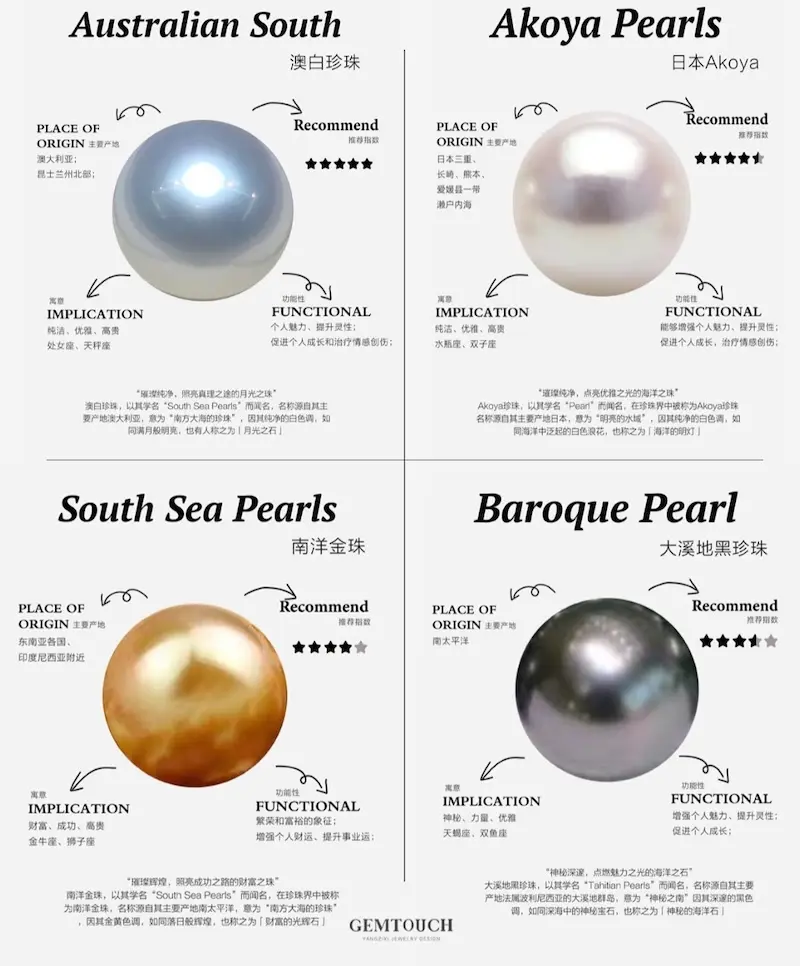
Quick breakdown of non-freshwater pearls, since they affect the market even if they’re not your primary inventory:
- Akoya (Japan/China): Wholesale cost jumped 25% in 2025 due to red tide events that damaged oyster populations off Japan’s coast. A 7-8mm strand now costs $280-400 for commercial grade, $650-900 for AAA+. Retail at $1,800-3,500. Margin is decent (350-450%), but the high wholesale cost limits your turnover unless you’re in a premium market.
- South Sea (Australia/Philippines/Indonesia): Still the luxury end of the market. 10-12mm white rounds wholesale at $1,200-1,800 for commercial, $3,500-5,500 for gem-grade. Retail at $8,000-18,000. Margin looks good on paper (300-450%), but these are slow movers. Most retailers stock 2-3 pieces max. High capital tie-up, low turnover.
- Tahitian (French Polynesia): Black pearls. 9-11mm wholesale at $400-700 for commercial, $900-1,400 for AAA. Retail at $1,500-4,500. Margin is fine (300-400%). Problem is market demand. Tahitians are niche. You’ll sell one for every ten freshwater necklaces. Stock them if you have the capital, but don’t build your inventory strategy around them.
The pattern is clear: freshwater pearls and Edisons are where the volume and margin opportunities sit in 2026. Saltwater pearls are fine for rounding out your collection, but they’re not going to drive your revenue growth.
Pearl Market Trends 2026: What’s Coming
Three trends will define the pearl market over the next 12 months:
1. Quality over quantity. Low-grade commercial pearls are gone. Customers expect better. The “good enough” pearl necklace at $100 retail doesn’t exist anymore, because the raw material to make it costs $60 wholesale. Either move upmarket or get out of pearls entirely.
2. Edison adoption accelerates. More retailers will figure out that Edisons are the South Sea alternative. Expect Edison demand to increase 30-40% in 2026. Prices will stay stable through Q2, then start climbing as farms sell through existing inventory. If you’re going to stock up, do it before April.
3. Direct factory sourcing becomes standard. Retailers who continue working through 2-3 layers of middlemen will get squeezed on margin. The successful retailers in 2026 will be the ones who established direct relationships with factories or worked with distributors offering factory-direct pricing. The $40 savings per strand I mentioned earlier? That’s the difference between a healthy margin and barely breaking even.
Conclusion: Secure Your Margins Now
2026 is the year of “high-quality material scarcity.” Production is down. Demand is stable. Prices will trend upward, but profit opportunity for real pearl prices is still huge—if you source directly from factories.
Here’s what you need to do:
- Lock in pricing contracts now. Talk to your wholesale pearls supplier this week. Get a six-month fixed-rate agreement. Prices are stable right now. They won’t stay that way.
- Load up on Edison inventory. This is the fastest-growing category in pearls. Customers want the look of South Sea without the price tag. If you’re not offering Edisons, you’re losing sales to retailers who are.
- Move to per-gram pricing where possible. Cut out middlemen. Buy bulk loose pearls if you can handle the stringing yourself or work with a jeweler who can. Your raw material cost will drop 20-30%.
- Focus on AAA-AAAAA freshwater. The low-end market is dead. Mid-grade and premium freshwater is where the volume sits. Stock accordingly.
- Review your markup strategy. Real pearl prices went up, but so did retail pricing. Make sure you’re capturing the full margin opportunity. If you’re still using 2024 retail prices with 2026 wholesale costs, you’re leaving money on the table.
Don’t let market fluctuations eat your profit. The data is clear. The opportunity is clear. What you do with it is up to you.
Ready to lock in factory-direct pricing?
Download our Q1 2026 Wholesale Price List or contact us directly to discuss volume pricing for your spring inventory. We work with retailers across the U.S. and Canada who want better margins on high-quality wholesale pearls.
The market moved. Make sure you’re moving with it.
Xinye Pearl is a factory-direct supplier of freshwater pearls and Edison pearls based in Changzhou, China. We work directly with retailers to provide per-gram and per-strand pricing on commercial through gem-grade pearls. Contact us for current wholesale pricing and minimum order requirements.