
Unique pearl shapes are exploding in 2026. Every jewelry brand now faces a simple choice: stand out with baroque pearls and irregular forms, or blend into obscurity with the same round pearls everyone else is selling.
Here’s what changed. Round pearls used to dominate because they were “classic.” But classic became boring. Buyers—especially younger ones—want personality. They want pieces that look different. They want jewelry that starts conversations.
That change opened up a huge market for wholesale pearls suppliers and businesses that were willing to accept different pearl shapes. Brands that stick to tradition aren’t earning money right now. Customers can’t find coin pearls, keshi pearls, and stick-shaped baroque designs anyplace else than here.
Why Unique Pearl Shapes Matter for Your Brand in 2026
Look at the numbers. Baroque pearls now represent 40-50% of every harvest. That’s not rare—that’s abundant. But most suppliers still treat them like afterthoughts, pricing them 50-80% below round pearls simply because they’re “imperfect.”
That pricing gap is your margin opportunity.
When you source wholesale baroque pearls directly from a pearl manufacturer, you’re buying the same organic material that high-end designers showcase on runways. The only difference? You’re not paying the luxury markup.
According to recent trend analysis, designers in 2026 are placing baroque shapes front and center in their main collections—not hiding them in “unique pieces” sections. Mixed metals, layered designs, and organic silhouettes dominate the current market. Your brand needs inventory that matches where customers are actually spending money.
The 5 Unique Pearl Shapes That Differentiate Your Brand
1. Coin Pearls: Flat, Versatile, High-Margin
Coin pearls sit flush against skin. They don’t roll. They don’t shift. That makes them perfect for earrings, pendants, and modern choker designs.
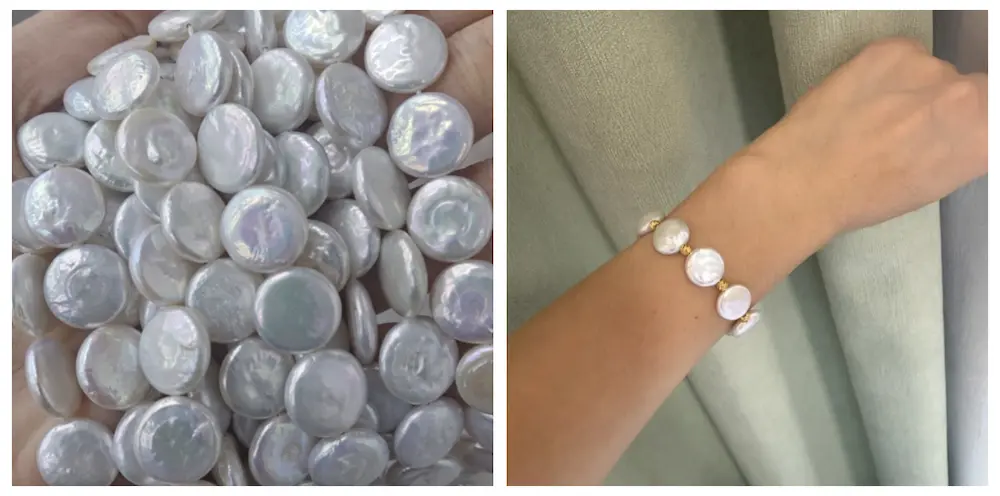
Why they sell:
- Comfortable for all-day wear
- Reflective surfaces create exceptional luster
- Stack beautifully in layered necklaces
- Lower cost than round pearls, higher perceived value
The shape gives designers flexibility. You can drill them top-to-bottom for drops, or side-to-side for linear arrangements. Fashion-forward brands are using coin pearls in asymmetric ear stacks and mixed-media pieces that combine pearls with leather or metal chains.
Best applications: Statement earrings, modern bridal jewelry, minimalist pendants
2. Keshi Pearls: 100% Nacre, Maximum Brilliance
Keshi pearls form without a nucleus. That means they’re solid nacre all the way through. More nacre equals more luster, more color play, and more visual interest than standard cultured pearls.
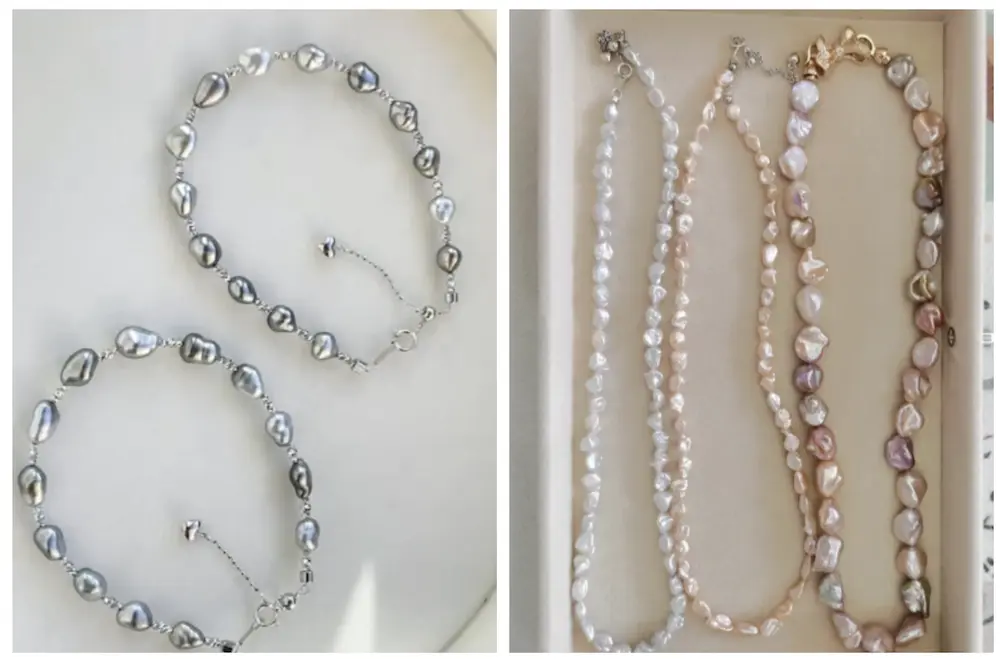
The market knows keshi pearls as “cornflake pearls” or “petal pearls” because of their irregular, organic shapes. Each one is genuinely unique. You can’t match them perfectly, which actually becomes a selling point when you market them correctly.
Why designers choose keshi:
- Exceptional luster from thick nacre layers
- Unique overtones and orient effects
- Naturally irregular shapes inspire creativity
- Premium aesthetic without premium pricing
According to the Gemological Institute of America, keshi pearls are formed as byproducts during the culturing process, making them both natural and accessible. When freshwater pearls produce keshi varieties, you get affordable luxury that your competitors can’t easily replicate.
Best applications: Bohemian jewelry lines, artisan collections, contemporary stud earrings
3. Stick Pearls (Biwa Pearls): Linear Elegance
Stick pearls—sometimes called Biwa pearls after the original Japanese lake where they were first cultivated—have elongated, bar-like shapes. Think toothpick dimensions but with pearl luster.
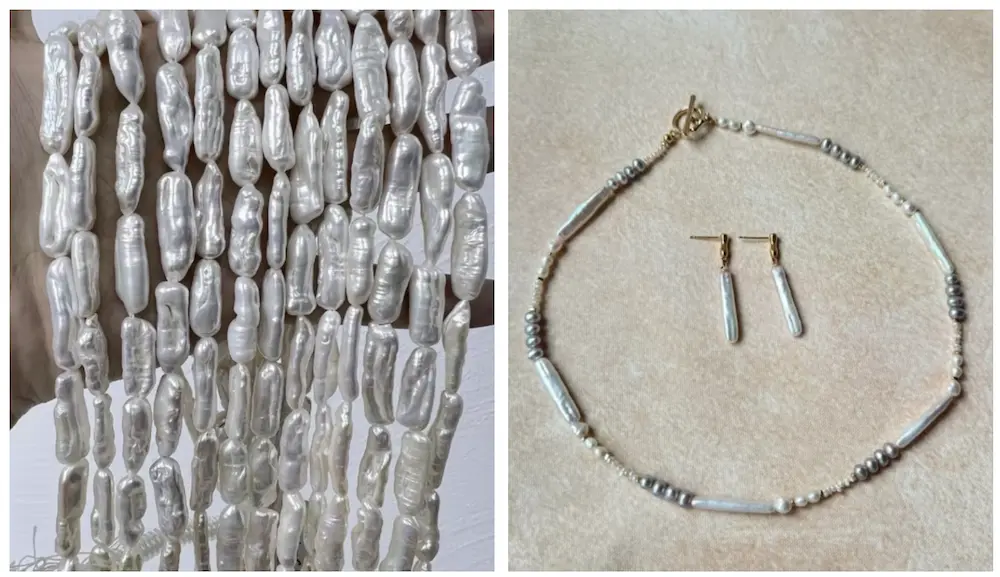
These work exceptionally well in:
- Drop earrings with modern geometric aesthetics
- Fringe necklaces that create movement
- Minimal bar pendants that appeal to Gen Z buyers
The linear shape breaks away from traditional pearl jewelry completely. When customers see stick pearls, they don’t immediately think “grandma’s pearls.” They think contemporary. They think architecture. They think fashion-forward.
Market insight: Chinese pearl farms now produce the majority of stick pearls, making them widely available at wholesale prices. Finding vendors who can consistently deliver quality in terms of shine and smoothness of the surface is the most important thing.
Best uses: modern drop earrings, simple jewelry, and architectural designs
4. Drop-Shaped Baroque Pearls: Romantic Asymmetry
Drop shapes bridge the gap between round and totally free-form baroque. They have a defined teardrop silhouette but retain enough irregularity to feel organic and special.
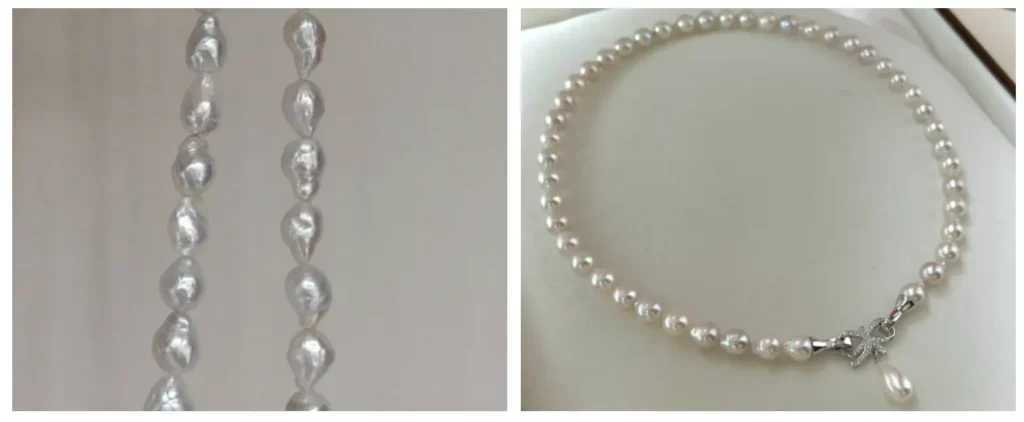
This shape is the second most valuable after perfectly round pearls, according to industry grading standards. But here’s the thing: you’re still buying them at baroque prices while selling them at near-round perceived value.
Why drop shapes convert:
- Romantic aesthetic appeals to bridal market
- Symmetrical enough for matching earrings
- Organic enough to feel unique
- Work in both vintage-inspired and modern designs
Pair drop-shaped baroque pearls with mixed metals—white gold chains with yellow gold accents, for example—to hit the 2026 trend of multi-toned jewelry that coordinates with everything in a customer’s collection.
Best applications: Bridal collections, romantic necklaces, vintage-inspired earrings
5. Circled Baroque Pearls: Texture-Rich Statement Pieces
Circled pearls feature concentric rings running around their circumference. Tiffany’s marketed these as “Circles of Love” in the 1970s, creating instant brand recognition that still carries weight today.
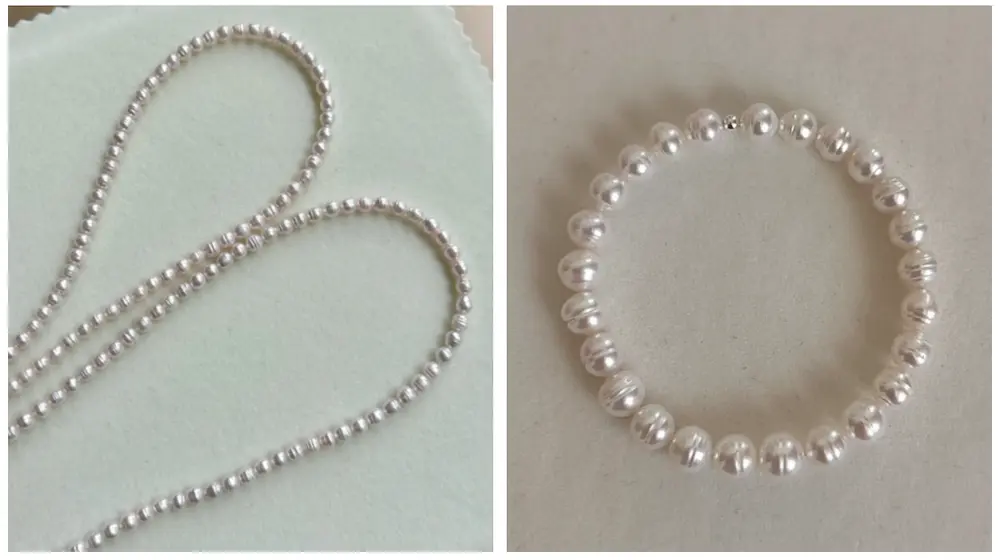
The circles create surface texture that catches light differently than smooth pearls. This produces high concentrations of color banding and visual interest. When you photograph circled baroque pearls, they practically sell themselves because the texture translates beautifully in images.
Why they’re trending:
- Rich surface texture creates depth
- High luster despite irregular surface
- Lower price point enables larger sizes
- Unique enough to drive social media engagement
If you’re building a brand around bold, statement jewelry, circled baroque pearls give you instant differentiation.
Best applications: Best applications: statement necklaces, big cocktail rings, and pieces that look good on social media
How to Source and Price Unique Pearl Shapes
Here’s the formula that works: Source wholesale baroque pearls directly from farms. Skip the middlemen. Build relationships with suppliers who can provide consistent quality across multiple shipments.
When you work with a reliable pearl manufacturer, you get:
- Direct farm pricing (50-80% below retail)
- Custom drilling options (top-drilled, side-drilled, specific hole sizes)
- Consistent grading standards
- Large quantity availability
Pricing strategy:
| Pearl Shape | Wholesale Cost vs Round | Retail Markup Opportunity |
|---|---|---|
| Coin Pearls | 40-60% less | 150-200% |
| Keshi Pearls | 30-50% less | 200-300% |
| Stick Pearls | 40-60% less | 150-250% |
| Drop Baroque | 20-40% less | 100-150% |
| Circled Baroque | 40-70% less | 200-350% |
The margin opportunity comes from education. Most customers don’t know that baroque shapes offer identical nacre quality and durability as round pearls. They just assume “irregular = lower quality.” Your marketing corrects that assumption and captures the value.
Designing With Unique Pearl Shapes: Practical Tips
Do not think about this too much. Unique pearl shapes look their best when you let the shape come from nature.
For coin pearls: Make ear stacks with several studs that are at different angles. They are pleasant even when you have 3 or 4 pairs in one ear because they are flat.
For keshi pearls: Embrace asymmetry. Use different sizes in the same necklace. The organic shapes actually look better when they’re intentionally mismatched.
For stick pearls: Line them up horizontally for modern bar necklaces. Or hang them vertically to make long, dramatic drop earrings that move and add length.
For drop baroque: Don’t worry about the exact shape of the earrings; just match them by weight and size.Slight differences add character.
For circled baroque: Make them the focal point. Don’t compete with the natural texture by adding too many other elements.
The firms that do well in 2026 see diverse pearl shapes as features, not bugs. They photograph the irregularities. They market the one-of-a-kind nature. They build entire collections around organic beauty instead of trying to standardize everything.
Quality Standards for Wholesale Baroque Pearls
Shape is less important than luster. A baroque pearl with a lot of shine will always sell better than a pearl with a superior form but a dull surface.
When looking for a wholesale pearls inventory, put these things first:
- Luster: Should be brilliant, smooth, and reflect light well.
- Surface quality: Make sure there aren’t any lumps, stains, or flaws that are easy to see.
- Nacre thickness: The thicker the nacre, the longer it lasts and the richer the color.
- Size consistency: Makes it easier to match stones in multi-stone pieces
- Orient effect: In baroque types, look for color changes that seem like rainbows.
Don’t get caught up trying to find “perfect” baroque pearls. That’s an oxymoron. The whole point is organic irregularity. Focus on luster and surface cleanliness, then let the natural shapes create visual interest.
Market Positioning: Standing Out in 2026
A hook is something that every jewelry brand needs. Something that makes clients pick you over the next supplier.
Unique pearl shapes give you multiple angles:
Sustainability angle: Baroque pearls reduce waste in pearl farming. Instead of discarding irregular shapes, you’re using the full harvest. Eco-conscious buyers respond to this message.
Artisan angle: Each piece is one-of-a-kind because no two baroque pearls match perfectly. This appeals to customers who want handcrafted, unique jewelry.
Value angle: You’re offering high-quality pearls at accessible prices because you’re working directly with manufacturers. Same material, better pricing.
Trend angle: Position your brand as fashion-forward by stocking the shapes that designers are currently featuring on runways and in editorial spreads.
Pick the angle that matches your brand identity and lean into it. The worst strategy is trying to be everything to everyone. Find your niche within the baroque pearl market and dominate that space.
Frequently Asked Questions
Are baroque pearls lower quality than round pearls?
No. Quality depends on luster, nacre thickness, and surface condition—not shape. Baroque pearls often have thicker nacre layers than round pearls because they’re allowed to grow longer. The price difference comes from market perception, not actual material quality.
How do I match baroque pearl earrings?
Match by weight, approximate size, and luster rather than exact shape. Slight asymmetry actually enhances the organic aesthetic that makes baroque pearls appealing.
What’s the difference between baroque and keshi pearls?
Baroque means any shape that isn’t regular, whether it’s nucleated or not. Keshi pearls are made without a nucleus, which means they are 100% nacre. Baroque pearls are not all keshi pearls, yet all keshi pearls are baroque.
Can I build a full jewelry line around unique pearl shapes?
Yes. Many successful brands focus exclusively on baroque and irregular pearls. The key is consistent quality standards and clear brand positioning around organic beauty and individuality.
What drilling options work best for unique pearl shapes?
Coin pearls can be top-drilled or side-drilled depending on your design. Keshi pearls usually work best top-drilled through the thinnest point. Stick pearls need side-drilling for horizontal orientation. Work with your pearl manufacturer to customize drilling for each design.
Final Thoughts
Round pearls aren’t going anywhere. But they’re no longer enough to build a memorable brand.
Unique pearl shapes—coin, keshi, stick, drop, and circled varieties—give you differentiation that actually matters. They photograph well. They tell stories. They create margin opportunities that round pearls can’t match.
The brands that win in 2026 are the ones that stop viewing unique pearl shapes as “lesser than” round pearls and start seeing them as superior for specific applications. Different isn’t deficient. Different is defensible market positioning.
If you’re still building your jewelry line around perfect rounds, you’re competing on the same criteria as everyone else. Price becomes your only differentiator, and that’s a race to the bottom.
Stock freshwater pearls in baroque varieties. Source directly from farms. Build designs that showcase organic irregularity as a feature. Market the one-of-a-kind nature. Create collections that customers can’t find anywhere else.
That’s how you build a jewelry brand that stands out in unique pearl shapes and captures the customers who want something different in 2026.



 EN
EN  JA
JA  AR
AR  IT
IT  ES
ES  DE
DE  KO
KO